werob
Magazine
Latest insights from the world of robotics.
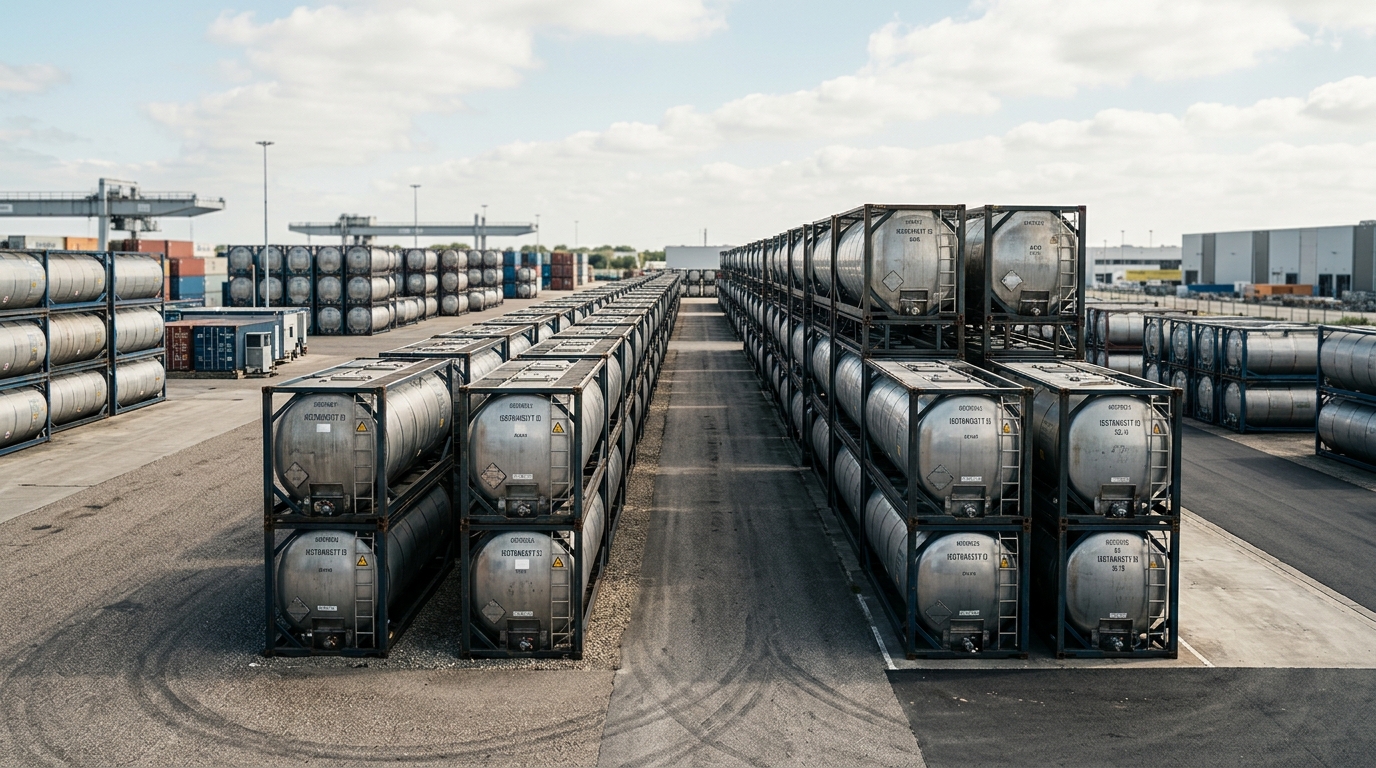
Tank Container Cleaning in Germany: Why No Mobile Robot Exists Yet
106 member companies cover more than 95 percent of Germany's annual tank cleaning, per DVTI. None of them uses a mobile robot to do it — because the market simply doesn't have one.
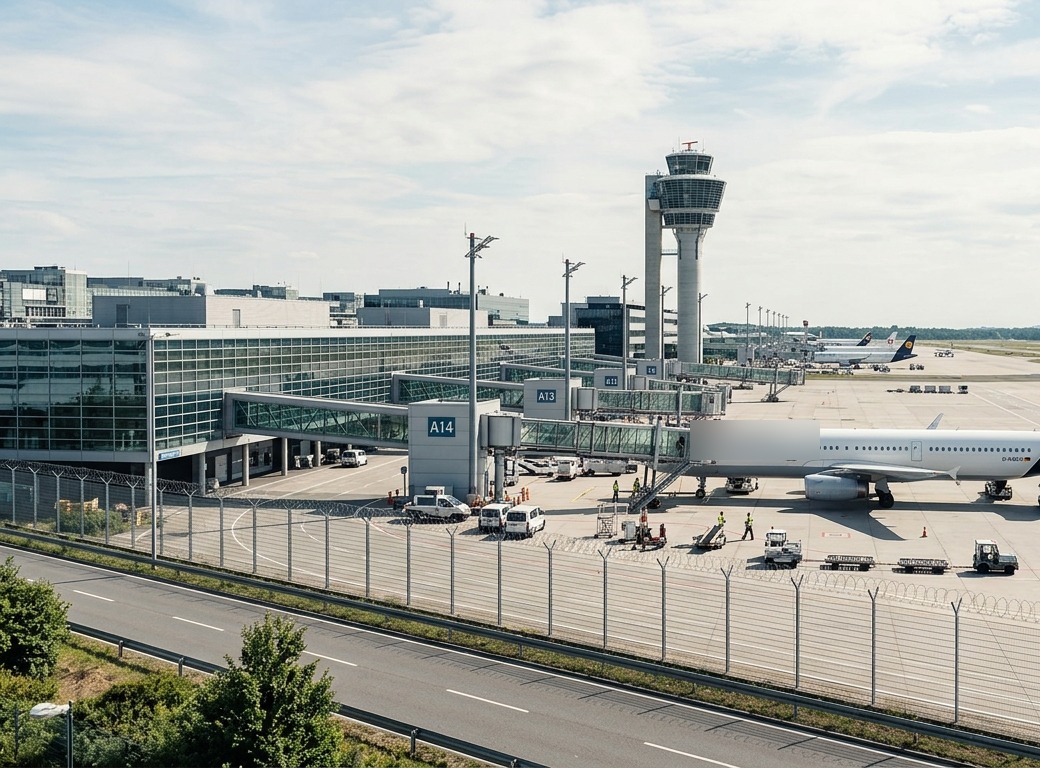
Drone No-Fly Zones at German Airports: What Section 21h LuftVO Means
An airport is not an ordinary fenced site. Section 21h LuftVO sets its own, considerably larger exclusion zones — regardless of who owns the ground underneath.
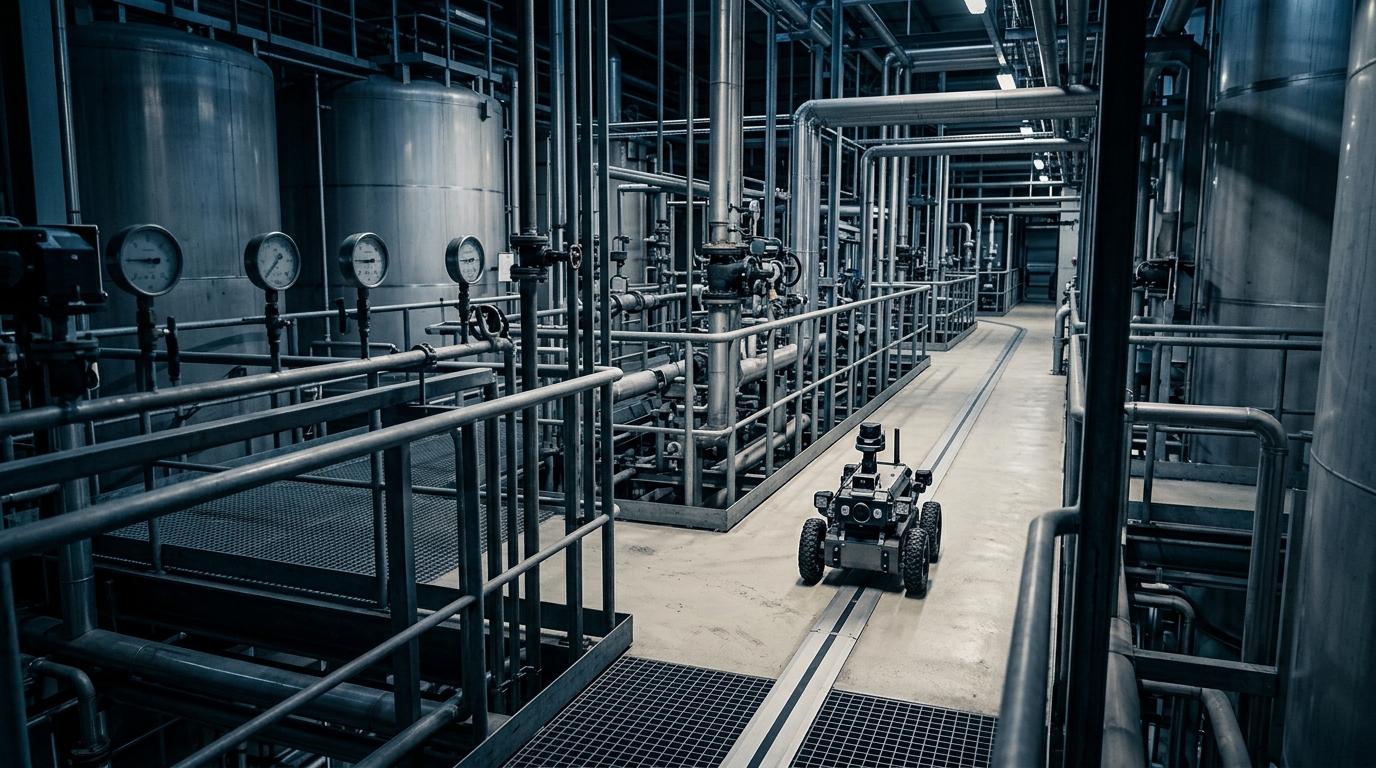
ATEX-Certified Inspection Robots: The Cost of Unplanned Downtime
Germany has 4,049 operating areas under the Störfall-Verordnung (major-accident ordinance). An early warning sign that reaches the regular round too late rarely stays a footnote — it becomes unplanned downtime.
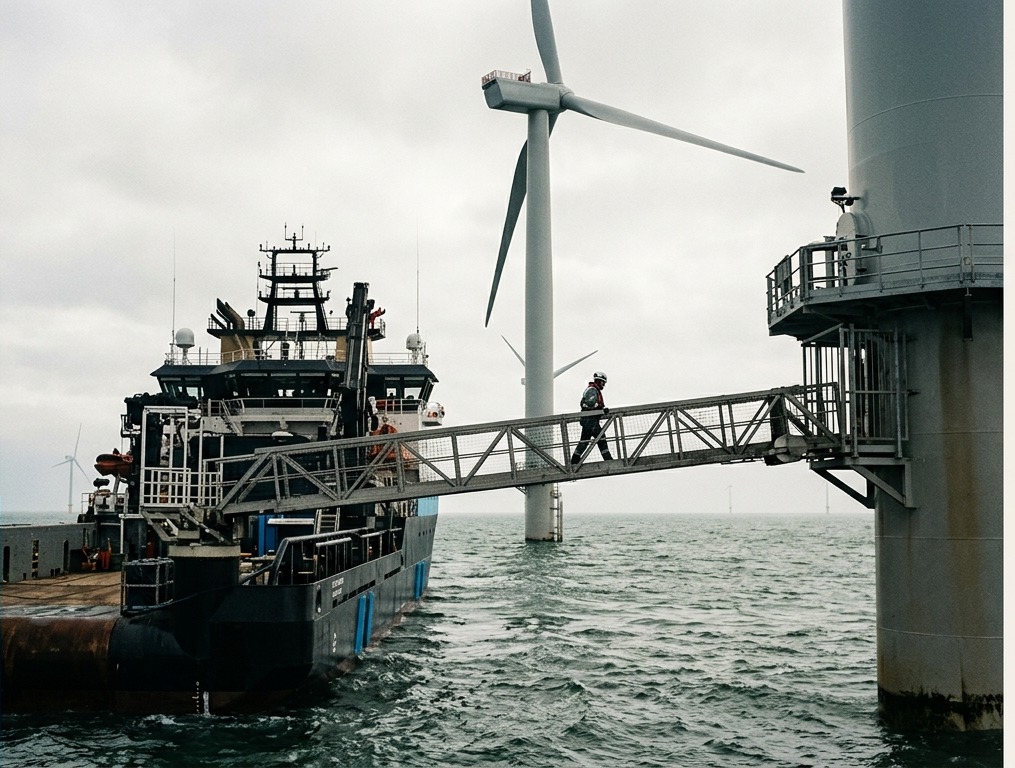
Offshore Wind Maintenance: The Real Cost of Turbine Access
1,764 offshore wind turbines with roughly 10.8 GW stand in German waters. Every maintenance job starts with the same question: how does someone reach the turbine safely without burning a weather window.
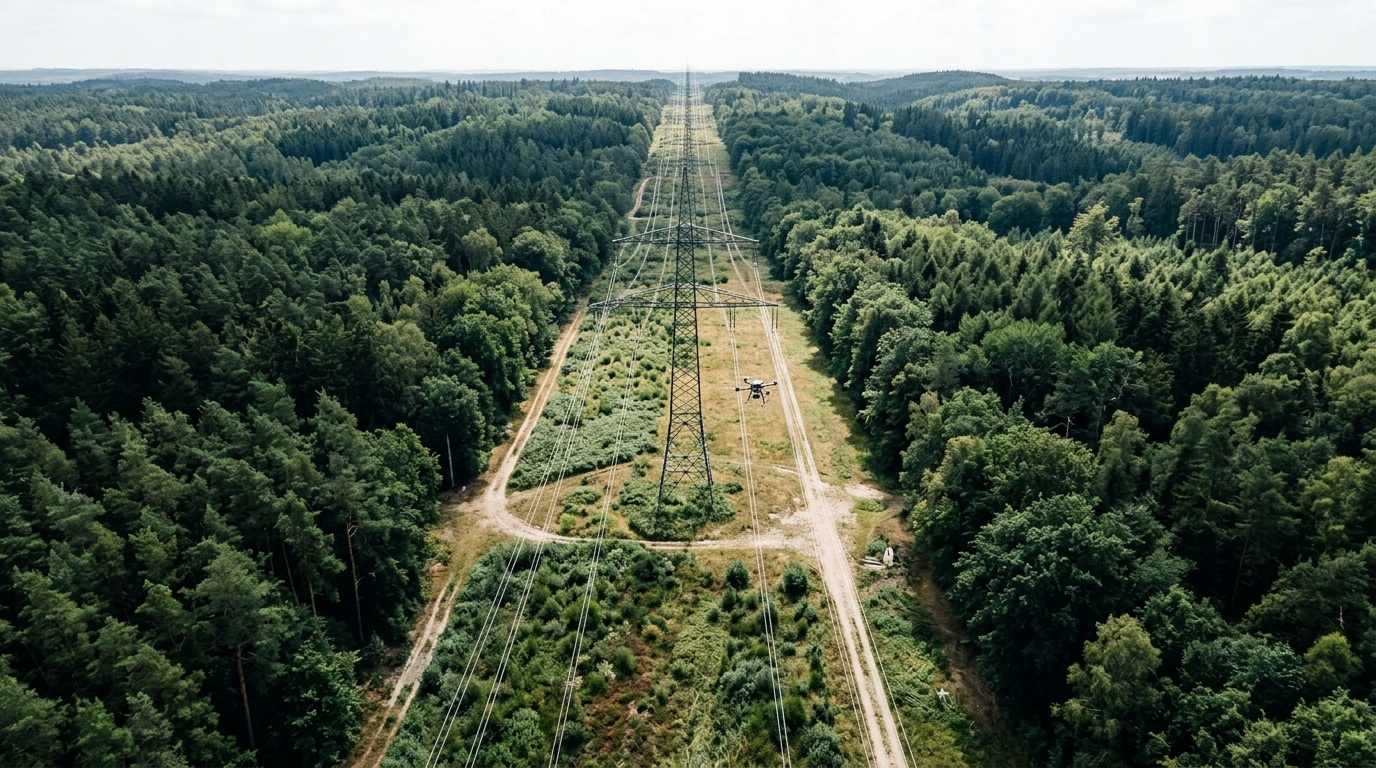
Vegetation Management on Power-Line Corridors: Why Clearing Is a Legal Obligation
Germany carries roughly 37,900 km of extra-high-voltage grid, every kilometre inside a protection strip set by law. Vegetation that grows into that strip is not a maintenance nicety — it is an outage and wildfire risk.
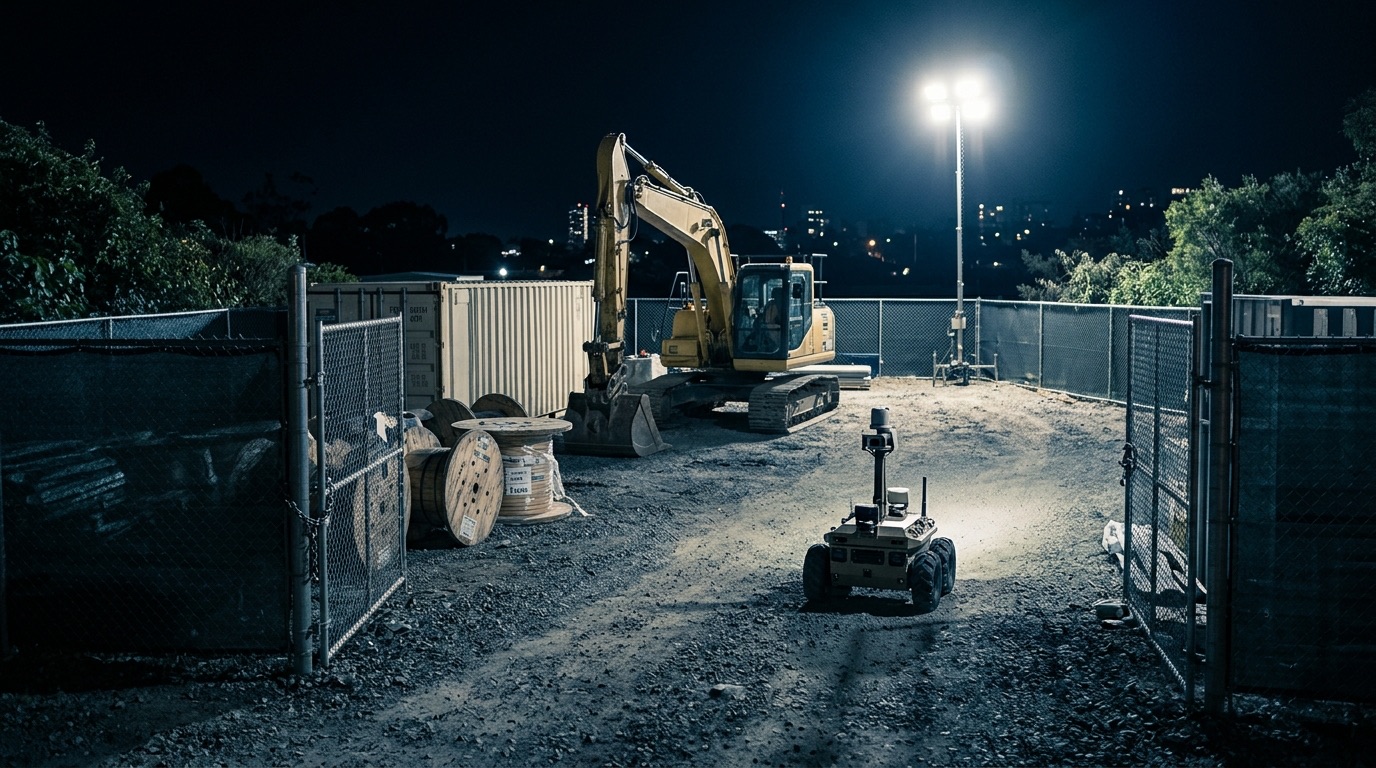
2,156 thefts, one in ten solved: what a construction site can establish at night, and what is not its job
The Baden-Württemberg state criminal police office counted a good two thousand thefts from construction sites and building shells in 2023, with almost ten million euros of damage, and about one case in ten was solved. The nationwide figures circulating beside that differ by a factor of six. From the numbers that hold up follows a task for the technology, and it is not to recognise the thief: it is to establish that something is happening on the ground, and to send someone.
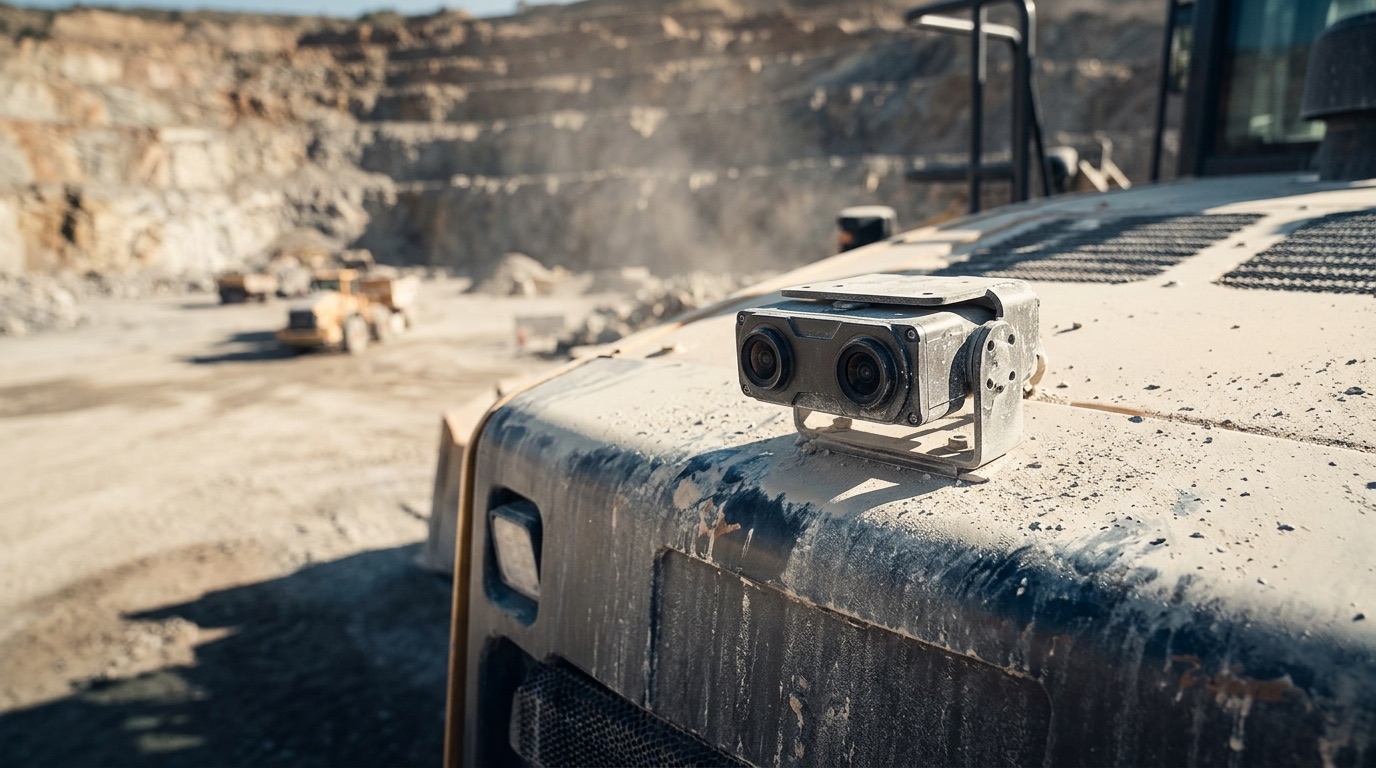
Pedestrian detection on excavators and wheel loaders: what the camera is documented to do, and what no datasheet says
Two routes lead today to a camera on the back of a construction machine that tells a person from a pallet: a brand-independent retrofit kit that has been in series production for years, and a factory option that brakes a wheel loader to a standstill on its own. Both manufacturers document what their system detects and where it runs. Neither documents at what distance, in how many milliseconds, or to what safety level. That is exactly where the site walk begins.
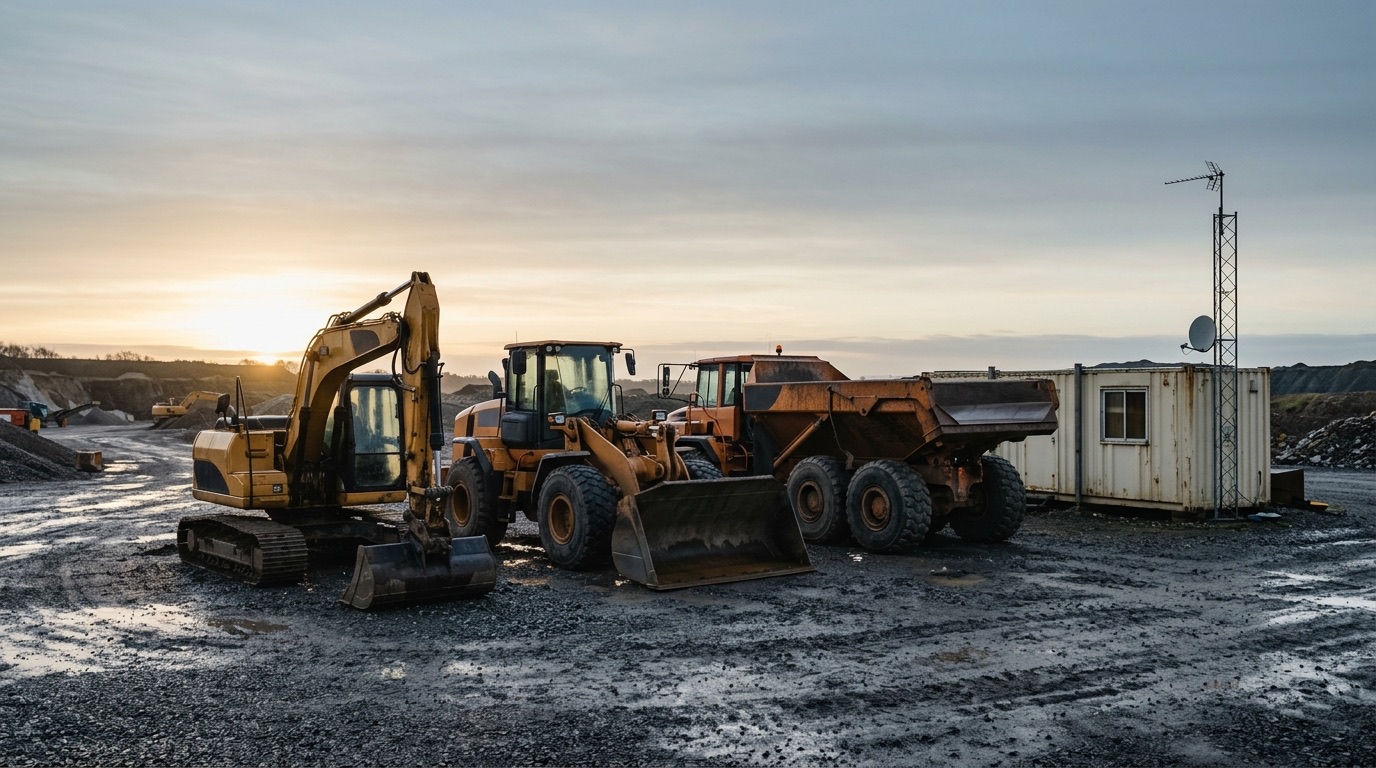
ISO 15143-3: what a mixed machine fleet hands over through the interface, and what it does not
Excavators, wheel loaders and dumpers from different makers have reported their operating data through the same interface for years: ISO/TS 15143-3, known in the trade as AEMP 2.0. Anyone bringing a robot or an autonomy retrofit kit onto such a site meets this data world first. The text of the Technical Specification and one manufacturer's product brochure say exactly what arrives through it: twenty data elements, over HTTPS from the manufacturer's server, for a fee, and nothing that controls a machine.

Humanoid hype, read from the outside: what a physical-AI primer adds to the PLAZA question
In August this site read the PLAZA Hotelgroup and NEURA Robotics announcement against the official vacancy statistics and against wheeled service robots. A March 2026 primer on physical AI, written for executives by an author with no stake in hotels, supplies the piece that announcement could not: what experts in the field say about the humanoid narrative when they are not selling one, and why the limiting factor in a humanoid is heat before it is intelligence.
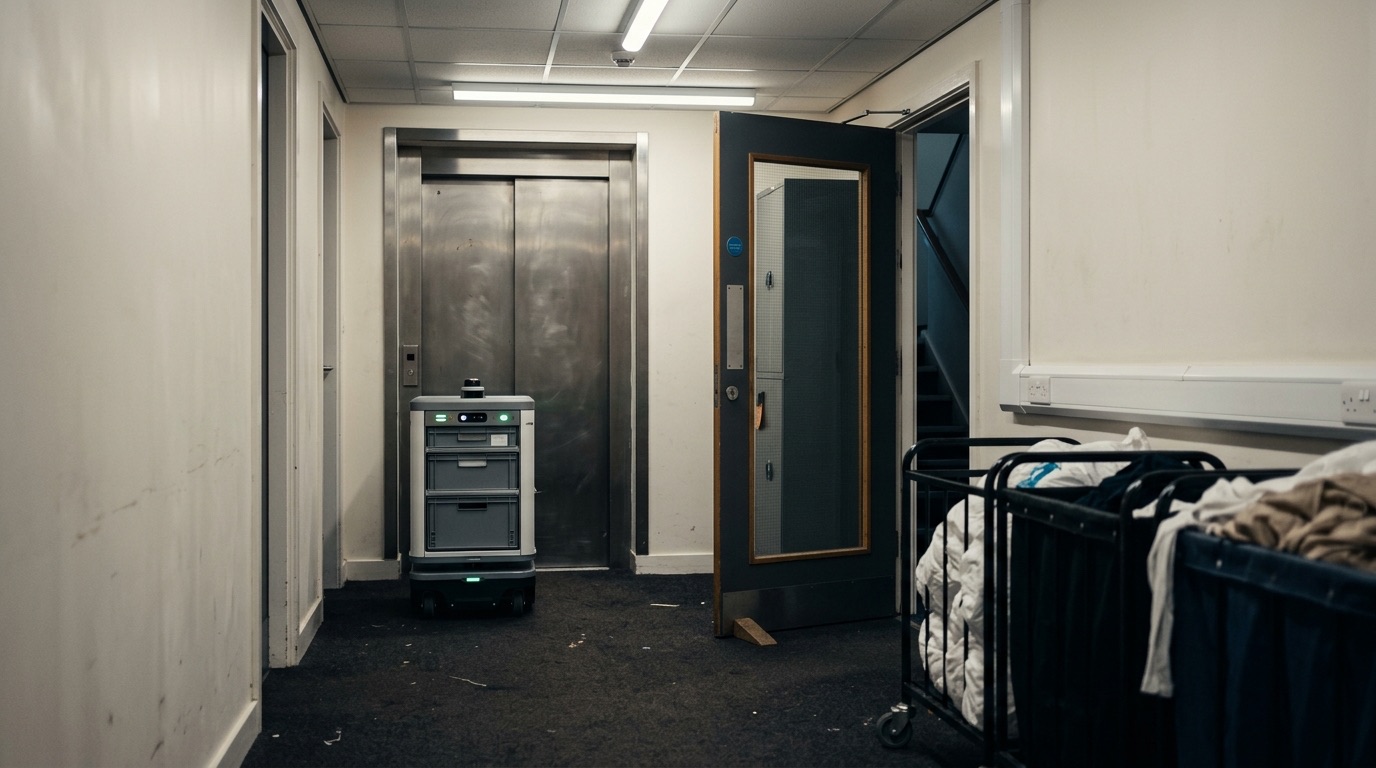
Manicured demos, messy buildings: why a business primer on physical AI names integration, not the model, as the barrier
A 25-page primer written for executives, not engineers, spends its last third on a single point: the videos are real, the labs are tidy, and the hard part is fitting the machine into an untidy operation. The author reaches that conclusion by way of tractors, power stations and a logistics writer. An operator can use it as a reading guide for the next vendor pitch.
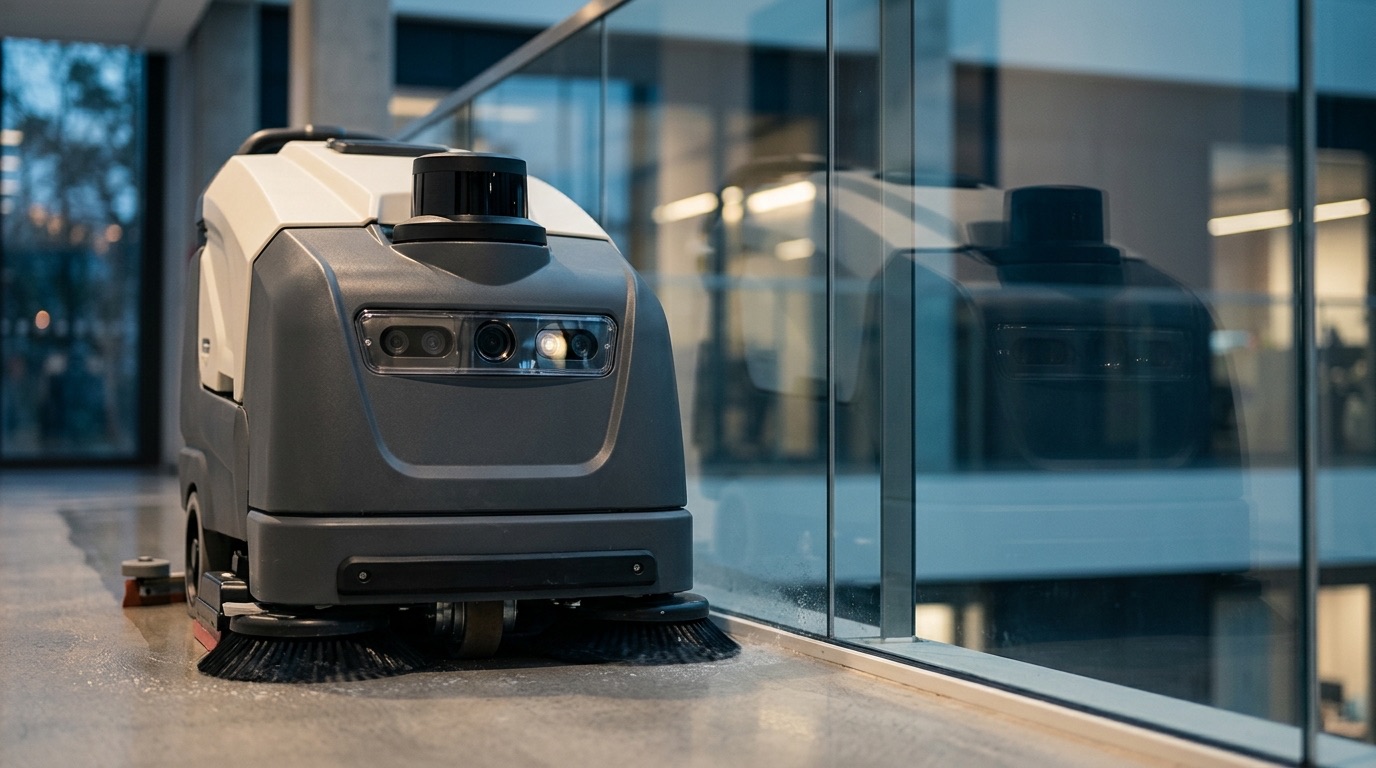
20 millimetres and a glass wall: what a cleaning robot's sensors are documented not to see
A catalogue scrubber-dryer robot drives on a 2D laser scanner, 3D depth cameras, an RGB camera and drop sensors. The datasheet gives one number to go with them: obstacles from 20 millimetres in height. What lies below that, what is made of glass and what is black is not in the datasheet, but it is in two measurement studies anyone can read.
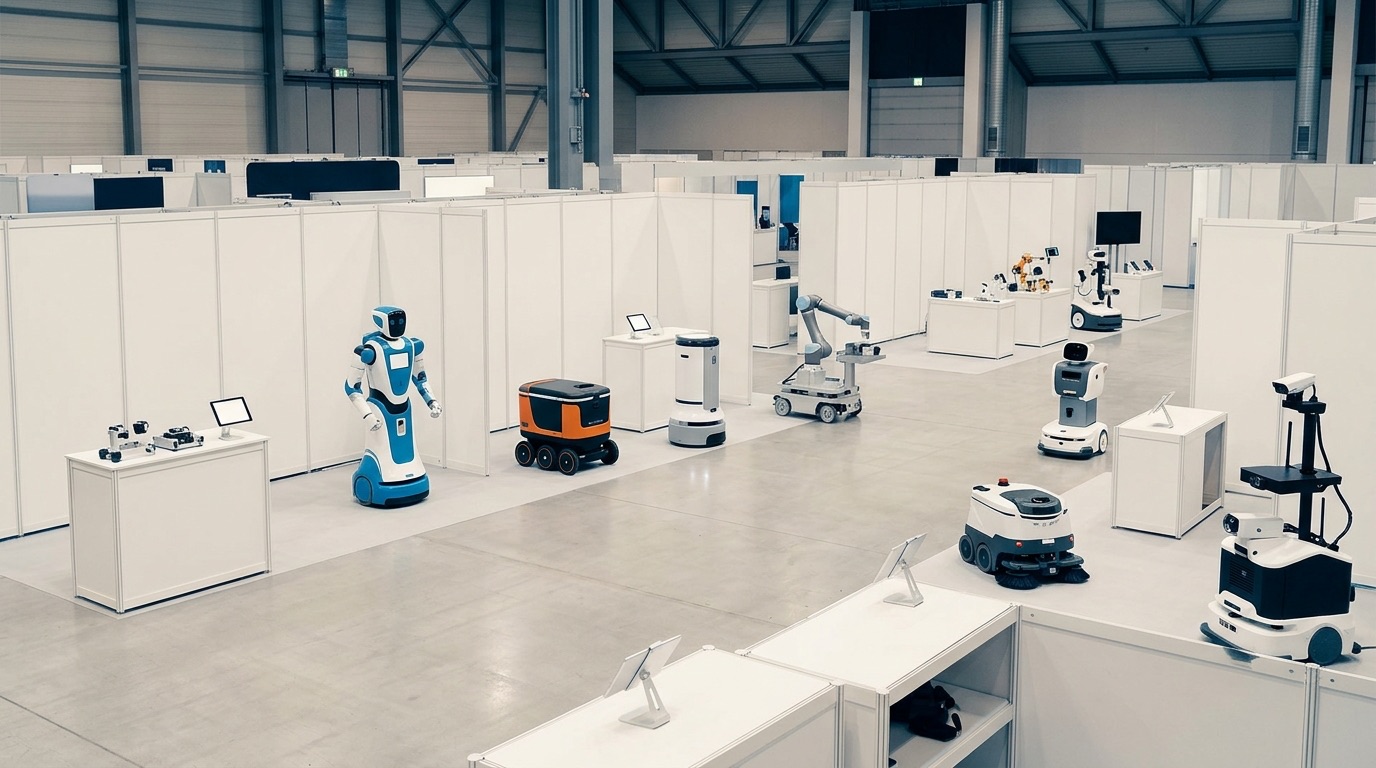
944 manufacturers, 80 percent of them SMEs: why nobody dominates the service robot market
In World Robotics 2025 the IFR counts exactly 944 producers of service robots, excluding integrators and prototype builders. Four in five have fewer than 500 employees, 93 percent count as incumbents, and the number of new entrants has been falling for years. For an operator that means the market is not consolidating into a leader but into niches.
€12,000 once, €30,000 in Bavaria, 30 percent in year one: what actually pays towards a service robot in Germany in 2026
Germany has no funding programme for service robots. It has three instruments a robot fits into, and each has an amount, an end date and one condition most applications fail on. Plus a loan that is not a grant.
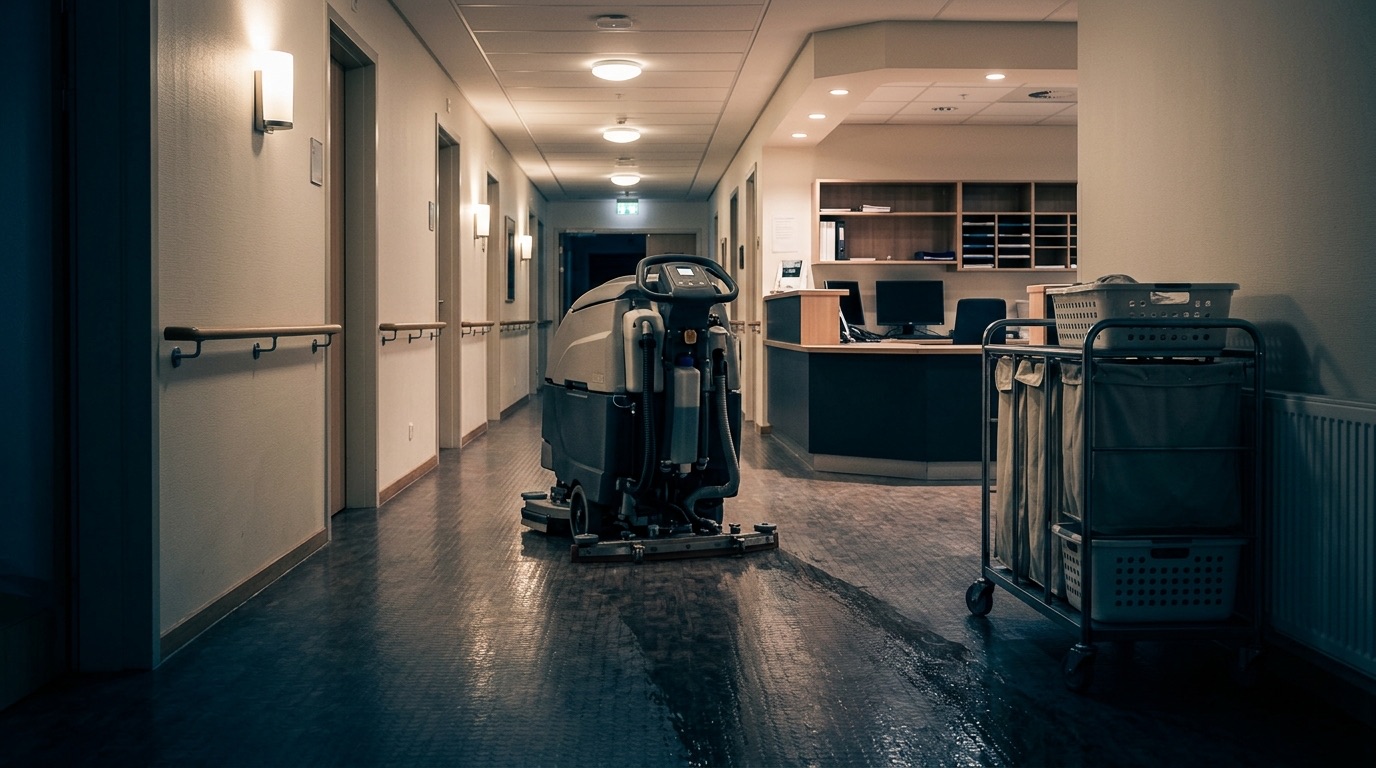
Nine sick days per head per year: the cost line that appears on no robot quote
The BKK Gesundheitsreport 2025 counts 933 days of absence per 100 employees in cleaning occupations from musculoskeletal disorders alone, and 708 in residential care homes. The average across all employees is 453. No robot vendor prices that gap into a quote, because the operator's own number is the one that matters and the vendor does not have it.

90 percent fewer man-days than a traditional robotics build
A traditional in-house robotics rollout ties up internal man-days that never show up on a quote — vendor comparison, integration, rework. werob cuts exactly that effort by 90 percent.

536 robots, one fast-growing gap
536 home-care robots were sold worldwide in 2024 — against 4.9 million people cared for at home in Germany alone. The growth is real. So is the gap.

The real cost of a stock count
A manual stock count shuts operations down, ties up staff for days, and still comes with an error rate. The real cost centre isn't the counting itself — it's the standstill around it.

What a missed gauge round actually costs a plant
In 4,049 operating areas across Germany, the gauge round through the Ex zone is mandatory — and its failure is usually invisible, until it isn't. A fixed round on wheels is insurance against exactly that moment.

255,010 German farms, one labour problem
For 255,010 agricultural holdings in Germany, the open shift isn't abstract — it's the milking parlour at five in the morning with nobody there to run it. A robot costs what an unfilled position costs, just more reliably.

Physical AI: why adaptive robots fail less often than scripted ones
A rigid, pre-scripted system stalls the moment reality deviates from the plan — a moved cart, a closed door, a skipped step. Physical AI is the difference between a robot that stops there and one that keeps working.

The last picking station: what a sorting robot changes at the end of the line — and what it does not
In 2022 a waste company in Swisttal put a picking robot not at the start of its packaging-waste plant but at the end, where the PET stream is almost pure and every missed pick is expensive. The operator itself says what the robot replaces and what still happens by hand.

Forty minutes a day: what the world's largest robot fleet publishes about its own utilisation
Brain Corp reports over 50,000 robots and 5.3 million autonomous hours in half a year. Divided by robots and days, that leaves just under forty minutes. It is not a criticism of the fleet — it is the number that belongs on the dashboard after month three, and the reason is in a Kärcher datasheet.

What six chemical operators ask of a round-walking robot — and what of that is not on the datasheet
In January 2023 BASF, Evonik, Currenta, Nobian, Covestro and Merck wrote down what an inspection robot has to be able to do in their plants. The paper is seven pages long, and the word certificate appears only at the margin. What it says instead decides operation after the pilot.

200 graves a night: the unglamorous case for robotics in grounds care
On the Waldfriedhof in Schwabach a robot waters the graves of a cemetery nursery — at night, from a 215-litre tank, at refill points the nursery had to install first. No mowing robot, no lawn, no brochure shot. That is exactly why it works.