Live200 robots in operation across Europe as of May 2026.Live44 OEM partners and counting. Three new this month.Live11 European countries operational. Germany, Austria, Switzerland, France, Italy, Spain, Netherlands, Denmark, Sweden, Poland, United Kingdom.LiveFirst humanoid on Floor 2, Hamburg senior living. Week 12 of operation.PublishedCost-reduction case with a care group. Double-digit cost offset, year one.Live200 robots in operation across Europe as of May 2026.Live44 OEM partners and counting. Three new this month.Live11 European countries operational. Germany, Austria, Switzerland, France, Italy, Spain, Netherlands, Denmark, Sweden, Poland, United Kingdom.LiveFirst humanoid on Floor 2, Hamburg senior living. Week 12 of operation.PublishedCost-reduction case with a care group. Double-digit cost offset, year one.
werob.

Solution · Process industry

The round that needs a permit before a person can walk it.

In an Ex-classified plant the routine round is expensive before it starts: a permit, a second person, gas detection, and an interval set by all three. werob integrates the robots that are actually certified to be there, so the interval is set by the asset instead.

4,049

Seveso establishments in Germany

Solution · Process industry

The interval is set by the permit, not by the plant.

A gauge in a Zone 1 area gets read when a permit, a competent person and a standby can be lined up at the same time. That is why the round is weekly rather than daily, and why the first sign of a developing problem is usually the second sign. A certified robot walks the same route on a fixed cadence, reads the same gauges from the same standpoints, and logs every pass identically, so a drifting level or a warming bearing shows up as a trend rather than as an event. Germany had 4,049 establishments under the Störfall-Verordnung in 2024 (Umweltbundesamt, reporting the ZEMA count, data state 27 July 2026), and every one of them runs rounds that look like this.

What the robot runs

01

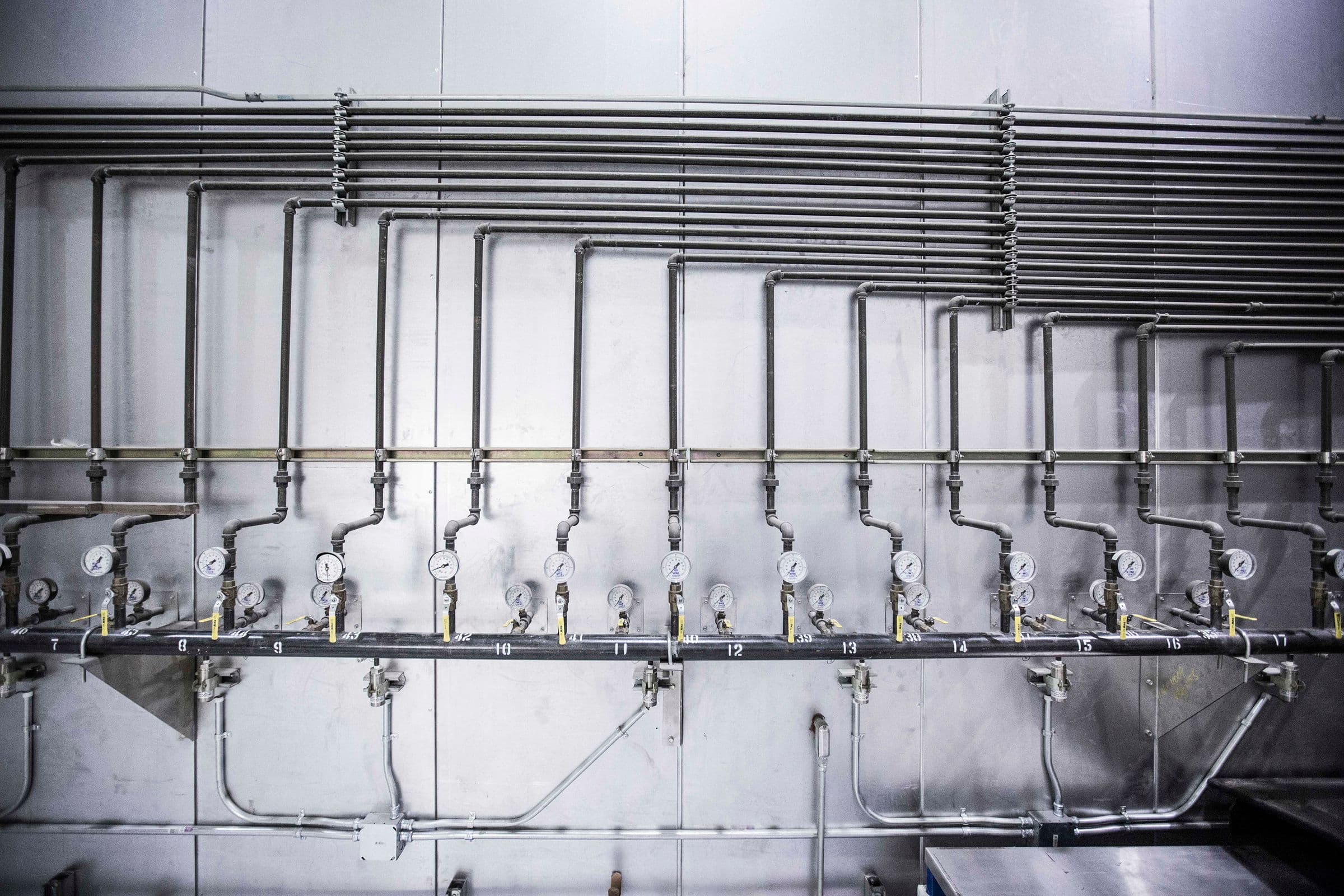
Gauge, level and lever reads

Walks fixed standpoints and reads analogue gauges, sight glasses and valve positions the same way every pass, so the record is comparable across months instead of across inspectors.
02

Thermography and acoustics

Thermal capture on pumps, tanks and steam trapping, plus acoustic capture on rotating equipment, on the cadence the asset needs rather than the one the permit allows.

03

Gas and leak rounds

Carries gas detection along the route as a routine sweep, which is a different job from the fixed detection your plant already has and does not replace it.

04

The Ex documentation trail

The certificate, the zone map, the route and the explosion protection document have to agree with each other before anything moves. That agreement is the deliverable, not the robot.

Hardware match

  • ANYbotics ANYmal X
  • Taurob Inspector
  • ExRobotics ExR-2

Connectors

  • SAP PM / Leitwarte

Standards

  • ATEX 2014/34/EU
  • BetrSichV
  • TRBS 2152
  • 12. BImSchV
  • EU 2023/1230

Built for Ex-classified plant

What the operator describedHardware matchCadenceStatus
Legged robot walks a multi-level unit with stairs and grated platforms, reading gauges and levels and capturing thermal on pumps.ANYbotics ANYmal XDaily to per-shiftAvailable
Tracked robot runs a fixed outdoor route across a tank farm and pipe rack with thermal and gas payloads, resident on site between missions.Taurob Inspector · ExRobotics ExR-2Scheduled, residentAvailable
Route, zone map and explosion protection document reconciled against the robot certificate before deployment, as the acceptance package.Platform-independentPer plant, onceAvailable

This is a newly available werob capability, not a live werob deployment. ANYbotics, Taurob and ExRobotics are real, shipping products in the market, not confirmed werob partners; werob is manufacturer-independent and matches the platform to the zone and the route. ANYbotics has published a case study of ANYmal X at BASF Ludwigshafen (4 August 2023) describing Zone 1 work indoors and outdoors on 20-minute missions of 20 inspection points; that is the manufacturer’s case study, not a werob project. This is ATEX Group II — Group I, which is firedamp, belongs to mining & quarrying.

Process industry questions

You list Boston Dynamics Spot on three other pages. Why not here?
Because Spot carries no ATEX or IECEx certification and therefore does not go into a Zone 1 area. It is a good platform and it is on our security, infrastructure and construction pages for that reason, but Ex classification is not a matter of ruggedness or judgement — either the certificate exists or the robot stays outside the zone. Three platforms carry ATEX and IECEx Zone 1 certification today: ANYbotics ANYmal X, Taurob Inspector and ExRobotics ExR-2. Anyone offering you a non-certified robot for a Zone 1 round is offering you a problem with your explosion protection document.
How is this different from your infrastructure page, which uses the same robots?
Two of the platforms overlap and nothing else does. Infrastructure is public civil assets — bridges, tunnels, dams, solar farms — inspected under DIN 1076 and RI-EBW-PRÜF for a road or rail authority. This page is a private plant operator under BetrSichV, TRBS 2152 and the Störfall-Verordnung, where the governing question is which zone a route crosses. Different buyer, different legal regime, different acceptance evidence.
And the difference from mining?
The ATEX group. Mining underground is Group I, which is firedamp, and it sits under BBergG with statutory surveying reserved to the Markscheider. Surface process plant is Group II. Equipment certified for one is not thereby certified for the other, and the pages are kept apart on exactly that line.
Can you really have a robot on the floor in eight weeks here?
Honestly, usually not, and we would rather say so than quote you the number we quote elsewhere. Eight weeks is realistic in a hotel, a warehouse or a care home. In an Ex-classified plant the path runs through your zone map, your explosion protection document under BetrSichV, a route that has to be reconciled against both, and your own works approval and permit system. The robot is rarely the long pole. Expect the specification and the documentation work to dominate the timeline, and expect a first route in a Zone 2 or unclassified area to move considerably faster than a Zone 1 one.
Does the robot replace fixed gas detection or our shift rounds?
No to the first, and not entirely to the second. Fixed detection is a safety instrumented function and a mobile sweep is not a substitute for it. On rounds, the robot takes the repetitive read — the same gauges, the same standpoints, the same cadence — so your operators spend their permitted time in the zone on the things that need a person: sampling, intervention, and the judgement calls a camera cannot make.

Start

Start with the zone map, not the robot.

Describe the unit, the zones and the round in plain language. First spec in 48 hours; the deployment timeline follows your explosion protection document, and we will tell you what it looks like before you commit.