Live200 robots in operation across Europe as of May 2026.Live44 OEM partners and counting. Three new this month.Live11 European countries operational. Germany, Austria, Switzerland, France, Italy, Spain, Netherlands, Denmark, Sweden, Poland, United Kingdom.LiveFirst humanoid on Floor 2, Hamburg senior living. Week 12 of operation.PublishedCost-reduction case with a care group. Double-digit cost offset, year one.Live200 robots in operation across Europe as of May 2026.Live44 OEM partners and counting. Three new this month.Live11 European countries operational. Germany, Austria, Switzerland, France, Italy, Spain, Netherlands, Denmark, Sweden, Poland, United Kingdom.LiveFirst humanoid on Floor 2, Hamburg senior living. Week 12 of operation.PublishedCost-reduction case with a care group. Double-digit cost offset, year one.
werob.

Solution · Mining

The most dangerous place in a mine is the one someone has to walk into.

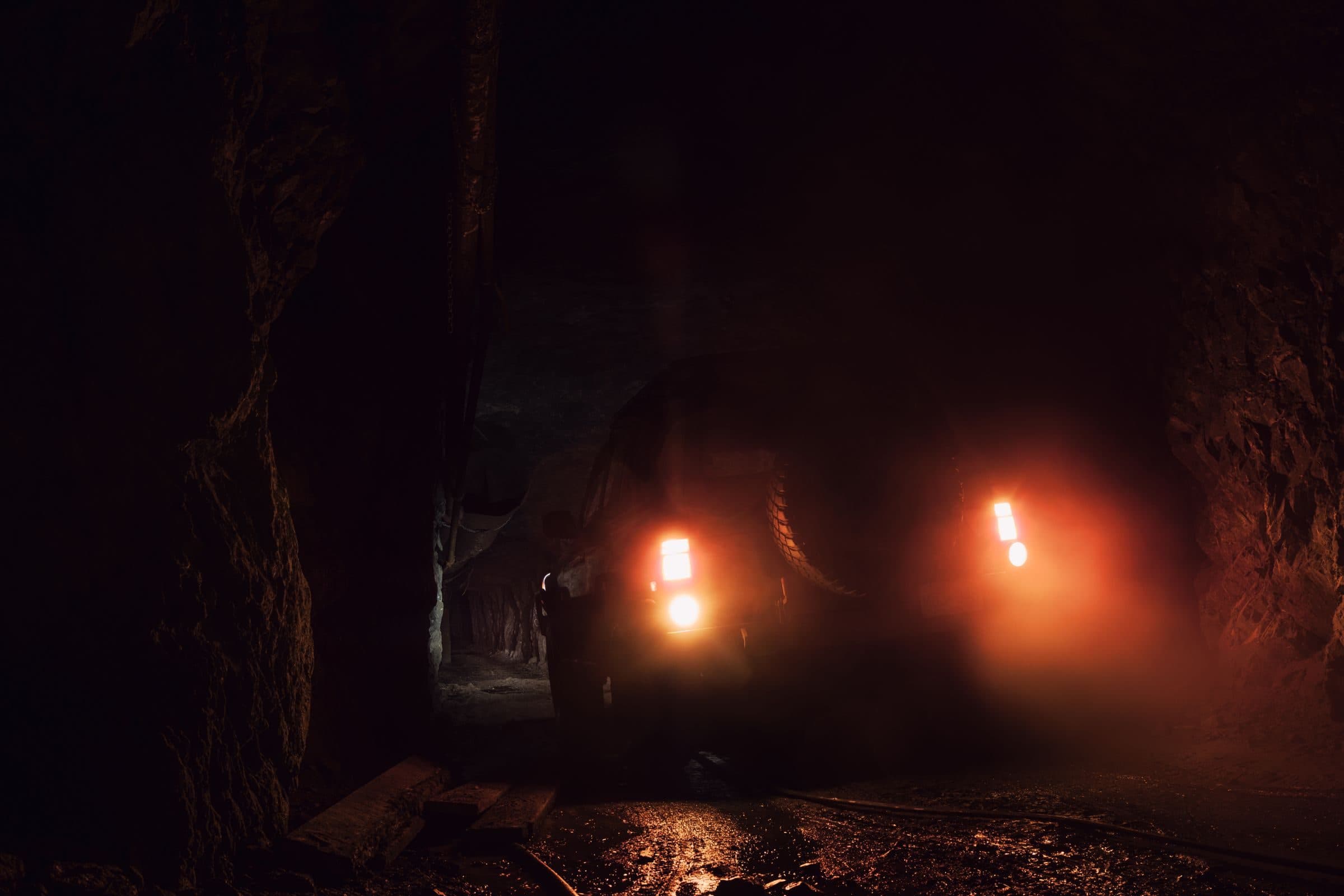
Haulage on fixed underground routes, face and long-hole drilling, inspection of shafts, ventilation raises and conveyor drifts, and access to workings nobody can enter any more. werob integrates real mining automation so the routine work stops requiring a person at the face.

2.700

aggregates works in Germany

Solution · Mining

Germany still extracts. It just does it somewhere other than people think.

German hard coal mining ended in 2018, and the public image of the industry stopped there. The reality is that around 2,700 works in roughly 1,600 companies extract just under 500 million tonnes of aggregates a year in Germany, on the industry association MIRO figures, and that is only sand, gravel and natural stone, before counting lignite, potash and salt. On top of that sits an obligation that never ends: RAG states that it pumps around 110 million cubic metres of mine water a year at 12 sites across the Ruhr, the Saar and Ibbenbueren, to keep it from mixing with groundwater. Extraction, aftercare and inspection all share the same problem. The places that most need looking at are the ones it is least safe to send somebody into.

What the robot runs

01

Haulage & tele-remote

Autonomous and tele-remote load-haul-dump machines and trucks on fixed underground routes, operated from a surface control room. The point is not speed. It is that the re-entry window after a blast stops being the thing that dictates the shift.

02

Drilling

Autonomous face and long-hole drill rigs work a pattern to plan and log what they actually drilled, so the deviation between planned and executed hole is a record rather than an argument.

03

Inspection & mapping

Legged and tracked robots plus SLAM mapping payloads survey shafts, ventilation raises, conveyor drifts and old workings, including places that are unsupported, flooded or simply not enterable any more.

04

Aftercare

Closed mines do not stop needing attention. Water management infrastructure, shaft integrity and subsidence monitoring are permanent tasks, and much of the relevant volume is under water, which is where the subsea side comes in.

Hardware match

  • Sandvik AutoMine
  • Epiroc
  • Innok INSPECTOS
  • Exyn / Emesent

Connectors

  • Flottenleitstand

Standards

  • BBergG
  • ATEX 2014/34/EU
  • EU 2023/1230
  • DGUV
  • Markscheider

Built for underground and the pit

What the operator describedHardware matchCadenceStatus
Tele-remote loader works the muck pile from a surface control room, so the re-entry window after a blast no longer decides when the shift restarts.Sandvik AutoMine · EpirocPer shiftAvailable
SLAM mapping payload flies or walks a ventilation raise and old workings, producing a point cloud of ground nobody can safely enter.Exyn · Emesent HovermapPer campaignAvailable
Legged robot walks a fixed inspection route along the conveyor drift and pump station, capturing the same waypoints visually and thermally on every pass.ANYbotics ANYmal · Boston Dynamics SpotWeeklyAvailable

Mining is a newly available werob solution. Hardware and cadence are representative; per-site scope is set in your spec. The figure above is an industry association figure (MIRO, Bundesverband Mineralische Rohstoffe, retrieved July 2026) describing the addressable market in Germany for aggregates alone, not live deployments. Anything operating in a firedamp environment must carry ATEX Group I equipment, which narrows the hardware choice sharply and is settled before selection. Statutory mine surveying stays with the Markscheider.

Mining questions

Is there even a mining industry left in Germany?
Yes, just not the one people picture. Hard coal ended in 2018. What continues is quarrying and aggregates at scale, potash and salt, lignite, and a very large permanent aftercare obligation. On the MIRO figures, around 2,700 works in roughly 1,600 companies extract just under 500 million tonnes of aggregates a year, and that is before lignite, potash and salt. Add to that RAG pumping around 110 million cubic metres of mine water a year at 12 sites, which is a task with no end date.
Why is underground robotics harder than a factory?
Because almost nothing you rely on above ground is available. There is no GNSS underground, so navigation runs on SLAM and infrastructure-based positioning. Communication goes over leaky feeder, underground WLAN or 5G with limited bandwidth. Dust, water and vibration are constant. Ventilation dictates where you can be. And a stalled vehicle in a drift blocks the only route there is, which makes recovery a very different problem than in a warehouse aisle.
What does ATEX mean for the hardware choice?
In a firedamp environment it decides it. Directive 2014/34/EU defines equipment Group I specifically for mines susceptible to firedamp, with categories M1 and M2 setting how the equipment must behave when gas is detected. Most standard inspection robots and most standard batteries are simply not available in that class. That question is settled at the start of the spec, because it determines what can be considered at all rather than what is preferable.
Can a drone or robot replace the mine surveyor?
No, and in Germany that is a legal point rather than a technical one. Statutory mine surveying is reserved to the Markscheider. A SLAM point cloud or a photogrammetric volume is excellent for progress, stockpile reconciliation and for mapping ground nobody can enter, and it is available far more often than a formal survey. But the binding survey remains the Markscheider's, and any vendor blurring that line is selling you a problem.
Which systems are we actually talking about?
Real, shipping automation: Sandvik AutoMine and Epiroc for autonomous and tele-remote haulage and drilling, Innok Robotics in Regensburg, whose INSPECTOS platforms run infrastructure monitoring at the K+S Werra salt mine, Exyn and Emesent Hovermap for underground SLAM mapping where there is no GNSS, and UNEXMIN GeoRobotics for flooded workings, which has surveyed German mines at Kaefersteige near Pforzheim and Gehren near Ilmenau. One precision worth having: ANYbotics ANYmal X is ATEX certified, but to Zone 1 IIB, which is equipment Group II for surface industry. For firedamp workings you need Group I, and no commercial legged robot carries that today.
Where does werob stop and wedrone start?
Underground and on the ground it is werob: haulage, drilling, inspection rounds, mapping, aftercare. In the open air above the pit it is wedrone: stockpile and pit volumetrics, highwall and bench inspection, blast monitoring and tailings facility surveillance. A surface operation usually wants both, and they are specified together. Flooded workings are the third case, and those run on the subsea side.

Start

Take the routine work off the face.

Describe the drift, the atmosphere and the task in plain language. First spec in 48 hours, first deployment in eight weeks.