Offshore Wind Maintenance: The Real Cost of Turbine Access
1,764 offshore wind turbines with roughly 10.8 GW stand in German waters. Every maintenance job starts with the same question: how does someone reach the turbine safely without burning a weather window.
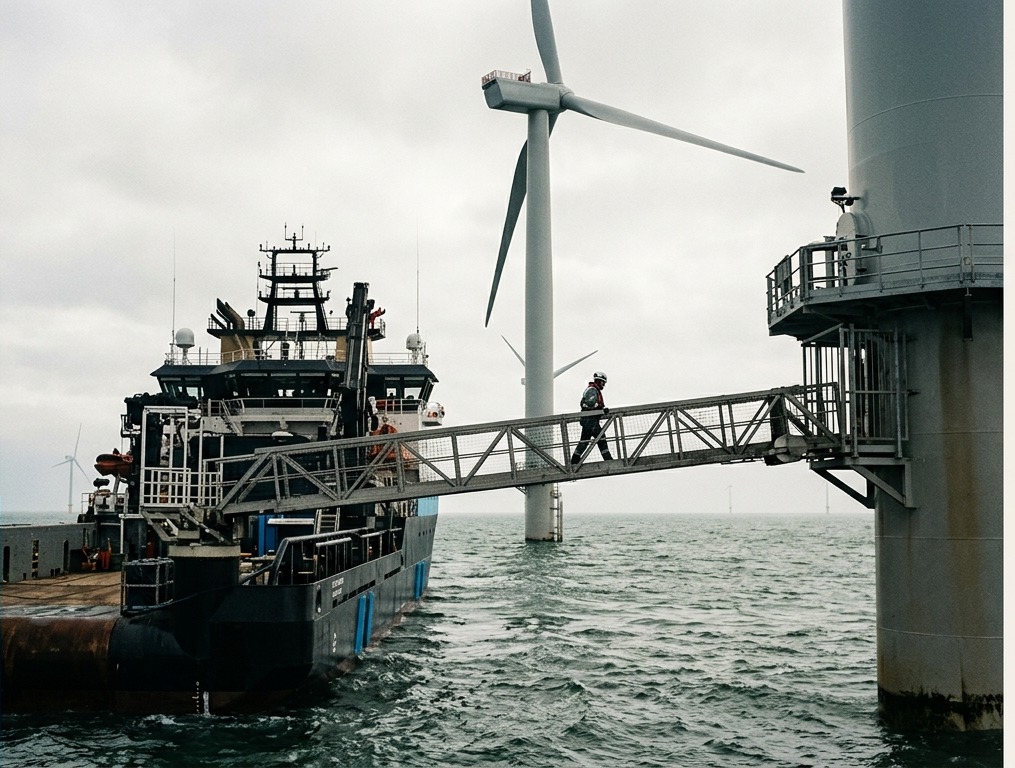
As of 30 June 2026, Germany had 1,764 offshore wind turbines in operation with roughly 10.8 GW of installed capacity (Deutsche WindGuard). Every single one is reachable only by crew transfer vessel (CTV) or service operation vessel (SOV), depending on wave height and weather window, and blade inspection has so far needed roped industrial climbers. Access, not the work on the turbine itself, is what drives the cost.
Key Takeaways
- 1Germany had 1,764 offshore wind turbines in operation with roughly 10.8 GW as of 30 June 2026 (Deutsche WindGuard).
- 2Access runs through a CTV or SOV depending on weather windows; blade inspection has so far needed roped climbers.
- 3wedrone brings drone inspection as an alternative to roping in, flown by certified partners under SORA 2.5 and EU 2019/947.
The German offshore stock
What access actually costs
Drones instead of roping in
Where the line sits
FAQ
- Does a drone fully replace the climber?
- For many blade findings, yes; for structural repair, no. The drone delivers the imagery for the decision on who goes up next.
- Does wedrone fly the drones itself?
- No. wedrone structures the deployment and the compliance path and brings in certified partner operators who hold the authorisation.
- What happens if the weather window doesn't hold?
- That is exactly where a planned climber deployment fails most expensively. A drone has lower weather-window requirements than a technician on a rope, but it does not remove the constraint entirely.
Related reading
Offshore drone inspection: wind farms, platforms and the limits of flying over water
What drone inspection actually delivers offshore: the German wind stock in numbers, the regulatory frame after SORA 2.5, and the operational limits of flying without a landing option.
24 July 2026automated stocktaking robot costThe real cost of a stock count
A manual stock count shuts operations down, ties up staff for days, and still comes with an error rate. The real cost centre isn't the counting itself — it's the standstill around it.
11 September 2026power line vegetation management clearance corridorVegetation Management on Power-Line Corridors: Why Clearing Is a Legal Obligation
Germany carries roughly 37,900 km of extra-high-voltage grid, every kilometre inside a protection strip set by law. Vegetation that grows into that strip is not a maintenance nicety — it is an outage and wildfire risk.
18 September 2026