Live200 robots in operation across Europe as of May 2026.Live44 OEM partners and counting. Three new this month.Live11 European countries operational. Germany, Austria, Switzerland, France, Italy, Spain, Netherlands, Denmark, Sweden, Poland, United Kingdom.LiveFirst humanoid on Floor 2, Hamburg senior living. Week 12 of operation.PublishedCost-reduction case with a care group. Double-digit cost offset, year one.Live200 robots in operation across Europe as of May 2026.Live44 OEM partners and counting. Three new this month.Live11 European countries operational. Germany, Austria, Switzerland, France, Italy, Spain, Netherlands, Denmark, Sweden, Poland, United Kingdom.LiveFirst humanoid on Floor 2, Hamburg senior living. Week 12 of operation.PublishedCost-reduction case with a care group. Double-digit cost offset, year one.
werob.

Solution · Agriculture

The pass that has to happen in a four-day window.

Drilling, hoeing and the barn round are time-bound work with a labour market that no longer supplies the hands. werob integrates real European field and barn robots so the pass happens inside its window, whoever is available that week.

255,010

agricultural holdings in Germany

Solution · Agriculture

The window closes whether or not the driver turns up.

Field work is not evenly spread across a year. It arrives in windows measured in days — the soil is fit, the weed is at the right leaf stage, the forage is ready — and a pass missed inside that window is not recovered later in the season. The same is true in the barn, where feed pushing and manure collection are on a clock that does not care about the roster. These are the passes a machine holds to, because they are repetitive, geometrically defined and unrewarding for a person to sit through. Germany had 255,010 agricultural holdings in 2024 (Destatis), and the structural direction is fewer holdings working more hectares each, which is exactly the shape that runs out of driver hours first.

What the robot runs

01

Drilling and mechanical hoeing

Seeds and then hoes the same rows against the recorded RTK positions, so the hoe knows where the plant is instead of having to see it. Runs the pass in daylight or dark, on a cadence set by the weed stage rather than by driver availability.

02

The barn round

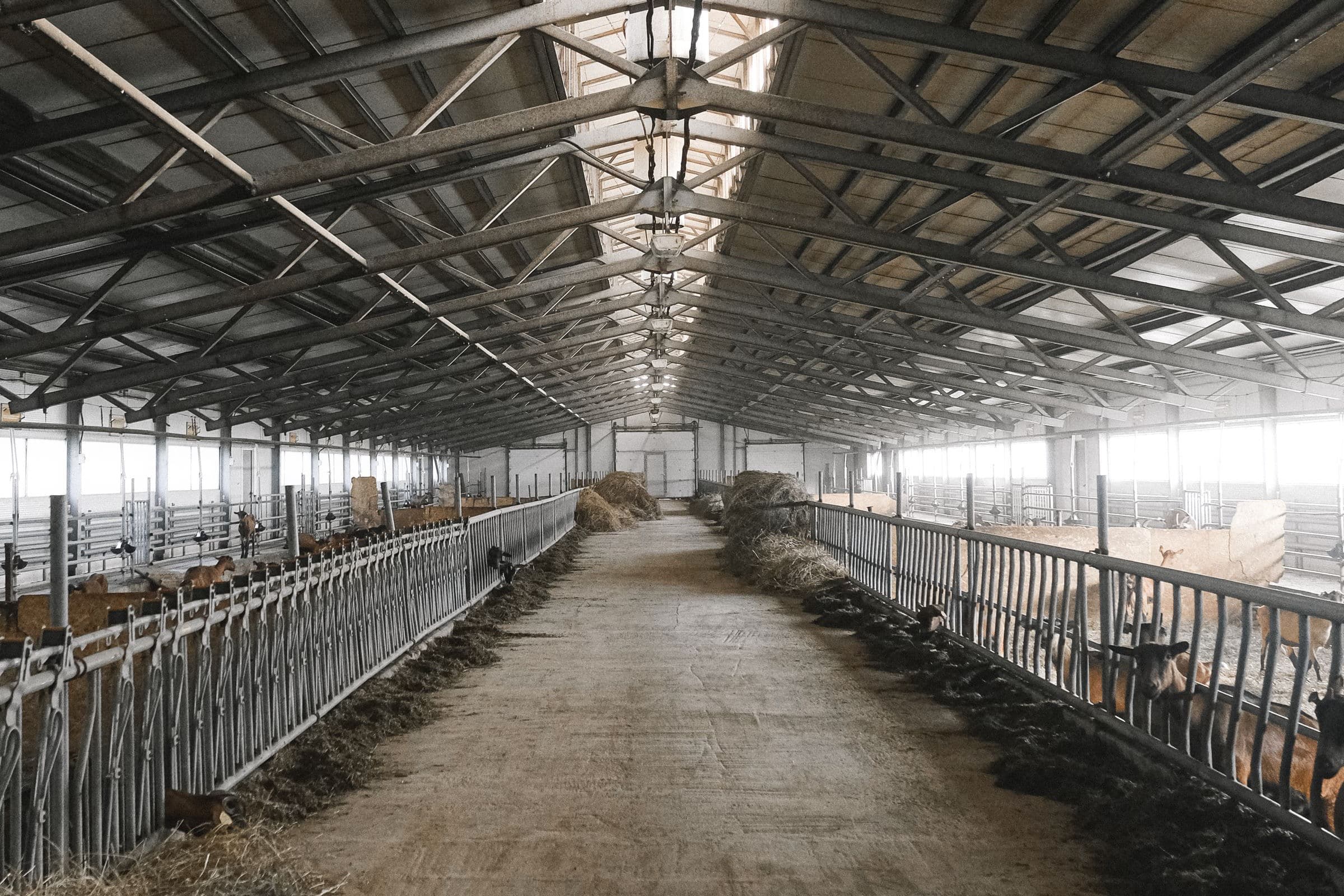
Pushes feed back to the barrier through the night and collects manure off the alley on a fixed loop. This is the work that is done a dozen times a day or not properly at all.

03

Field logistics

Autonomous tractor-class platforms for repeated, geometrically defined passes on ground you control. Not a replacement for the operator on the harvester in a wet October.

04

ISO 18497 evidence

The obstacle protection system, the autonomous operating zone and the verification of both are documented as the acceptance case, because that is what ISO 18497 asks for and what a Berufsgenossenschaft will ask to see.

Hardware match

  • Naio Oz / Orio
  • FarmDroid FD20
  • AgXeed AgBot
  • Lely Discovery / Juno

Connectors

  • Schlagkartei / FMIS

Standards

  • ISO 18497
  • EU 2023/1230
  • DGUV
  • DSGVO / GDPR

Built for arable and livestock production

What the operator describedHardware matchCadenceStatus
Robot drills a sugar-beet or vegetable stand and returns to hoe the same rows against the recorded seeding positions, without a driver in the cab.FarmDroid FD20Per drilling and hoeing windowAvailable
Robot runs the feed alley through the night, pushing feed back to the barrier, and collects manure off the alley on a fixed loop.Lely Juno · Lely Discovery CollectorContinuous, 24/7Available
Autonomous platform runs a repeated field pass inside a defined operating zone with the obstacle protection case documented for acceptance.AgXeed AgBot · Naio OrioPer pass windowAvailable

This is a newly available werob capability, not a live werob deployment. Naio Technologies, FarmDroid, AgXeed and Lely are real, shipping products in the market, not confirmed werob partners; werob is manufacturer-independent and matches the platform to the crop, the soil and the barn. FarmDroid states more than 500 FD20 units working in 26 countries; that is the manufacturer’s own figure. Distinct from golf & grounds and grounds & green space care, which are amenity turf under ISO 13482 — see the FAQ.

Agriculture questions

How is this different from your golf & grounds or grounds & green space pages?
Different buyer, different surface, different standard. Those two are amenity turf: a golf club, a municipality or a landscaping firm keeping mown grass presentable, with the safety case built against ISO 13482. This page is production: a Landwirt or a Lohnunternehmer growing a crop or keeping livestock, with the safety case built against ISO 18497. There is no hardware in common either — a Husqvarna Ceora mows a fairway, a FarmDroid FD20 drills and hoes a stand. If your question is about a sports pitch, a cemetery or a park, you want grounds & green space care.
Why ISO 18497 and not ISO 13482?
ISO 13482 covers personal care robots in physical contact with a person, which is not what a field robot does. ISO 18497 is the agricultural series and was reissued in July 2024 as four parts under the title "Safety of partially automated, semi-autonomous and autonomous machinery": machine design principles, obstacle protection systems, autonomous operating zones, and verification and validation. Those four are the frame your acceptance evidence is written against. EU 2023/1230 applies from 14 January 2027 alongside it.
Can it run the field without anybody on site?
That is the question ISO 18497-3 exists for, and the honest answer is that it depends on the boundary of the operating zone and on what your obstacle protection system can demonstrate, not on what the platform can do on a good day. Ground you control with a defined boundary is a very different case from a field with a public right of way across it. We write the zone and the evidence with you before hardware is chosen, not after.
Does the robot spray?
Application is possible on some platforms, but it is a regulated act in its own right under German plant protection law and it is not something werob treats as a default capability. We start with drilling, mechanical hoeing and barn work, where the machine earns its keep without adding a regulatory question to the project.
What about drones over the field?
That is the aerial side and it runs through wedrone — multispectral crop monitoring, targeted application and wildlife rescue before mowing. This page is ground only. The two are matched to the same holding but they are separate projects with separate approvals.

Start

Get the pass inside its window.

Describe the crop, the soil and the barn in plain language. First spec in 48 hours, first robot on the holding in eight weeks.