Foundations & scour
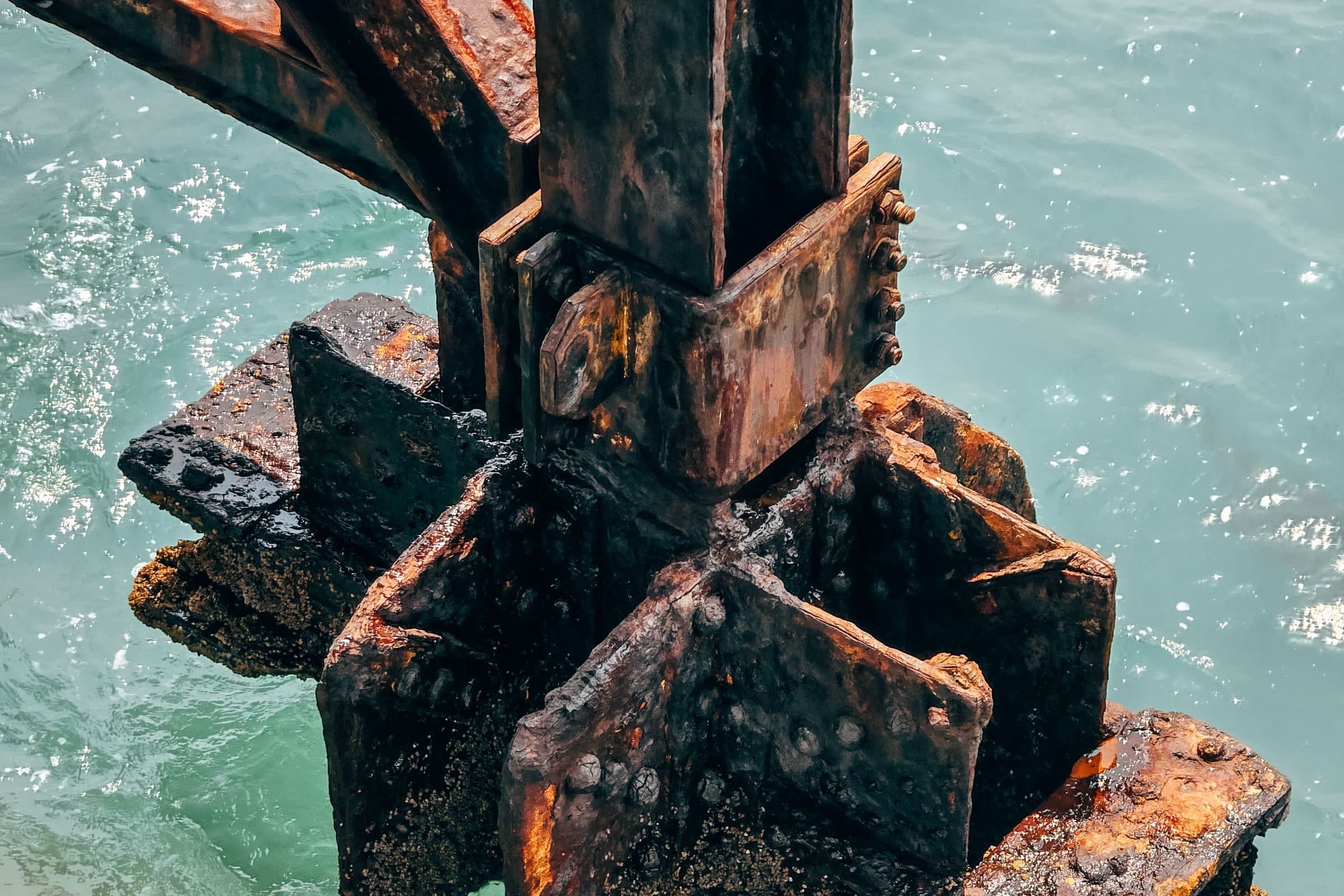
Monopiles, transition pieces, J-tubes and the scour protection around them, inspected visually and with cathodic protection readings on a repeatable route, so corrosion and seabed movement become a trend rather than a finding.
Solution · Subsea
Foundations, scour protection, cable corridors, quay walls, hulls: the part of the asset nobody sees is the part that fails quietly. werob integrates underwater robots from real manufacturers so the submerged half gets inspected on a cadence instead of after an incident.
1.764
offshore wind turbines in Germany
Solution · Subsea
Germany had 1,764 offshore wind turbines feeding the grid at the end of June 2026, roughly 10.8 GW across 31 fully operational wind farms (Deutsche WindGuard, first half of 2026). Every one of them stands on a foundation with scour protection and is connected by an array cable, and all of that sits under water. One number from that report decides more than any other: the average water depth of the German stock is 31 metres. An observation-class vehicle rated to 305 metres therefore reaches every one of them, which means the routine inspection case does not need a work-class system or a DP2 vessel at all. The same is true of quay walls, lock gates, dam intakes and ship hulls. The reason these surfaces get inspected less often than they should is rarely the robot. It is that a crewed support vessel is the dominant cost of any offshore campaign, so inspection gets batched into a campaign and the interval stretches. Anything that removes a vessel day, or moves the pilot ashore, changes that arithmetic more than a better camera does.
Monopiles, transition pieces, J-tubes and the scour protection around them, inspected visually and with cathodic protection readings on a repeatable route, so corrosion and seabed movement become a trend rather than a finding.
Survey along the corridor with sonar, sub-bottom profiler and magnetometer to find free spans, lost depth of cover and exposure. The as-laid record and the as-found record drift apart over time, and only a repeat survey shows by how much.
In-water hull inspection and proactive grooming before a fouling layer establishes itself. Roughness costs fuel, and most ports now require the removed material to be captured rather than washed into the harbour.
Quay walls, sheet piling, lock gates, dam intakes and trash racks. Inland and harbour work is where turbidity, not depth, is the limiting factor, which changes the sensor choice completely.
Hardware match
Connectors
Standards
| What the operator described | Hardware match | Cadence | Status |
|---|---|---|---|
| “Observation-class ROV flies a fixed route around foundations and scour protection, capturing the same waypoints each pass so corrosion and seabed change read as a trend.” | Blueye · Saab Seaeye | Per campaign | Available |
| “Survey AUV runs the cable or pipeline corridor with sonar and sub-bottom profiler, so depth of cover and free spans are measured rather than assumed.” | Exail A18-M · EvoLogics Quadroin | Annual | Available |
| “Hull robot grooms a still-clean hull at short intervals and documents the condition, with the removed material captured as the port requires.” | Hull grooming and cleaning robots | Per port call | Available |
Subsea is a newly available werob solution. Hardware and cadence are representative; per-asset scope is set in your spec. The figure above describes the addressable market in Germany (1,764 offshore wind turbines in operation, Deutsche WindGuard, 30 June 2026), not live deployments. Statutory and class-society survey remains with the class society and the accredited inspector; the robot delivers the capture, not the certificate.
More solutions
All solutions →
Start
Describe the structure, the water and the interval in plain language. First spec in 48 hours, first deployment in eight weeks.