Robots in Elderly Care: Deployable Today vs Years Away
Discover which robotics solutions are genuinely ready for European elderly care facilities today, and why humanoid caregivers remain years away.
While hype promises humanoid caregivers, pragmatic care operators turn to mature robotics for logistics, cleaning, and telepresence. Discover what is genuinely deployable today to relieve staff burden, and why physical assistance robots remain years away.
Key Takeaways
- 1Logistics robots are mature today, successfully saving healthcare staff over 1.5 billion steps by automating the transport of meals.
- 2The genuinely deployable categories are non-contact ones: transport, floor cleaning and disinfection, telepresence, supervised companion devices and medication dispensing.
- 3General-purpose humanoids and physical transfer robots remain years away due to liability risks and strict regulatory hurdles.
The Reality of Eldercare Robotics
Senior living facilities and nursing homes across Europe face relentless operating friction. As demographic shifts intensify demand, facility operators are constantly approached by technology vendors promising artificial intelligence and robotic caregivers capable of resolving severe labor constraints. However, navigating these commercial claims requires distinguishing practical, deployable automation from research prototypes that remain years away from routine deployment.
The fundamental reality of robotics in eldercare is straightforward: mature systems excel at shifting physical goods and executing repetitive facility tasks, not delivering personal care. Autonomous mobile robots can reliably handle heavy internal transport and surface sanitation, allowing qualified nursing personnel to redirect their working hours toward direct resident support. Evaluating care automation through this pragmatic lens prevents costly pilot projects that fail to integrate into daily clinical operations.
| Robotic Category | Operational Readiness | Primary Value Proposition | Core Limitations |
|---|---|---|---|
| Intralogistics & Transport | Fully Deployable | Automates meal, linen, and waste transport | Requires mapped corridors and lift integration |
| Sanitation & Floor Care | Fully Deployable | Maintains consistent hygiene across public zones | Limited to standard flooring profiles |
| Supervised Telepresence & Social Devices | Deployable with Protocol | Assists remote family contact and scheduled check-ins | Requires staff supervision and regular disinfection |
| Physical Patient Transfer | Immature (5+ Years) | Autonomous resident lifting and repositioning | Stringent medical liability and contact safety barriers |
| General-Purpose Humanoids | Immature (7+ Years) | Multi-task autonomous assistance | Prohibitive unit costs and unproven clinical dexterity |
Procurement teams must evaluate any robotic initiative by its measurable contribution to routine workflows. Systems that operate in shared corridors without touching residents present manageable risk profiles and predictable return on investment, whereas devices intended for physical human handling introduce complex regulatory hurdles.
Deployable Today: Logistics and Transport Automation
Logistics and internal distribution represent the single most mature application of robotics in senior living and healthcare environments today. In a standard multi-story facility, nursing and support staff expend hours every shift pushing heavy laundry hampers, distributing meal trays, shuttling waste bins, and collecting scheduled medication carts from central dispensaries.
Autonomous mobile robots (AMRs) equipped with optical sensors, LiDAR, and building integration modules now manage these tasks autonomously. By interfacing directly with automatic doors and modern elevator banks, transport robots move between facility basements, central kitchens, utility rooms, and residential wards without human intervention. In high-volume healthcare settings, routine delivery automation has proven its capacity to relieve physical strain: fleet data from deployed logistics manipulators shows that automated couriers have saved healthcare staff over 1.5 billion steps, returning hundreds of thousands of hours to bedside care[1].
- Scheduled meal delivery: Autonomous transport of thermal food trolleys from central kitchens directly to ward dining areas before service times.
- Linen and laundry distribution: Moving heavy clean linen carts to storage closets and returning soiled laundry hampers to collection docks.
- Medication shuttle logistics: Transporting secure medication transport cassettes between on-site pharmacies and nursing stations with digital access logging.
- Waste and recycling management: Relieving housekeeping teams of repetitive evening waste runs across residential corridors.
Automating internal courier routes eliminates non-nursing transit time. When caregivers remain stationed in their respective wards rather than traveling across basement corridors and service lifts, response times to resident call bells improve and physical fatigue decreases.
Deployable Today: Floor Cleaning and Disinfection
Maintaining rigorous hygiene standards across high-traffic senior living corridors, dining halls, and common lounges demands extensive daily labor. Autonomous floor scrubbers and specialized disinfection units represent an established class of service robotics that operates reliably alongside residents and staff.
Modern autonomous scrubbers execute precise cleaning patterns, recycle water efficiently, and navigate around unexpected obstacles such as wheelchairs or mobile walkers. When deployed during low-traffic night shifts or mid-day rest hours, these machines ensure high-traffic flooring receives consistent, documented care without pulling facilities staff from specialized maintenance duties.
| Cleaning Modality | Primary Operating Area | Verification Method | Key Infection Control Requirement |
|---|---|---|---|
| Autonomous Wet Scrubbers | Main hallways, dining halls, atriums | Onboard telemetry and water flow logging | Daily reservoir emptying and squeegee sanitization |
| UV-C Disinfection Towers | Vacated rooms, quarantine zones, clinical suites | Dosimeter sensors and cycle time tracking | Strict interlock protocols to prevent human UV exposure |
| Interactive Companion Devices | Activity rooms, communal lounges | Contact plate swabbing and wipe-down checklists | Top-to-tail antibacterial wiping between users |
Infection control remains a critical operational consideration whenever automated or interactive hardware enters a residential environment. A peer-reviewed study in PLOS One that sampled companion robots after group sessions in UK care homes found that most devices acquired microbial loads well above the acceptable threshold of 2.5 CFU/cm² after just 20 minutes of normal resident handling, harboring organisms including Staphylococcus aureus[2]. The same study showed that a simple cleaning procedure taking roughly six minutes, spraying with an antibacterial product, brushing fur-type shells, then wiping top-to-tail with germicidal wipes, brought counts on every device back well within accepted limits, whether performed by a researcher or by care staff[2]. For operators, this reinforces that deploying robotic hardware requires formal cleaning protocols to prevent equipment from acting as fomites between wards.
Deployable Today: Telepresence and Companion Devices
Social interaction and cognitive engagement represent another category where non-contact robotics provides immediate utility. These devices range from mobile telepresence screens that facilitate remote consultations to interactive robotic animals utilized during structured occupational therapy.
Telepresence robots allow remote family members, consulting physicians, and off-site specialists to navigate living areas virtually and conduct high-definition video check-ins without requiring on-site coordination. Similarly, therapeutic companion robots have demonstrated clear benefits in calming residents with dementia, reducing agitation during clinical transitions, and supporting group activities. Adoption in this category is driven by the fact that these devices never touch a resident unsupervised, which keeps their risk profile, and therefore their procurement path, far simpler than that of any physical-assistance device.
- Supervised group activation: Incorporating interactive companion animals into memory-care group sessions to stimulate speech and sensory engagement.
- Scheduled remote wellness checks: Enabling off-site clinical staff to conduct visual check-ins for residents transitioning through ageing in place programmes.
- Automated medication dispensing: Utilizing stationary connected carousels that dispense unit-dose blister packs with audio-visual reminders under central monitoring.
- Tele-health family connectivity: Providing mobile video endpoints that allow geographically distant relatives to attend care conferences directly with residents.
The success of these tools depends entirely on staff-supported workflows. Telepresence units and social devices operate as cognitive and communication aids, not autonomous caregivers; they require structured deployment protocols and clear ownership among nursing and activities staff.
Still Years Away: Physical Lifts and Patient Transfers
One of the most persistent misconceptions in eldercare technology is the near-term arrival of autonomous robots capable of physically lifting, transferring, or repositioning frail residents. Transferring a person between a bed, wheelchair, and commode represents one of the heaviest physical burdens on nursing staff, leading many operators to seek automated solutions.
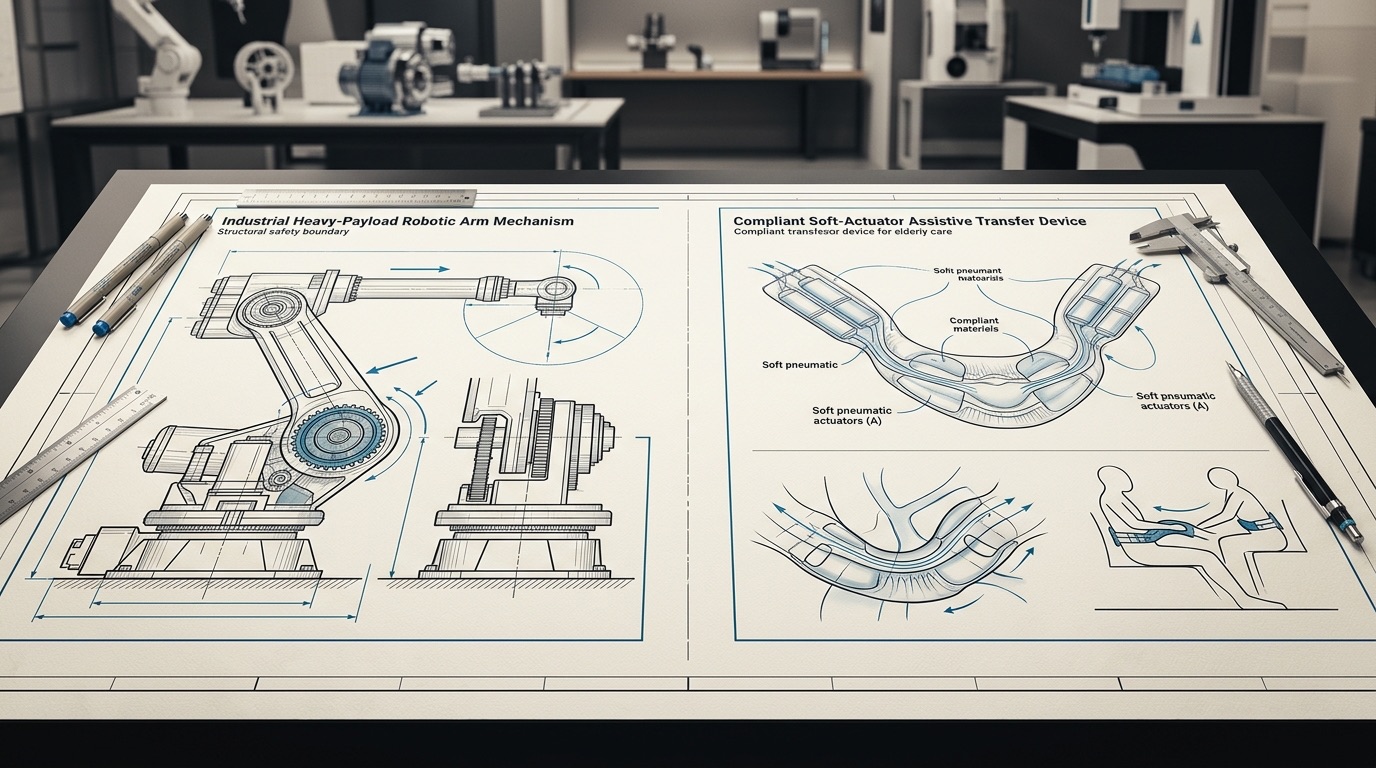
Despite compelling laboratory demonstrations, autonomous physical lifting remains unviable for routine deployment. Unlike rigid industrial payloads, human bodies present variable compliance, fragile skin, unpredictable pain points, and varying levels of resident cooperation. A robot attempting a physical transfer must interpret real-time physiological feedback, adjust grip forces continuously, and guarantee absolute safety if a resident experiences a muscle spasm or panic response.
Beyond mechanical complexity, regulatory and liability barriers are formidable. In the European Union, any robotic system designed for direct physical lifting must comply with the strict clinical evaluation and risk management standards mandated by the Medical Device Regulation (MDR). The certification process for autonomous physical contact devices requires multi-year clinical trials, extensive safety margins, and exorbitant testing overhead. For the foreseeable future, powered ceiling hoists, motorized standing aids, and staff-operated transfer devices remain the only certified, safe options for resident repositioning.
Still Years Away: Humanoids and Autonomous Hygiene
Bipedal humanoids and autonomous personal hygiene systems frequently dominate industry headlines. Marketing videos showcase humanoid platforms folding laundry, grasping cups, or simulating conversational care. However, an operational analysis reveals a wide gulf between controlled stage demonstrations and the chaotic environment of a working nursing home.
Humanoid manufacturers prioritize structured commercial sectors such as automotive manufacturing, electronics assembly, and warehouse intralogistics. These environments offer flat concrete floors, standardized container geometry, and clear financial returns based on continuous throughput. In contrast, residential care settings involve narrow residential bathrooms, soft furnishings, fluid spills, and vulnerable humans requiring empathetic touch and acute clinical judgement.
- Unstructured navigation challenges: Managing tight domestic bathrooms, scattered personal belongings, wet tile flooring, and sudden resident movements.
- Prohibitive hardware capital expenditure: Humanoid platforms remain low-volume research hardware with heavy service and spares overhead, creating economics that no care home operating budget currently supports.
- Complex clinical intuition: Personal hygiene and bathing require subtle assessments of skin integrity, joint stiffness, resident discomfort, and cognitive distress that machine vision cannot replicate.
- Consent, dignity, and acceptance: Physical contact during intimate personal hygiene requires verbal reassurance, emotional connection, and continuous resident consent.
General-purpose humanoids capable of autonomous personal care are not a 2026 product reality. Facility managers should treat long-term humanoid roadmaps as experimental research rather than actionable procurement options for current capital planning cycles.
Next Steps for Operators: Infrastructure and Deployment
Care home directors and operations managers seeking to implement automation today should focus on non-clinical transport and facility maintenance tasks. Establishing a reliable automation footprint requires preparing physical infrastructure, establishing clear operational boundaries, and partnering with experienced systems integrators who understand the nuances of deploying care home robots.
Before purchasing or leasing hardware, facility teams must conduct a thorough physical and digital infrastructure audit. A successful deployment depends on stable facility-wide Wi-Fi, motorized fire door interlocks, secure charging alcoves, and standardized elevator relay modules that allow autonomous mobile robots to change floors safely without human intervention.
- Phase 1: Operational Workflow Specification (Weeks 1 to 2): Map all internal courier and cleaning routes to quantify non-nursing staff transit hours and identify high-friction bottlenecks.
- Phase 2: Infrastructure and Network Audit (Weeks 3 to 4): Verify corridor clearances, lift controller compatibility, automatic door relays, and facility wireless coverage.
- Phase 3: Hardware Sourcing and Specification: Evaluate vendor-neutral OEM options based on payload requirements, battery duty cycles, and local maintenance support.
- Phase 4: Software Integration and Verification (Weeks 5 to 6): Connect robot dispatch systems to building management and staff communication channels with automated escalation triggers.
- Phase 5: Staff Training and Live Commissioning (Weeks 7 to 8): Deliver hands-on workflow coaching to ward teams, establish daily cleaning protocols, and initiate supervised live runs.
Executing this transition efficiently requires a structured integration methodology. Rather than attempting to assemble custom hardware from isolated vendors, operators can leverage the werob Platform to accelerate deployment. Utilizing the AI-assisted Spec Engine, facility managers translate everyday shift routines into formally verified operational plans, while Connectors link robot fleets directly to existing facility software. Operating through the centralized Cockpit dashboard, management maintains complete visibility over fleet telemetry, safety status, and task completion, transforming routine logistics into a dependable eight-week operational reality.
FAQ
- Are humanoid robots ready for elderly care facilities?
- While some models exist in pilots, general-purpose humanoid robots are not ready for hands-on care. Industry roadmaps prioritize factories and logistics first, meaning a fully autonomous humanoid caregiver remains a long-horizon project rather than a deployable solution today.
- What robotics can be deployed in a care home today?
- Operators can successfully deploy logistics robots for moving laundry and meals, floor-cleaning and disinfection robots, telepresence devices for remote check-ins, and simple companion robots supervised by staff.
- Can robots safely lift and transfer elderly residents?
- No. Robots that physically lift, transfer, or reposition residents face immense blockers, including liability, the unpredictability of care environments, and the strict regulatory certifications required for safe physical human contact.
- Do robots increase infection risks in care homes?
- Shared interactive devices do pick up bacteria during normal handling, with peer-reviewed sampling in care homes finding microbial loads above the accepted threshold of 2.5 CFU/cm² after short group sessions. A short documented cleaning routine with antibacterial spray and germicidal wipes returns them to acceptable levels, so the risk is manageable with protocol rather than inherent.
- What does an eldercare robot deployment actually cost?
- Costs vary widely by site and depend on far more than the hardware line item: fleet size, lift and door integration work, network coverage, software connectors, staff training and the ongoing service contract all shape the total. Treat any single headline unit price as incomplete and budget on a per-route, per-shift basis instead.
Related reading
Care Home Robot: Operational Efficiency and Compliance in Care
The use of robotics in residential care is no longer a vision of the future but an economic necessity to relieve staff. Learn how werob, as a systems integrator, paves the path from specification to live operation in eight weeks.
2 June 2026care robot acceptanceCare robot deployments: why acceptance decides success
Discover why care robot deployments fail over staff acceptance rather than technical limits, and how operators can design successful robotic pilot projects.
27 August 2026care automationCare Automation: Efficiency Gains Through System Integration
Automation in care is no longer a future vision but an operational reality. Learn how werob as a systems integrator paves the way from specification to live operation in eight weeks.
13 June 2026medication robot care homeMedication Robot in the Care Home: Efficiency and Compliance
Automating medication logistics relieves nursing professionals of time-consuming errands. werob integrates autonomous systems into existing workflows and secures regulatory compliance.
1 June 2026robotics ageing at homeRobotics for ageing at home: what actually works in 2026
Germany cares for 4.9 million people at home. The IFR counted 536 robots sold worldwide for care at home in 2024. An honest look at where robotics pays off around the ageing population, and where it does not.
29 July 2026