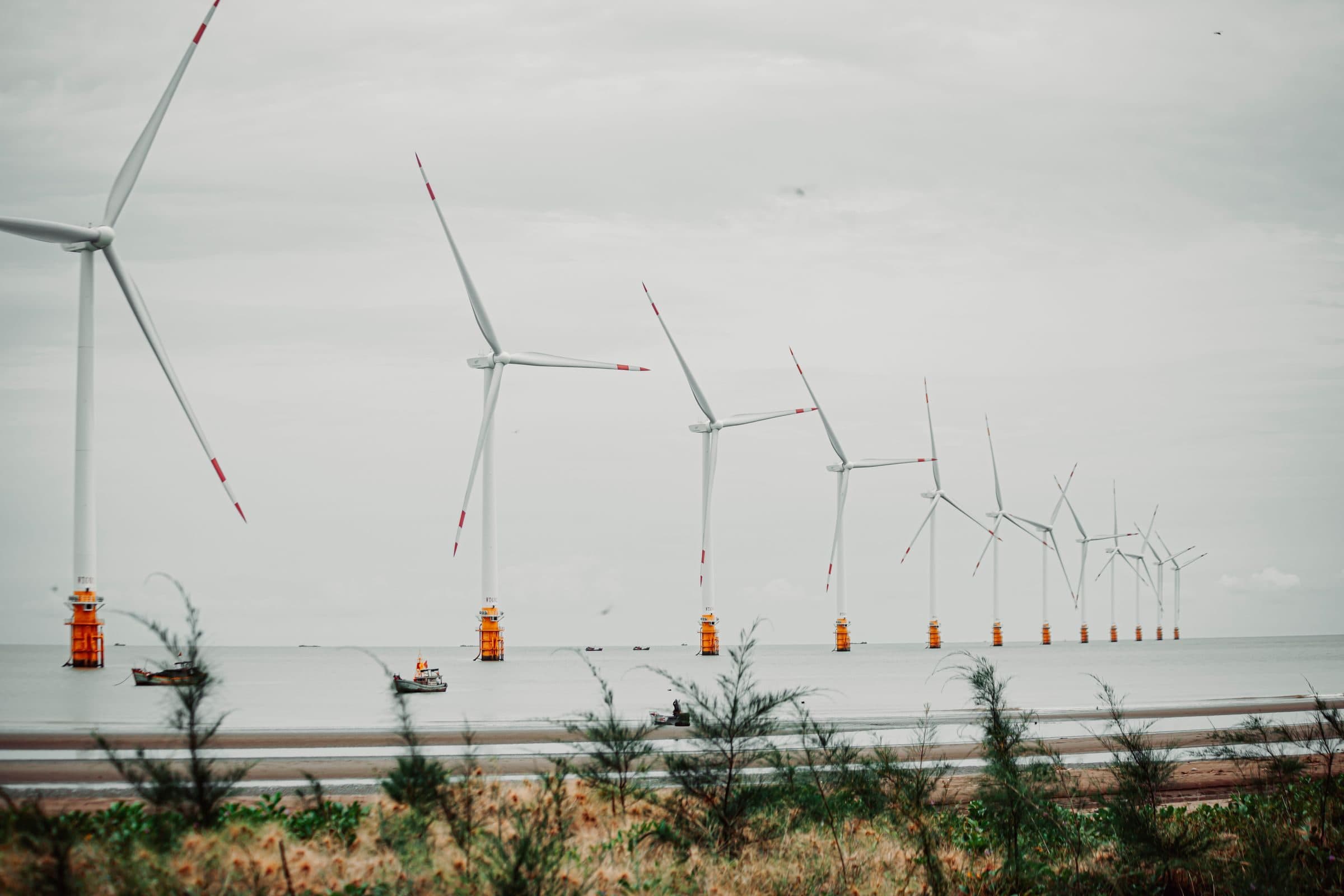
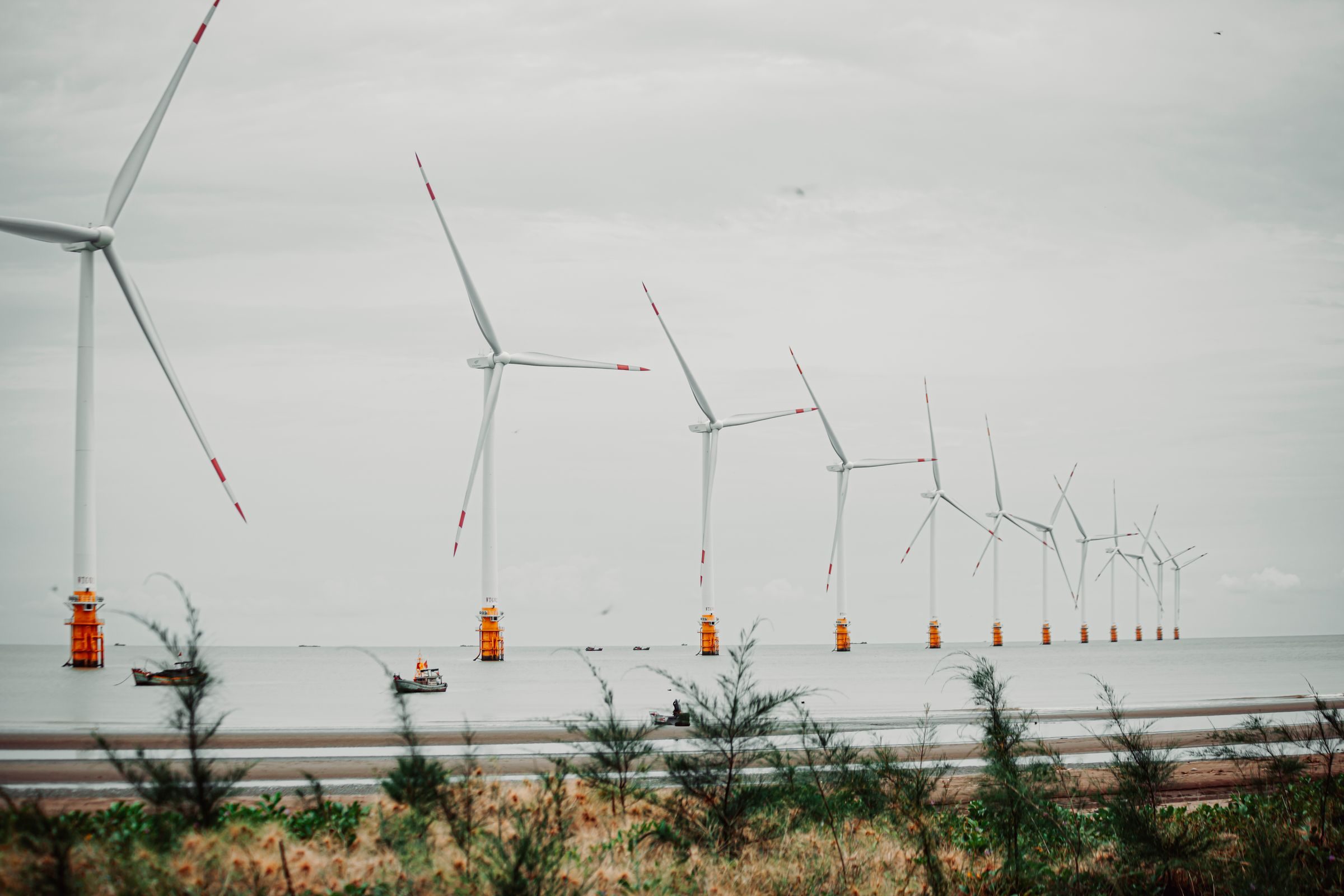
- Why is offshore harder than an onshore flight?
- Because almost every assumption an onshore flight rests on disappears. Launch is often from a moving vessel, there is no landing site within range, salt spray attacks the airframe, wind and sea state impose tight windows, and if the link drops there is no diversion surface over water. An aircraft that ditches is usually lost. All of that belongs in the risk assessment before it belongs in a quote.
- Does the drone replace the rope-access team on the blade?
- For capture, very largely. For repair, not at all. A flight delivers high-resolution imagery of the entire blade surface in a fraction of the time and with nobody hanging on a rope. But as soon as laminating, bonding or coating is required, people go back on the blade. The sensible sequence is therefore to fly, have it assessed, and send the rope team precisely where there is something to do.
- Who assesses the findings?
- Not us, and not the pilot. The flight delivers the capture; the engineering assessment of a blade or structural finding stays with the qualified inspector and the operator. A thermal finding is an indication of an anomaly, not a diagnosis, and is verified before any repair.
- How large is the asset base?
- As of 30 June 2026, Germany had 1,764 offshore wind turbines in operation with roughly 10.8 gigawatts, plus 65 foundations already installed without a turbine (Deutsche WindGuard, first half of 2026). Every one of them has blades, a tower, a transition piece and platforms above water, and a foundation below it. The air side of that is wedrone, the underwater side werob.
- Does wedrone fly itself?
- No. wedrone holds no aviation certificates of its own and conducts no flights. The flying is done by approved operators from the partner network. wedrone structures the mission, the approval path, the operator selection and the documentation, and stays manufacturer-independent.
- And below the waterline?
- Nothing flies down there. Foundation, scour protection, cable corridor and biofouling run on werob's underwater robotics, meaning ROV and AUV rather than aircraft. Offshore assets almost always need both, and the sensible route is to specify air and water together rather than buying them twice, separately.