Renting robots in nursing homes: costs and integration
Renting robots in care is not just a procurement process, but rather a procedural decision. werob delivers ready-to-use solutions within eight weeks that are directly integrated into the care stack.
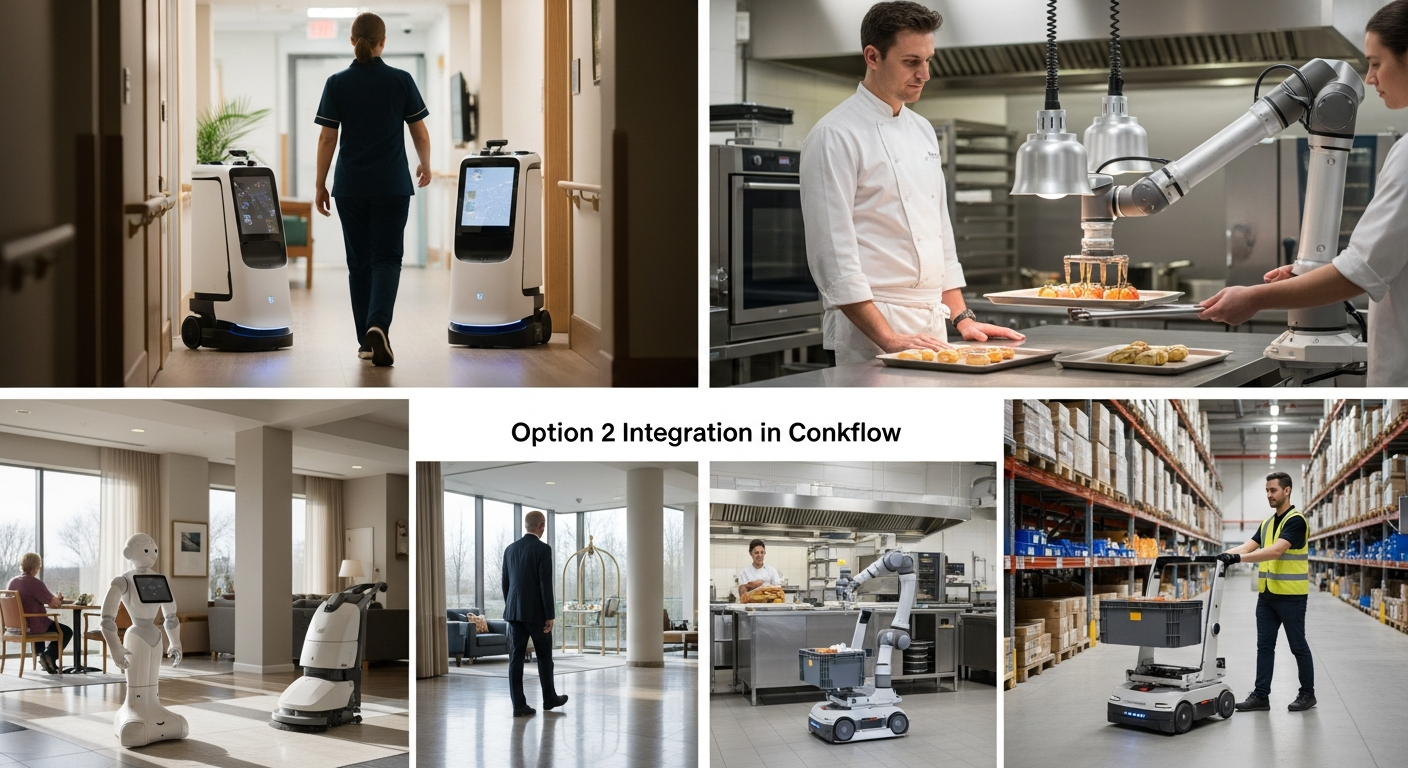
Station 2. 10:00 p.m. The night watch begins the medication round. Instead of heavy carts, an autonomous transport robot takes over the logistics between the central pharmacy and the living area. The nurse focuses entirely on the residents while the hardware silently navigates the hallways. This scenario is already an operational reality for customers like Korian Germany. werob does not act as a manufacturer, but rather as a system integrator that translates the workflow of a nursing home into a usable specification in 48 hours. With over 200 robots in live operation in eleven European countries, werob shows that robotics in care is now a question of integration and not just hardware acquisition.
Key Takeaways
- 192,000 euros in annual cost relief per location through automated medication rounds.
- 2Hardware-agnostic approach with access to over 44 OEM partners prevents vendor lock-in.
- 3Full compliance with the EU Machinery Regulation 2023/1230 included from January 2027.
The difference between rental and system integration
When operators think about renting a robot for a nursing home, the hardware is often at the forefront. But a robot alone does not solve personnel bottlenecks. werob is fundamentally different from individual OEM resellers or pure leasing providers. As a system integrator we translate the specific requirements of a facility into a technical solution. This means that it is not a specific model that is sold, but rather the result that counts.
Werob's platform is based on four levels. The Spec Engine converts your workflows into a precise specification within 48 hours. The system uses data from over 35,000 projects. In the second step, the supplier match, more than 44 OEM partners are checked against this specification. Whether a model from Keenon, Pudu or a humanoid robot from Apptronik is used depends solely on its suitability for your workflow. This hardware-agnostic approach prevents vendor lock-in and ensures you always use the most efficient technology.
A crucial factor is speed. While traditional consulting firms need months for discovery decks, werob delivers an offer within five days and puts the robot into active use in eight weeks. This is only possible because werob already has over 280 different robot models in its catalog that can be maneuvered and has the necessary connectors for the operator stack.
Economic efficiency: 92,000 euros in cost savings per location
The decision to use robotics in care must be justified from a business perspective. werob works with an outcome-only model. For you as the operator, this means: You only pay when the robot actually runs and takes on the defined tasks. There are no hidden list prices or high upfront investments that put a strain on the budget.
The verified practical figures prove the potential. With an automated medication round, the annual cost relief is 92,000 euros per location. This sum results from the savings in specialist hours that were previously spent on pure logistics activities. In the area of general transport, such as laundry or meals, the relief amounts to 71,000 euros per year. These values are not theoretical estimates, but are based on the live operation of 200 robots in Europe.
In addition to direct financial relief, the use of robots improves working conditions. In a Hamburg care facility, a humanoid robot is already being piloted in the twelfth week to support the staff with repetitive tasks. Reducing physical strain and regaining time for the actual care work are factors that can make the crucial difference in employee retention in times of skilled labor shortages.
Integration into the operator stack: PointClickCare and MatrixCare
A robot that acts as an isolated system creates additional effort instead of relief. The real strength of the werob platform lies in the prefabricated connectors. These enable direct integration into existing software systems such as PointClickCare or MatrixCare. When a robot completes a task, it is automatically documented in the system without the need for manual entry from staff.
This seamless connection ensures that the robotics fleet becomes part of the facility's digital ecosystem. The werob cockpit serves as the central control unit. It provides a four-dimensional traffic light system that monitors the status of hardware, infrastructure, regulatory and original specification in real time. This means operators maintain full control over their fleet at all times, regardless of whether it is a single location or a Europe-wide chain.
The connectors are not limited to care systems. werob also offers integrations with SAP EWM for logistics or Opera PMS for hotel-like structures within senior residences. This interoperability is a core differentiator that sets us apart from basic hardware vendors. The technology adapts to the process, not the other way around.
Regulatory and the EU Machinery Regulation 2023/1230
An often underestimated aspect when renting robots is legal protection. From January 20, 2027, the new EU Machinery Regulation 2023/1230 will be binding. This places significantly higher demands on the safety and conformity of robot systems, especially when they are used close to people. werob offers the necessary compliance path here.
As a system integrator werob takes responsibility for compliance with these standards. This includes not only the Machinery Regulation, but also specific standards such as ISO 13482 for personal care robots. Coordination with home supervision is also crucial, especially in Germany. werob has the experience from numerous projects to overcome these regulatory hurdles efficiently.
In addition, topics such as data protection in accordance with GDPR and cybersecurity in accordance with IEC 62443 are covered as standard. Since many robot manufacturers come from non-European countries, werob acts as a local partner who carries out the conformity assessments and ensures that the operation is legally compliant. Without this protection, operators risk costly shutdowns by regulatory authorities.
Hardware agnostics: The best robots for care
The market for robotics is developing rapidly. New models from manufacturers such as Keenon, Pudu, Boston Dynamics and Unitree are released every month. It is almost impossible for a nursing home operator to keep track of everything. werob solves this problem through hardware agnostics. The catalog contains over 44 OEM partners with a total of 280 different robot types.
In the field of service robotics, models such as the Keenon T9 are established for transporting food or medication. But werob is already looking further. With partners such as Apptronik or Figure AI, humanoid solutions that can take on more complex tasks are being evaluated. At werob, the decision as to which hardware to rent is based on objective data from supplier matching.
Should a manufacturer bring a better model onto the market or an existing system no longer delivers the desired performance, the hardware-agnostic approach enables a flexible change. You are not tied to a single manufacturer's roadmap. werob ensures that the most technologically and economically sensible hardware is always working in your house.
The path to live operation in eight weeks
Time is a critical factor in nursing. A project that spends months in the planning phase ties up resources without providing any benefit. werob radically accelerated the implementation process. It all starts with the Spec Engine. Within 48 hours of the first conversation, a finished specification will be available that describes exactly which tasks the robot will take on in which shift.
After supplier matching has identified the right partner, the offer will be made within five days. The actual delivery and integration into the company usually takes no longer than eight weeks. During this time, the connectors to the IT stack are activated and the staff on site is trained. The goal is a smooth transition in which the robot offers added value from day one.
This promise of speed is a central pillar of the werob model. It is based on standardized processes and a deep knowledge of operational processes in nursing. While others are still discussing pilot projects, werob robots are already in productive use and are sustainably relieving staff workload.
Outcome-only: A fair commercial model
Werob's commercial model is consistently geared towards the success of the customer. In contrast to classic rental or leasing contracts, where payment begins with delivery, werob relies on an outcome-only principle. This means that the commercial obligation only applies when the robot delivers the specified performance in real operation.
This model minimizes the risk for the operator. You don't have to release large amounts of investment without knowing whether the technology will work in your specific environment. werob bears the integration risk. This underlines the claim of not being a hardware seller, but rather a long-term partner for operational automation.
The billing is transparent and is based on the relief provided. Since werob acts as a system integrator, all costs for maintenance, software updates and support via the cockpit are already included. There are no hidden fees for using the connectors or fleet management. This planning security is a significant advantage for those responsible for budgets in the care industry.
Future security through the werob cockpit
Operating a robot fleet does not end with installation. To ensure long-term stability, continuous monitoring is necessary. The werob Cockpit offers a comprehensive solution for this. It not only monitors the charging status or position of the robots, but also analyzes in-depth performance data. For example, if a robot can no longer perform its tasks optimally due to a change in infrastructure - such as new furniture in the hallway - the system reports this immediately.
This proactive monitoring prevents downtime. The four-dimensional traffic light system provides information about whether there are problems at the hardware, WLAN infrastructure, regulatory requirements or process specification level. In this way, support can intervene in a targeted manner, often before the on-site staff even notices a disruption.
The cockpit also enables data-based optimization of processes. Operators can see exactly how many kilometers a robot has traveled and how many hours of specialist time were saved as a result. This transparency is the basis for scaling robotics to additional locations. With the goal of operating over 2,000 robots by 2028, werob offers the technological platform that grows with your requirements.
Conclusion: Robotics as a strategic decision
Renting robots for nursing homes is no longer a technological gimmick, but a strategic necessity to address the shortage of skilled workers. With cost savings of up to 92,000 euros per year and location, automation offers a clear return on investment. However, the decisive factor for success is not the choice of a single robot model, but the quality of the system integration.
werob, as a hardware-agnostic partner, offers the security of always having the best technology in use, integrated into the existing IT systems and legally secured by compliance with the EU Machinery Regulation 2023/1230. The quick path from specification in 48 hours to live operation in eight weeks makes werob the leading integrator in Europe. Start now and have your first specification drawn up to make operational relief in your company a reality.
FAQ
- How much does it cost to rent a robot for a nursing home?
- werob works with an outcome-only model. There are no fixed list prices in advance. You only pay when the robot delivers the specified performance in live operation. The costs are offset by the high annual relief of up to 92,000 euros per location.
- How long does it take to implement a robot?
- The process is optimized for speed: you will receive a finished specification within 48 hours, a quote after five days and the robot will be ready for use in your facility within eight weeks.
- Which IT systems are supported?
- werob offers ready-made connectors for common care systems such as PointClickCare and MatrixCare as well as for ERP systems such as SAP EWM and hospitality software such as Opera PMS or Mews.
- Is the use of robots in care legally safe?
- Yes, werob ensures compliance with all relevant standards, including ISO 13482 and the upcoming EU Machinery Regulation 2023/1230. Coordination with the home supervisor is also supported.
- Do I have to choose a specific manufacturer?
- No, werob is hardware agnostic. We rank over 44 OEM partners and 280 robot models against your specific needs to find the best solution for your workflow.
- Who takes care of the maintenance of the robots?
- The werob cockpit monitors the fleet live. Maintenance, updates and technical support are part of the integration package, so your on-site staff is not burdened with technical details.
Related reading
Robots in nursing homes: cost relief and operational safety
The use of robotics in inpatient care is no longer a vision of the future, but rather an economic necessity to relieve the burden on specialist staff. Find out how werob, as a system integrator, paves the way from workflow analysis to live operation in eight weeks.
17 June 2026Robots used in nursing homesRobots in nursing homes: efficiency and compliance
The use of robotics in care is no longer a vision of the future, but rather an economic necessity to relieve the burden on specialist staff. Find out how werob, as a system integrator, deploys ready-to-use solutions within eight weeks that achieve significant cost savings.
29 June 2026nursing home director roboticsNursing home director robotics: operational relief and ROI
The introduction of robotics in care often fails due to complex selection processes. werob shortens the path from requirements analysis to live operation to eight weeks and guarantees measurable cost reductions.
26 June 2026rent care robotsRenting Care Robots: Costs, Benefits, and System Integration
The decision to rent care robots is often the first step toward relieving specialist staff. But without the right software connection and regulatory protection, the hardware remains ineffective.
14 June 2026service robot retirement home costsService robots in nursing homes: costs and operational relief
The costs for service robots in care primarily depend on the integration and the selected operating model. Learn how werob eliminates financial risk through hardware-agnostic system integration and an outcomes-only model.
18 June 2026