Payback of robots in care: ROI analysis for operators
The payback of robots in care does not depend on the hardware, but on the integration into the workflow. Find out how you can save up to 92,000 euros per year through automated medication rounds and transport routes.
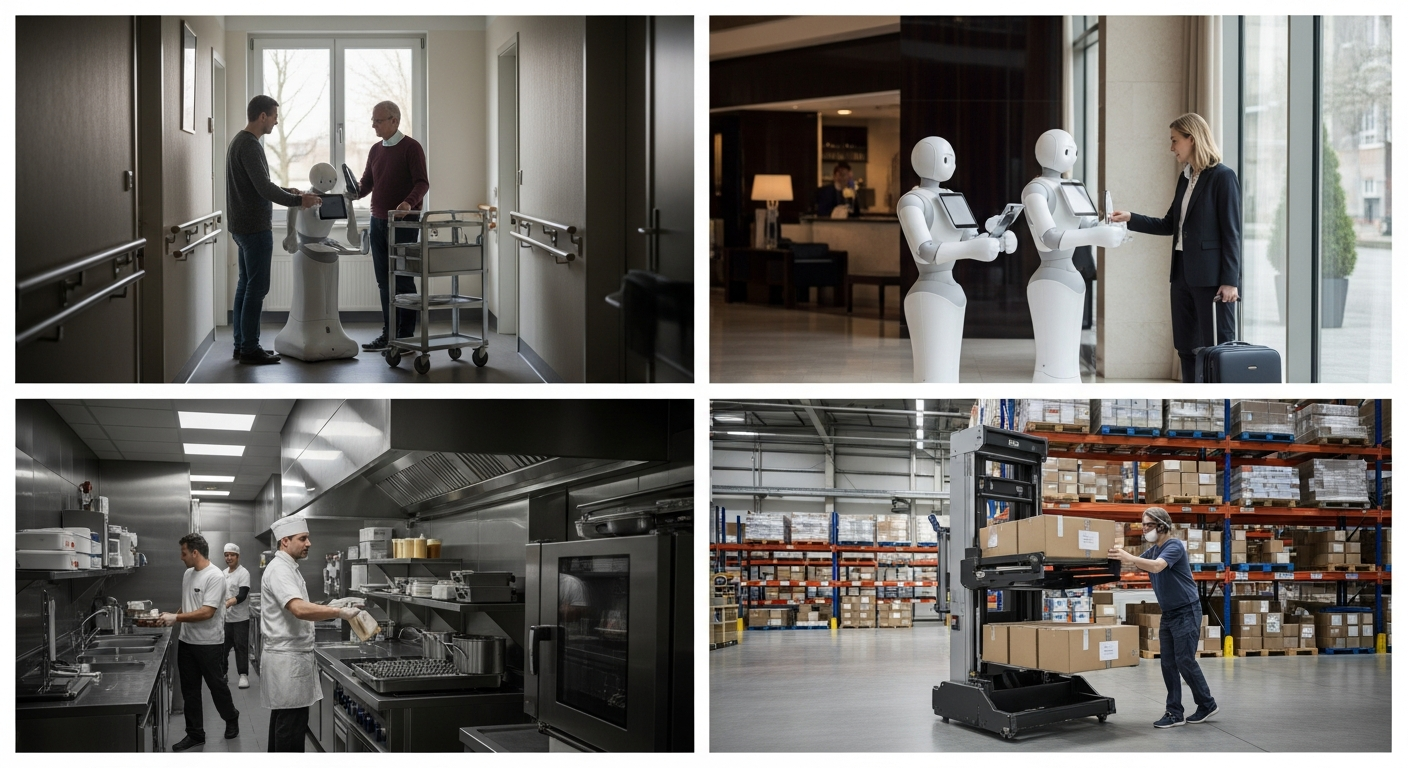
Station 3. 4:15 a.m. The night guard prepares the morning round of medication. Instead of manually pushing heavy carts through the hallways, an autonomous transport robot takes over the logistics between the pharmacy and the living area. The nursing staff concentrates on the residents while documentation takes place automatically in the background via the MatrixCare interface. This is not a pilot project, but rather everyday operations in over 200 werob live operations. The question of amortization has long been answered here: the economic benefit begins with the first successfully completed shift. In the modern care industry, robotics is no longer a technological experiment, but rather a business necessity to secure operating margins.
Key Takeaways
- 1An automated medication round reduces costs by 92,000 euros per year and location.
- 2The amortization is massively accelerated by werob connectors in systems such as PointClickCare and MatrixCare.
- 3The EU Machinery Regulation 2023/1230 makes a certified compliance path mandatory from January 2027.
The economic reality of care robotics: cost relief instead of visions
In the discussion about robotics in care, the mistake is often made of viewing the technology as an end in itself. However, only one key figure counts for the Director of Operations: the annual cost reduction per location. At werob, these calculations are based on real operating data from over 200 robots in live use. An automated medication round leads to a verified cost reduction of 92,000 euros per year and location. This sum results from the reduction of unproductive runtimes and the avoidance of errors during distribution.
Another essential factor is internal transport. Moving laundry, meals or waste ties qualified caregivers into tasks that do not provide any therapeutic added value. Here werob realizes a relief of 71,000 euros per year. The payback occurs as soon as the robot takes over the first full shift. By pursuing an outcome-only model, there is no need for high upfront investments, which would push the ROI into the distance. You only pay when the system is running productively. This shifts the economic logic from a risky CAPEX project to a plannable OPEX optimization.
Users also ask: How do you calculate the ROI for care robots? The calculation is made by comparing the monthly operating costs of the integrated system and the wage costs saved for unproductive auxiliary activities. With a relief of 92,000 euros annually, the system integration often pays for itself in the first quarter of live operation.
Spec Engine: From shift planning to specification in 48 hours
The biggest obstacle to amortization is usually a month-long discovery phase. Traditional consulting firms often need three to six months to create a concept. werob radically shortens this process. The Spec Engine translates your workflow into a usable robot specification within 48 hours. This system has been trained on over 35,000 projects and immediately recognizes which hardware configuration is optimal for your specific floor and shift schedules.
The speed of specification is a direct lever for profitability. Every month that a project spends in the planning phase is a month without cost relief. Thanks to the werob approach, the offer is fixed after just five days. The time until the first robot is in use is just eight weeks. This operational excellence ensures that the payback phase begins immediately and is not delayed by lengthy decision-making processes. The Spec Engine takes into account not only the hardware, but also the necessary infrastructure and regulatory requirements, which avoids later expensive adjustments.
Hardware agnostics: Why 44+ OEM partners ensure ROI
A common mistake in procurement is vendor lock-in. Anyone who commits to a single robot manufacturer early on loses the flexibility to react to technological leaps or price changes. werob is not a manufacturer, but a system integrator. We rank over 44 OEM partners against your specific requirements. Whether a model from Keenon, Pudu or a humanoid robot from Apptronik is the best choice depends solely on the performance metrics of your specification.
Werob's catalog contains over 280 different robot models that can be maneuvered. This hardware agnostic nature protects your investment. Should a manufacturer stop production or end software support, the werob platform enables a seamless change of hardware while workflow logic and integrations remain in place. This ensures long-term amortization across the entire automation life cycle. We select the hardware based on the best cost-benefit ratio for your specific use case, be it logistics, cleaning or direct resident support.
Connectors: Integration into PointClickCare and MatrixCare
A robot that works in isolation creates additional effort through manual data transfer. The true payback comes from integration into the existing software stack. werob supplies pre-built connectors for market-leading systems such as PointClickCare and MatrixCare. When a robot completes a round of medication, it is documented in real time in the care management system. This not only saves time, but also increases compliance and data security.
The seamless connection to SAP EWM or Opera PMS in related areas such as logistics or facility management ensures that the robot fleet acts as an integral part of the operational organization. Without these connectors, nursing staff would have to acknowledge the robot's work manually, which would partially negate the time saved. The werob connectors eliminate these interface losses. Users also ask: Which software integrations are important for care robots? The most important integrations are the connections to the electronic patient record (ePD) and duty scheduling to ensure that the robot is always where it is needed most.
Regulation as investment protection: EU Machinery Regulation 2023/1230
An often underestimated risk to amortization is regulatory changes. On January 20, 2027, the new EU Machinery Regulation 2023/1230 will become binding. Many robots on the market today do not yet meet these strict requirements. Anyone who invests in hardware today that will no longer be allowed to operate in 2027 risks a total loss. werob offers the necessary compliance path here. As a system integrator, we ensure that all solutions used comply with current and upcoming EU standards.
This includes not only physical security according to ISO 13482 for service robots, but also cybersecurity according to IEC 62443 and the requirements of the EU AI Act. Werob's live cockpit monitors the regulatory status of the entire fleet in real time. A 4-dimensional traffic light system signals immediately when adjustments to the infrastructure or software are necessary to maintain the operating license. This proactive approach protects operators from fines and business interruptions, which guarantees the economic stability of the project.
Outcome-only: The commercial model for maximum security
The traditional model of purchasing robots is unattractive for many care facilities due to the high initial investment and technical risks. werob breaks with this tradition with an outcome-only model. This means: You pay nothing until the robot is running productively in your company. This model perfectly aligns the interests of werob and the operator. Our goal is to get the system live as quickly and efficiently as possible.
There are no hidden list prices or expensive consulting fees for Discovery decks. The cost structure is transparent and linked to actual success. This massively lowers the barrier to entry for automation and accelerates the path to payback. Since werob takes over the entire operational level from specification to fleet management, the internal administrative effort for the operator is reduced to a minimum. Users also ask: How much does a care robot cost per month? Since werob bills based on results, the costs depend on the complexity of the workflow and the relief achieved, with the goal always being a significant net saving compared to conventional personnel costs.
Case study: Korian Germany and the path to cost relief
A concrete example of successful implementation is Korian Germany. In this project, a double-digit cost reduction was achieved in the first year. The key to success was not the selection of a specific robot model, but rather the consistent translation of the care processes into digital specifications by werob. By automating standardized transport routes, skilled workers were noticeably relieved, which in turn increased employee satisfaction and reduced fluctuation.
Another example is a nursing facility in Hamburg, where werob is successfully running the first humanoid pilot project in its twelfth month of operation. This shows that even complex tasks can be carried out economically through the correct integration and monitoring in the werob cockpit. These reference projects prove that the promised figures of 92,000 euros for medication rounds and 71,000 euros for transport tasks are not theoretical values, but are achieved in practice. Users also ask: Do nurses accept the robots? Experience at Korian shows that acceptance is extremely high as soon as employees realize that the robot can relieve them of annoying, physically difficult tasks and leave more time for actual care.
The 8-Week Path: Speed as an ROI Accelerator
Time is money - this old saying applies particularly to the amortization of automation projects. werob has standardized the process to such an extent that it only takes eight weeks from the first contact to the robot on the floor. This process is divided into clear phases: 48 hours until the finished specification by the Spec Engine, five days until the binding offer and finally the implementation and integration into the operator stack within two months.
This speed is only possible because werob can rely on ready-made connectors and an extensive database of 35,000 projects. We don't have to reinvent the wheel every time. While other companies are still in the planning phase, werob customers are already making their first savings. This time advantage of several months has a massive impact on the cumulative cost reduction over the first two to three years. The rapid scalability also makes it possible to roll out successful pilots to an entire group with multiple locations within a very short time.
Live Cockpit: Fleet management for lasting performance
The amortization does not end with commissioning. In order to secure ROI in the long term, the performance of the robot fleet must be continuously monitored. The werob Cockpit offers live fleet management with a 4-dimensional traffic light system. This monitors the hardware health, the stability of the infrastructure (Wi-Fi, elevator control), compliance with regulatory requirements and compliance with the original specification.
If a robot does not complete the expected number of trips or if there are increasing blockages in the hallways, the system detects this immediately. This enables proactive troubleshooting before failures that would impact profitability occur. The cockpit also serves as a central documentation point for home supervision and other supervisory authorities. The transparent representation of all activities makes proving that tasks have been properly delegated to the robot system child's play. This significantly reduces the administrative effort for the nursing service management and ensures the long-term acceptance and profitability of the solution.
FAQ
- How quickly does a robot in care pay for itself?
- With an annual cost reduction of up to 92,000 euros, the systems usually pay for themselves within the first year of operation, often even much faster.
- What specific tasks do the robots take on?
- The main tasks are logistics: medication rounds, transport of meals, laundry and waste as well as support with cleaning.
- Is werob a robot manufacturer?
- No, werob is a hardware-agnostic system integrator. We select the best solution for your specific workflow from over 44 OEM partners.
- What happens if there are regulatory changes?
- werob ensures the compliance path, especially with regard to the EU Machinery Regulation 2023/1230, which is binding from January 20, 2027.
- How much effort does the IT integration require?
- Thanks to pre-built connectors for PointClickCare, MatrixCare and SAP EWM, the integration effort is minimal and integrated into the 8-week implementation plan.
- Are there hidden costs in the werob model?
- No, werob works according to an outcome-only model. You only pay when the system is running successfully in your company.
Related reading
Care Robots in Practice: Operational Efficiency for Operators
The introduction of care robots often fails because of months-long discovery phases. werob shortens the path from workflow analysis to a ready-to-deploy fleet to eight weeks and secures regulatory compliance.
1 June 2026raas care robotRaaS care robots: Efficiency through system integration
Robotics as a Service (RaaS) transforms care from an investment-intensive hurdle into a scalable operating model. As a system integrator, werob provides the necessary infrastructure to productively integrate robots into everyday station life within eight weeks.
26 June 2026robotics platformRobotics platform for operations: integration instead of hardware
A modern robotics platform is much more than a control unit for individual machines. It acts as an operational layer that combines hardware agnostics, regulatory compliance and deep software integration in one system to realize measurable cost reductions.
5 July 2026care robot acceptanceCare robot deployments: why acceptance decides success
Discover why care robot deployments fail over staff acceptance rather than technical limits, and how operators can design successful robotic pilot projects.
27 August 2026Robot pilot project care inquiriesRequest robot pilot project care: Live operation in 8 weeks
A robot pilot project in care must not be an end in itself. Anyone who inquires today is looking for operational relief and legally secure processes. werob translates your requirements into a usable specification in 48 hours.
1 July 2026