Renting robots monthly: costs and models for operators
Monthly rental of robots offers operators financial flexibility without high investment risk. As a system integrator, werob enables deployment within eight weeks through manufacturer-independent integration and a purely results-oriented model.
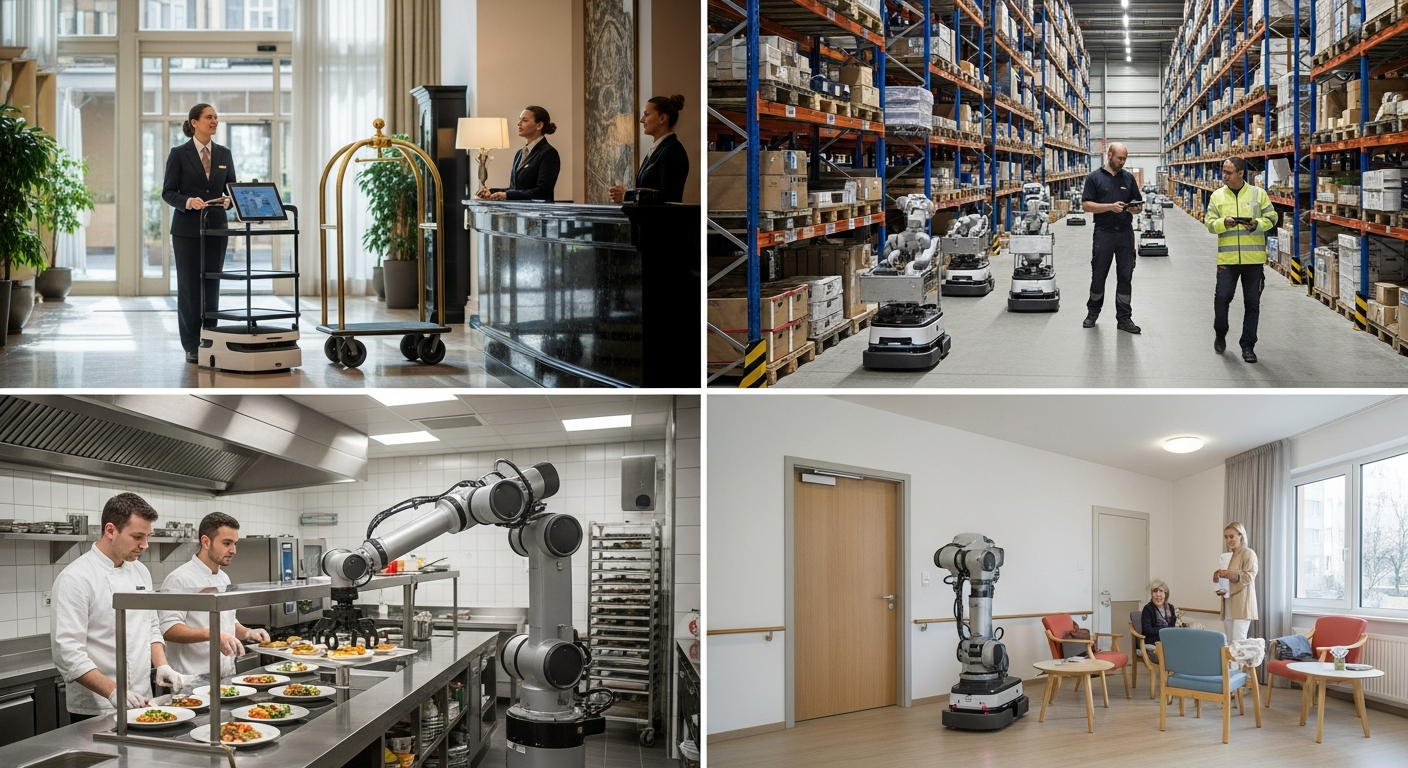
Station 2. 10:00 p.m. The night shift has just started. While the nurse completes the documentation, the transport robot is already delivering the medication carts for the next morning. This automated process saves 92,000 euros in personnel costs annually per location. No high initial investment was necessary for the operator. The decision was made to use a monthly model that bundles hardware, software and regulatory security. werob specified this specific workflow within 48 hours and put it into live operation after eight weeks. Today, over 200 such robots in eleven European countries are running under the control of the werob cockpit.
Key Takeaways
- 1Monthly rent transforms high investment costs (CAPEX) into predictable operating expenses (OPEX) without financial risk.
- 2The outcome-only model guarantees that costs are only incurred when the robot is productively integrated into the workflow.
- 3The EU Machinery Regulation 2023/1230 makes a certified compliance path mandatory for all operators from January 2027.
The end of high initial investments: CAPEX vs. OPEX
In the traditional procurement of automation solutions, operators have previously faced a massive hurdle: high investment costs (CAPEX) combined with technological risk. Anyone who buys a robot ties up capital and bears the sole risk of obsolescence. The rent robot monthly model transforms this structure into operating expenses (OPEX). This enables companies in the care, hotel or logistics sectors to immediately benefit from automation without burdening their balance sheets with high depreciation.
werob goes a decisive step further than classic leasing providers. The commercial model is outcome-only. This means you pay nothing until the robot actually runs in your company and fulfills the defined workflow. This approach completely eliminates the project risk for the operator. While conventional providers often quote list prices for hardware, werob focuses on reducing costs per location and year. In nursing, for example, the automation of medication rounds results in a reduction of 92,000 euros annually. This saving is in direct proportion to the monthly rental fee, ensuring ROI from the first day of live operation.
The Spec Engine: From workflow to rental in 48 hours
A main reason for the failure of robotics projects is the lengthy planning phase. Three to six months are standard in the industry for discovery phases and feasibility studies. werob shortens this process to 48 hours using the Spec Engine. The Spec Engine is a model trained on data from over 35,000 projects. It translates your operational requirements directly into a usable robot specification.
Instead of dealing with technical details such as sensor types or load capacities, you simply describe the shift plan, the floor and the task. The Spec Engine creates a digital action graph from this. This automated process ensures that the monthly rent is on a solid technical basis. Within five days you will receive a concrete offer that is tailored exactly to your workflow. After eight weeks, the robot is already in use. This speed is crucial to effectively address the shortage of skilled workers in industries such as nursing or hotels, where every unfilled position causes immediate costs.
Hardware agnostics: Why choosing from 44+ OEMs is crucial
If you decide to rent a robot on a monthly basis, you should never commit to a single manufacturer. The robotics market is developing rapidly. A model that is leading today may be technically obsolete in two years. werob acts as a hardware-agnostic system integrator and is not a reseller of a single OEM. In Supplier Match, over 44 OEM partners are tested against your specific requirements.
The catalog includes over 280 different robot models, from humanoid systems from manufacturers such as Apptronik or Figure AI to specialized service robots from Keenon or Pudu. This ranking system means you always get the hardware that is best suited for your use case. If your needs change or a more powerful model comes onto the market, the platform allows you to switch flexibly. This independence protects your investment and ensures that the monthly rental always delivers the highest operational benefit. werob takes care of all communication and coordination with the manufacturers, so that you only have one central contact person for your entire fleet.
Integration into the operator stack: connectors instead of isolated solutions
A robot that doesn't communicate with your existing systems is just an expensive toy. The monthly rental at werob includes access to ready-made connectors in the common operator stack. Whether PointClickCare or MatrixCare in nursing, Opera PMS or Mews in the hotel industry, or SAP EWM in logistics: the integration is seamless. These connectors ensure that the robot receives orders directly from your system and returns status reports in real time.
An example from the hotel industry illustrates the value: When a guest orders room service via the PMS, the robot is automatically activated, travels to the bar, takes the order and delivers it to the room. This integration enables cost savings of 112,000 euros per year in the room service area. Without this deep connection to the software infrastructure, employees would have to operate the robot manually, which would negate the gain in efficiency. werob ensures that automation becomes part of your digital ecosystem rather than remaining an isolated hardware solution.
Regulation as a rental requirement: EU Machinery Regulation 2023/1230
An often overlooked aspect of renting robots is legal compliance. From January 20, 2027, the new EU Machinery Regulation 2023/1230 will be binding. Many Asian OEMs currently do not have the necessary conformity assessments for the European market. Anyone who operates robots without this compliance risks high fines and the shutdown of the fleet. werob offers the necessary compliance path here.
As a system integrator werob takes responsibility for compliance with all regulatory requirements, including ISO 13482 for personal assistance robots and the GDPR for the processing of sensor data. The werob cockpit continuously monitors the regulatory status of each robot in the fleet. This is particularly critical in sensitive areas such as care (home supervision) or security (BewachVO). By renting monthly through werob, you outsource not only the technical but also the legal risk. You receive a turnkey solution that is already prepared for the requirements of 2027.
Cost relief in practice: verified figures
The decision to rent monthly is ultimately based on economic profitability. werob works with verified data from live operations to calculate cost relief per location and year. These numbers are not estimates, but are based on real usage scenarios at customers like Korian Germany.
| Industry / use case | Cost relief per year/location |
|---|---|
| Care: medication round | €92,000 |
| Care: Transport tasks | €71,000 |
| Hotel: room service | €112,000 |
| Hotel: bar/breakfast preparation | €54,000 |
| F&B: kitchen floor cleaning | 44,000 € |
| F&B: Washroom Tray Bot | €76,000 |
| Logistics: Yard Patrol | €68,000 |
| Golf: Ball Collection | €38,000 |
These savings usually exceed the monthly rental costs by far. In nursing, even a single robot for medication rounds significantly reduces the workload on specialist staff, who can then devote more time to direct resident care. In the hotel industry, automation of room service enables 24-hour operations without additional night staff.
The Cockpit: Live fleet management included
If you rent robots on a monthly basis, the hardware is only part of the solution. The real value lies in the operation. The werob cockpit is the central control level for your entire fleet, regardless of how many different types of robots you have in use. It uses a four-dimensional traffic light system to monitor the status of hardware, infrastructure (Wi-Fi/charging zones), regulatory and specification compliance.
If a robot has a problem, the cockpit often detects it before it disrupts operations. This proactive monitoring is part of the monthly service fee. You don't need to build your own technical team to manage the robots. The cockpit also provides detailed reports on the service provided and the cost reduction achieved. This visibility is critical for management to assess the success of the automation strategy and make informed decisions about scaling to additional locations. Currently, 200 robots are controlled in real time via the cockpit, with the goal of growing to 2,000 units by 2028.
The path to becoming a robot in eight weeks: The onboarding process
The process at werob is designed for maximum efficiency. It begins with an eight-step intake process in which you describe your workflow in your own words. You will receive the technical specification within 48 hours. After selecting the appropriate hardware through Supplier Match and configuring the necessary connectors, implementation takes place. The goal is to have a fully functional robot in your company within eight weeks.
This promise distinguishes werob from classic consulting firms, which often spend months creating strategy papers. At werob, the focus is on operational implementation. The commercial model ensures that your interests and those of the integrator are perfectly aligned: werob only makes money when the solution works for you. This focus on results has made werob the largest robotics systems integrator in Europe, with operational presence in countries such as Germany, France, Italy and the United Kingdom. Start your Spec today and transform your operations through intelligent automation.
FAQ
- How much does it cost to rent a robot monthly?
- There are no flat-rate list prices at werob. The model is designed to be outcome-only. The costs depend on the specific cost relief that the robot achieves at your location, for example 92,000 euros annually in the nursing medication round.
- How long does it take from inquiry to deployment?
- werob delivers a specification within 48 hours and a quote within five days. The robot is usually in productive use after eight weeks.
- Do I have to choose a manufacturer?
- No, werob is hardware agnostic. We rank over 44 OEM partners and 280 robot models against your specification to find the best solution technically and economically.
- Are maintenance and software updates included in the rent?
- Yes, the monthly fee covers the hardware, the use of the connectors in your software stack as well as live fleet management via the werob cockpit including all updates.
- What happens in the event of technical disruptions?
- The werob cockpit monitors the fleet in real time with a 4-dimensional traffic light system. Malfunctions are proactively identified and resolved by our support, often before they impact operations.
- Is the rent legally safe regarding the new EU regulations?
- Yes, werob offers the compliance path for the EU Machinery Regulation 2023/1230, which is binding from January 20, 2027, and ensures that all robots used comply with European standards.
Related reading
Security robot monthly rental: costs and ROI for security services
Financing security robotics often fails due to non-transparent leasing models. Find out how werob creates calculable cost advantages through hardware agnostics and direct system integration.
20 June 2026monthly costs care robotsMonthly Costs of Care Robots: ROI and Operational Relief
The calculation of care robots is often based on incomplete assumptions about hardware leasing. Learn how to achieve annual cost relief of up to 92,000 euros per site through deep integration into the operator stack.
14 June 2026rent humanoid robot priceRenting a Humanoid Robot - Price: Costs and ROI for Operators
Renting humanoid robots replaces high investment costs with calculable operating expenses. As a systems integrator, werob realizes the deployment of humanoids such as Apptronik Apollo or Unitree in eight weeks.
9 June 2026Humanoid Robot Price 2026: Costs and ROI for Operators
The acquisition of humanoid robots is shifting in 2026 from a capital cost question to a purely results-oriented operating model. werob analyzes price structures and shows how operators can enter automation without upfront investments.
9 June 2026Lease robot per monthLeasing robots per month: Efficiency through outcome models
Those who want to lease robots on a monthly basis are often looking for flexibility in operating costs. But pure financing solutions fall short if integration and compliance are missing. werob offers an outcome-only model that combines hardware, software and regulatory security.
2 July 2026