- Does the drone replace the mine surveyor?
- No, and in Germany that is a legal question rather than a technical one. Statutory mine surveying is reserved to the Markscheider, and no point cloud changes that. What the flight changes is frequency: a photogrammetric volume is available monthly or weekly, a formal survey is not. The two do not compete; they sit on different time scales. Anyone telling you otherwise is selling you a problem with the mining authority.
- How accurate is an aerial stockpile volume?
- With ground control points and sound photogrammetric processing, accuracy is at the centimetre level, which is enough for inventory reconciliation, progress and volume calculation. What matters more than absolute accuracy is repeatability: if you fly identically every month, the difference between two flights is more reliable than any single value. Two campaigns flown differently, by contrast, cannot sensibly be subtracted from one another.
- LiDAR or photogrammetry?
- For stockpiles and open pit surfaces, photogrammetry is usually enough and considerably cheaper. LiDAR earns its cost when vegetation is in the way and you need the ground beneath it, in poor light, or where steep highwalls have to be captured at a shallow angle. We decide that from your site, not from a brochure.
- What about dust, blasting and traffic in the pit?
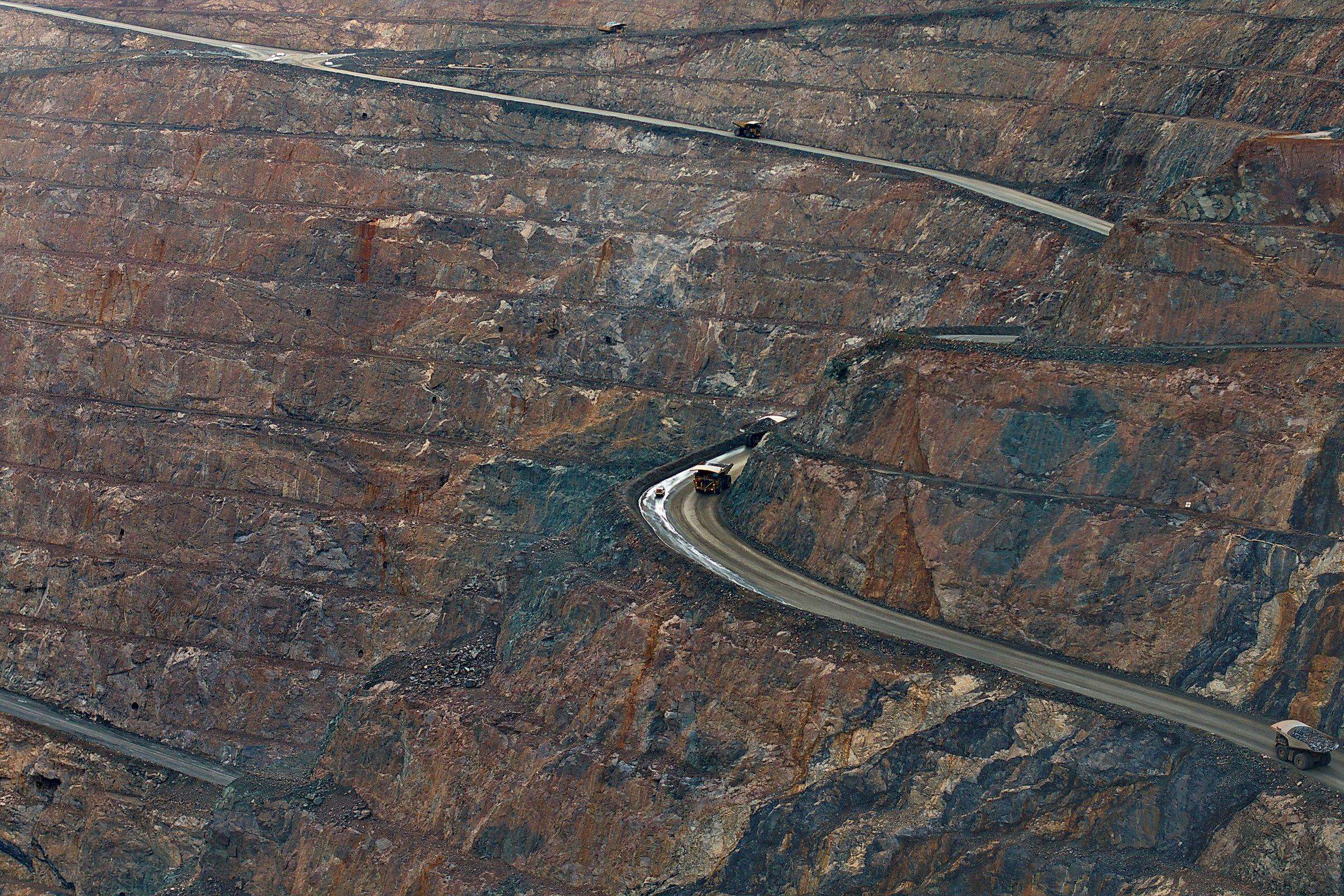
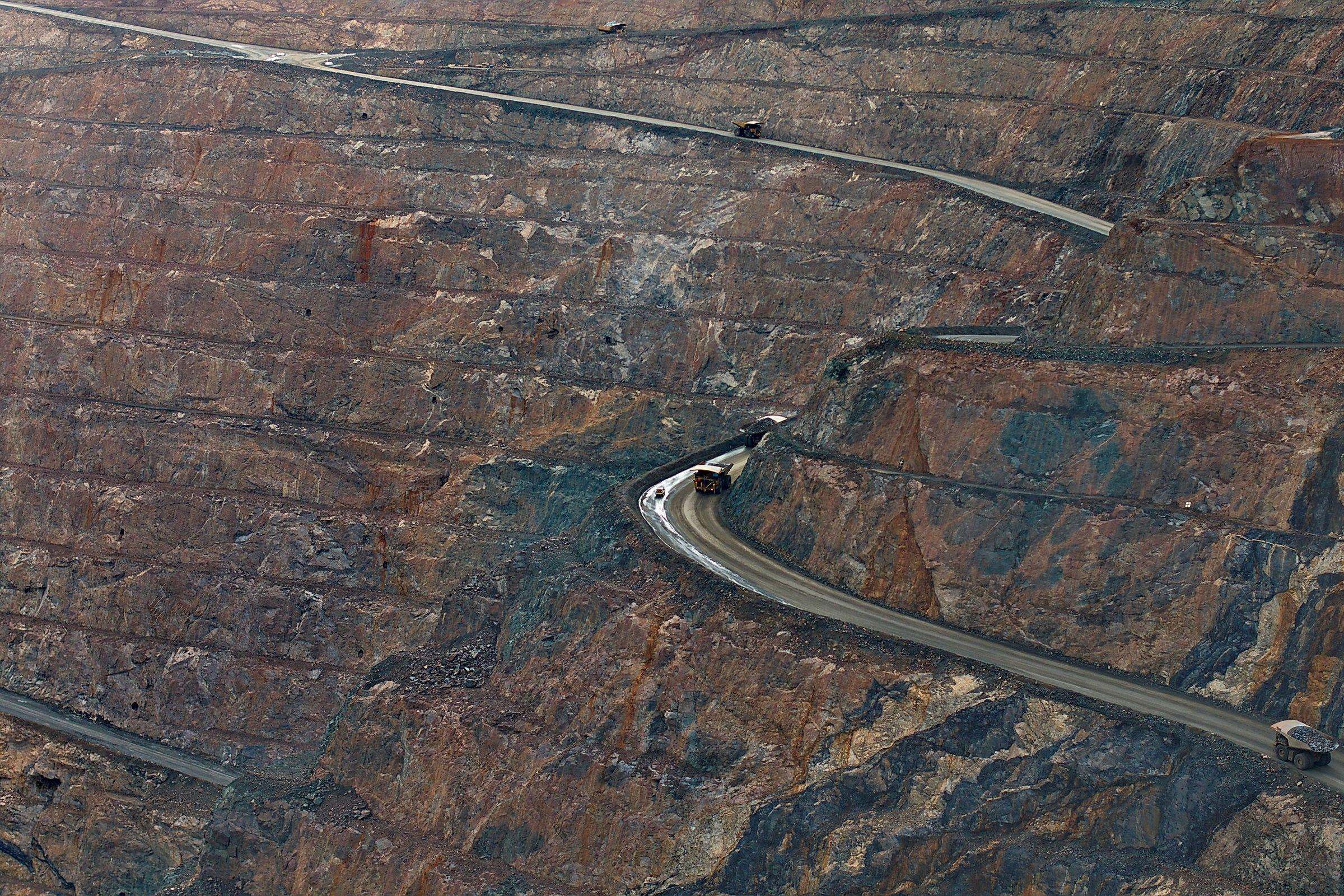
- Those are the real constraints, and they come before the technology. Nothing flies during the blast exclusion period, heavy dust produces poor photogrammetry, and heavy equipment routes determine where launch and recovery may sit. A flight profile that ignores these works in a brochure and not in production.
- How large is the sector in Germany?
- According to the industry association bbs, around 4,000 companies with 136,000 employees extract roughly 570 million tonnes of raw material a year. That is an association self-report and we label it as such. The point behind it is not in dispute, though: that is a very large number of extraction sites, all of which need surveying and monitoring on a regular basis.
- And underground?
- As a rule, nothing useful flies down there. Haulage, drilling, inspection of ventilation and conveyor drifts, and access to workings nobody can enter run on werob's ground robotics, with ATEX Group I equipment on top in firedamp environments. Air above ground, ground robots below it, and underwater robotics in flooded workings. All three are specified together.