The Role of a Robotics Systems Integrator in Modern Operations
A robotics systems integrator bridges the gap between raw hardware and operational ROI by managing the entire deployment lifecycle. This guide explores how werob uses a four-layer platform to deliver live robots in eight weeks.
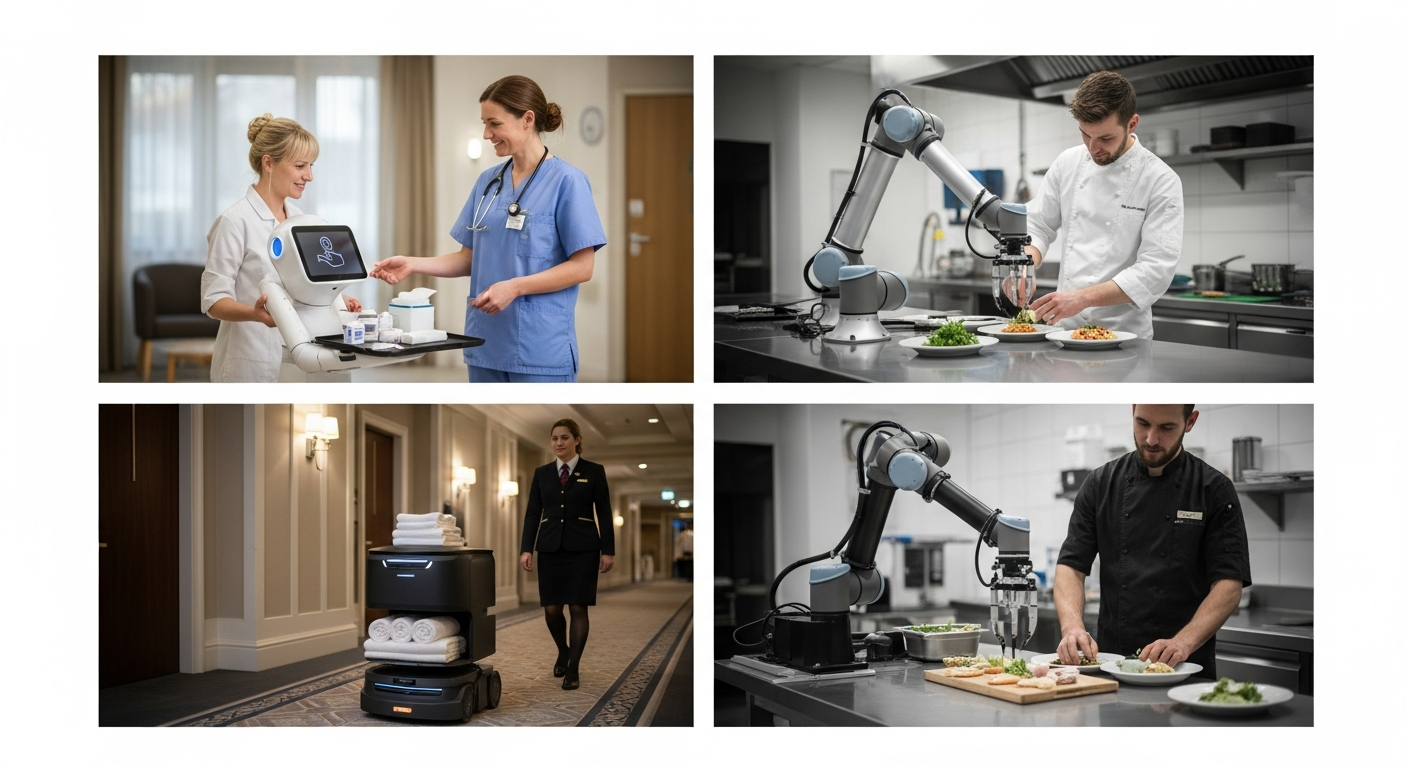
Floor 3. 03:00. The night shift at a Korian Deutschland senior living facility is at its most demanding point. A single nurse is responsible for the entire wing. In the hallway, a transport robot moves silently toward the service elevator, carrying 40 kilograms of soiled linens. This is not a pilot project or a technology showcase. It is a production environment where the robot is a utility, not a novelty. The nurse does not interact with the robot's code or its manufacturer. She interacts with a workflow that was translated into a technical specification 48 hours after the initial intake. This seamless operation is the result of a robotics systems integrator managing the friction between hardware capability and operational necessity.
Key Takeaways
- 1A robotics systems integrator is hardware-agnostic, ranking 44+ OEMs to find the best fit for a specific operational task.
- 2The EU Machinery Regulation 2023/1230 is a mandatory deadline for January 2027 that requires professional integrator oversight for compliance.
- 3Measurable cost offsets like €92k for senior living medication rounds provide a clear path to ROI without upfront list prices.
Defining the Robotics Systems Integrator
In the current industrial and service landscape, the bottleneck for automation is rarely the hardware itself. Manufacturers like Boston Dynamics, Keenon, and Pudu produce highly capable machines. However, these manufacturers are focused on the unit, not the operator's specific environment. A robotics systems integrator serves as the architect and general contractor for the deployment. werob does not manufacture robots. Instead, it functions as the operating layer that translates a senior living medication round, a hotel room service delivery, or a logistics yard patrol into a deployable action graph.
The integrator's value lies in removing the burden of discovery from the operator. Traditional consulting firms often spend three to six months producing discovery decks that lack technical execution. A systems integrator replaces this with a Spec Engine. At werob, this engine is trained on over 35,000 projects, allowing it to convert an operator's description of a shift into a deployable specification within 48 hours. This speed is critical for organizations that cannot afford long lead times while facing labor shortages and rising operational costs. By remaining hardware-agnostic, the integrator ensures that the operator is never locked into a single vendor's ecosystem, ranking 44+ OEM partners to find the exact match for the task at hand.
The Four-Layer Platform Architecture
Successful robotics deployment requires more than just unboxing a machine. It requires a structured platform that manages the complexity of the fleet. werob operates through four distinct layers. The first is the Spec Engine, which handles the intake of the operator's workflow. It looks at the shift, the floor plan, and the specific task to create a technical blueprint. The second layer is the Supplier Match. With a catalogue of 44+ OEMs and 280 different robots, this layer ranks hardware based on performance, regulatory compliance, and cost-effectiveness for the specific use case.
The third layer consists of Connectors. A robot that cannot talk to the existing software stack is a liability. werob provides pre-built integrations into major operator platforms such as PointClickCare, MatrixCare, Opera PMS, Mews, Toast, and SAP EWM. These connectors allow for automated task triggering and data logging without manual intervention. The final layer is the Cockpit. This is the live fleet management interface that uses four-dimensional traffic lights to monitor hardware health, infrastructure connectivity, regulatory status, and task adherence. This architecture allows werob to move from intake to a live robot on the floor in exactly eight weeks, a timeline that is significantly faster than the industry norm of six to twelve months.
Economic Impact and Cost Offsets
The primary driver for robotics integration is the measurable offset of operational costs. In the senior living sector, a medication round robot can generate a cost offset of €92,000 per site per year. This is achieved by freeing up qualified nursing staff from the manual transport of carts, allowing them to focus on direct resident care. Similarly, transport robots in these facilities provide an additional €71,000 in annual savings. These figures are not theoretical projections but are based on live operations across 200 robots currently deployed in 11 European countries.
The hospitality and F&B sectors see even higher returns. A hotel room service robot can offset €112,000 per year, while automation in bar and breakfast preparation accounts for €54,000. In food and beverage chains, a tray-bot in the dishroom provides a €76,000 offset, and automated kitchen floor cleaning adds another €44,000. For logistics and security, the numbers remain compelling. A yard patrol robot offsets €68,000, and retail security patrols save €58,000 annually. By focusing on these concrete numbers, a systems integrator shifts the conversation from capital expenditure to a clear outcome-only commercial model where the operator pays nothing until the system is running and delivering value.
Navigating the Regulatory Landscape
Compliance is the most significant hurdle for robotics in Europe. The EU Machinery Regulation 2023/1230 becomes mandatory on January 20, 2027. This regulation places strict requirements on conformity assessments, particularly for robots manufactured outside the European Union. A robotics systems integrator acts as the compliance pathway, ensuring that every machine in the fleet meets these upcoming standards. This includes adherence to ISO 13482 for personal care robots, which is vital for senior living and hospitality environments where robots operate in close proximity to humans.
Beyond machinery regulations, integrators must manage a complex web of local and sector-specific rules. In Germany, the Heimaufsicht regulates robot deployment in care facilities, while the BewachVO applies to autonomous security patrols. Data privacy is managed through strict DSGVO (GDPR) compliance, ensuring that camera and sensor data are handled securely. Furthermore, networked fleets must meet IEC 62443 standards for industrial cybersecurity. werob builds these compliance checks into the Cockpit, providing an automated audit trail that protects the operator from regulatory risk. This built-in compliance is a core differentiator that single-OEM resellers often cannot provide.
Hardware Agnosticism and OEM Ranking
The robotics market is fragmented, with hundreds of manufacturers specializing in different niches. An operator attempting to navigate this alone faces significant vendor lock-in risk. A systems integrator solves this by maintaining a hardware-agnostic stance. werob ranks 44+ OEM partners, including leaders in humanoids like Boston Dynamics, Apptronik, and Unitree, as well as service robot specialists like Keenon and Pudu. This ranking is not based on brand preference but on how well the hardware matches the specific requirements of the operator's task graph.
This approach allows for multi-OEM fleets managed through a single interface. For example, a large resort might use one brand for room service, another for floor cleaning, and a third for grounds mowing. Without an integrator, the resort would have to manage three different software platforms and three different maintenance contracts. werob unifies these into the Cockpit, providing a single point of truth for the entire fleet. This flexibility also future-proofs the operation. If a new, more efficient robot enters the market, the integrator can swap the hardware while keeping the existing software connectors and workflows intact. This decoupling of hardware and software is essential for long-term scalability.
Integration with the Operator Stack
A robot that operates in a vacuum is of limited use. To achieve maximum ROI, the robot must be integrated into the existing digital infrastructure of the business. This is where the Connector layer of the systems integrator becomes vital. In senior living, this means direct integration with PointClickCare or MatrixCare to sync medication schedules and resident locations. In the hospitality sector, connecting to Opera PMS or Mews allows robots to autonomously navigate elevators and deliver items to the correct guest rooms based on real-time check-in data.
For logistics and retail, the integration often involves SAP EWM or Genetec for security and inventory management. These pre-built connectors eliminate the need for expensive, bespoke software development projects that typically plague robotics pilots. By using standardized APIs and the ROS-2 framework, werob ensures that the robot becomes a functional extension of the existing ERP or PMS. This level of integration allows for automated reporting and performance tracking, which is visible in the live fleet cockpit. The ability to see exactly how many tasks were completed and the associated cost offset in real-time is what transforms a robotics project into a core business process.
The Outcome-Only Commercial Model
Traditional robotics procurement involves high upfront costs and significant risk for the operator. If the robot fails to perform as expected, the operator is left with expensive, idle hardware. A robotics systems integrator like werob changes this dynamic through an outcome-only commercial model. Under this model, the operator pays nothing until the robot is live on the floor and performing the specified tasks. This aligns the incentives of the integrator with those of the operator, ensuring that the focus remains on operational success rather than hardware sales.
This model also simplifies the budgeting process for operations directors. Instead of navigating complex capital expenditure requests, they can treat robotics as an operational expense tied directly to the cost offsets achieved. There are no hidden list prices or surprise maintenance fees. The integrator handles the hardware procurement, the regulatory compliance, and the technical integration as part of the service. This approach has allowed werob to scale to 200 robots across 11 countries, with a target of 2,000 robots by 2028. It lowers the barrier to entry for organizations that need automation but are wary of the technical and financial risks associated with traditional procurement.
Deployment Speed: From Spec to Live in 8 Weeks
Speed is a critical factor in modern operations. A labor shortage in a care facility or a hotel cannot wait for a year-long implementation cycle. werob has optimized the deployment process to hit a strict eight-week timeline. This begins with the 48-hour spec promise. Once the intake is complete, the Spec Engine generates the technical requirements, and the Supplier Match identifies the best hardware. A formal quote is delivered within five days. This rapid front-end process eliminates the months of discovery that typically stall robotics projects.
The remaining weeks are focused on site preparation, software integration, and compliance. Because the connectors to platforms like Toast or Mews are pre-built, the software setup is a matter of configuration rather than development. The integrator manages the logistics of shipping and on-site setup, ensuring that the robot is calibrated for the specific environment. By the eighth week, the robot is operational, and the staff is trained on how to interact with it via the Cockpit. This high-speed deployment model allows organizations to realize cost offsets almost immediately, providing a fast path to ROI that is unmatched in the industry.
The Future of Humanoid Integration
While service and industrial robots handle specific tasks today, the next frontier for systems integrators is the deployment of humanoids. werob is already leading this transition, having deployed the first humanoid pilot in a Hamburg senior living facility, which reached its 12th week of operation in May 2026. Humanoids from partners like Apptronik, Figure AI, and Neura Robotics offer the potential for even greater flexibility, as they can navigate environments designed for humans and use the same tools as staff.
The role of the integrator remains the same for humanoids: translating complex workflows into actions the robot can perform safely and efficiently. The integrator manages the high-risk AI categories defined by the EU AI Act and ensures that these advanced machines meet all safety standards for human proximity. As humanoid technology matures, the hardware-agnostic platform allows operators to integrate these machines into their existing fleets seamlessly. The integrator ensures that whether it is a simple tray-bot or a sophisticated humanoid, the machine is always working toward a measurable operational outcome.
FAQ
- What does a robotics systems integrator do?
- A robotics systems integrator translates an operator's manual workflow into a technical specification, selects the best hardware from various manufacturers, integrates it into existing software stacks, and manages the live fleet for compliance and performance.
- How long does it take to deploy a robot with werob?
- werob provides a specification within 48 hours, a quote within five days, and a live, integrated robot on your floor within eight weeks.
- Is werob a robot manufacturer?
- No, werob is a hardware-agnostic systems integrator. It partners with over 44 OEMs like Boston Dynamics and Keenon but does not manufacture its own hardware.
- What software can werob robots integrate with?
- werob has pre-built connectors for major platforms including PointClickCare, MatrixCare, Opera PMS, Mews, Toast, Lightspeed, GolfNow, Genetec, and SAP EWM.
- What is the EU Machinery Regulation 2023/1230?
- It is a mandatory regulation taking effect on January 20, 2027, that governs the safety and conformity of machinery, including robots, within the EU. werob provides the compliance pathway for this regulation.
- How does the outcome-only commercial model work?
- Under the outcome-only model, operators do not pay for the robotics system until it is fully operational and performing the tasks defined in the specification.
Related reading
The Largest Systems Integrator for Robotics in Europe
Robotics is no longer about the machine; it is about the integration. Discover how the world's largest systems integrator translates complex workflows into live robot fleets across 11 countries.
3 July 2026counter drone systems explained c uav detection defenseCounter-Drone Systems Explained: C-UAV Detection & Defense
Discover how C-UAV and C-UAS systems protect airspace through advanced detection, tracking, and mitigation technologies to secure critical infrastructure.
6 August 2026counter drone systems for critical infrastructure and eventsCounter-drone systems for critical infrastructure and events
Evaluate C-UAS hardware, navigate complex airspace regulations, and integrate counter-drone systems to secure critical infrastructure and large events.
6 August 2026bricklaying robot masonry constructionBricklaying Robots 2026: Fastbrick Systems on Site
Evaluate masonry robotics for construction in 2026. Discover what truck-mounted systems like Fastbrick's Hadrian X actually deliver on real job sites.
21 August 2026uas defense detection tracking and mitigation methodsUAS defense: detection, tracking, and mitigation methods
Explore how modern Counter-Unmanned Aircraft System (C-UAS) technology integrates radar detection, optical tracking, and non-kinetic mitigation methods.
6 August 2026