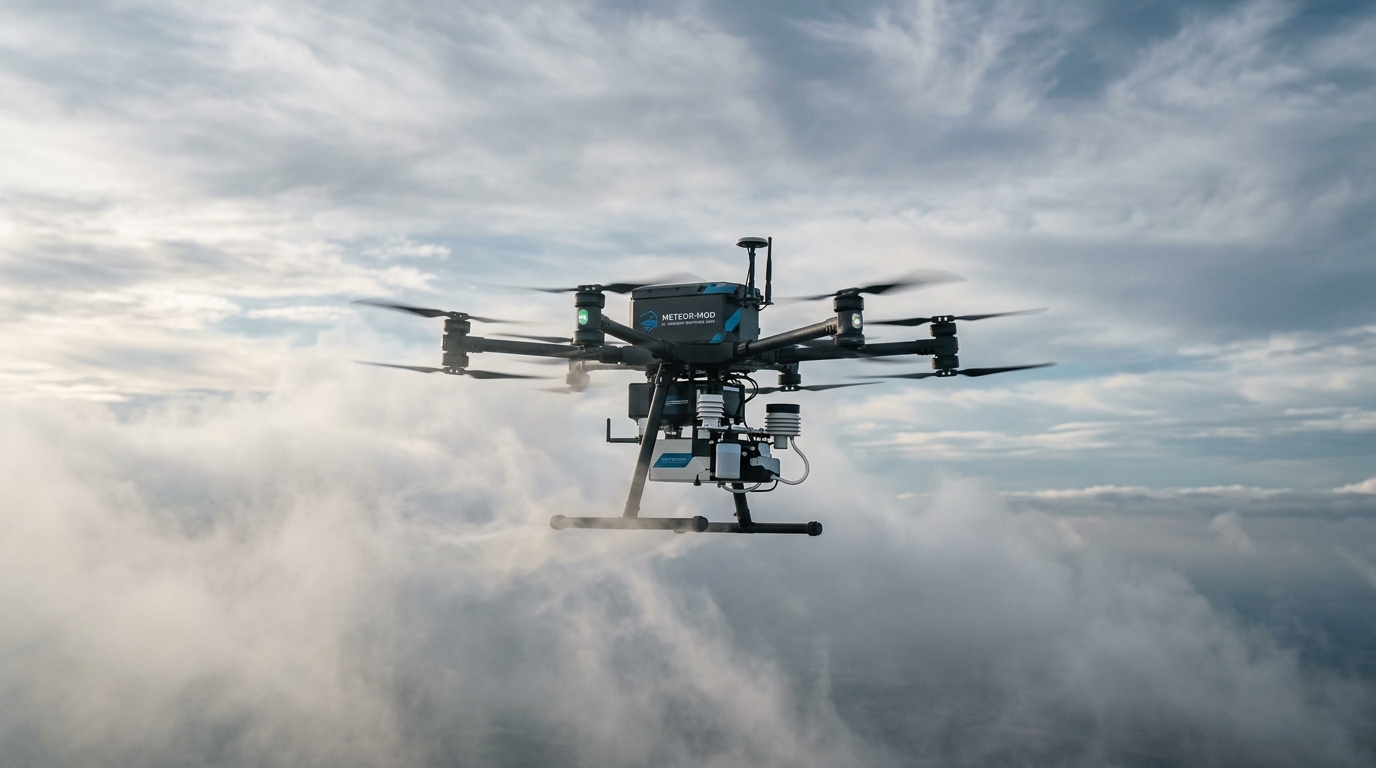
Cloud Seeding with Drones: Sourcing and Managing Precision Weather Modification Operations
Discover how drone-enabled cloud seeding is integrated for drought response. Learn about EU drone regulation compliance and multi-partner operations.
A sober and factual exploration of drone-based cloud seeding, detailing how integrated drone fleets can assist in drought response without overhyping efficacy.
Key Takeaways
- 1According to a 2024 US GAO report, studies estimate that cloud seeding can enhance precipitation by 0 to 20 percent under viable conditions.
- 2Drone operations in Europe must comply with EU regulation 2019/947, requiring specialized SORA risk assessments for cloud seeding.
- 3As an integrator, wedrone does not run seeding directly but coordinates specialized partners using a manufacturer-independent approach.
- 4Operators can manage complex multi-partner cloud seeding missions in real time using a unified software interface like the Cockpit.
The Evolution of Cloud Seeding and the Rise of Drone Technology
Weather modification efforts have traditionally relied on crewed aircraft to disperse glaciogenic or hygroscopic materials, such as silver iodide or dry ice, into targeted cloud formations to stimulate precipitation. While these traditional systems have served as a baseline for atmospheric research for decades, they present notable operational limitations. Crewed flights face severe weather safety constraints, high pilot risk, and substantial mobilization costs, making rapid or localized response to developing drought conditions highly challenging for regional authorities.
Transition to Autonomous Flight Systems
The rise of uncrewed aerial vehicles (UAVs) offers a localized and flexible alternative for municipal and environmental authorities. Uncrewed systems allow for targeted dispersion at lower operational altitudes without risking human crews. By utilizing pre-programmed flight profiles and integrated sensor payloads, drones can execute missions under meteorological conditions that would keep crewed aircraft grounded. This transition enables water authorities and agricultural operators to coordinate flexible, tactical deployments to counter localized drought patterns.
| Operational Dimension | Crewed Aircraft Seeding | Drone-Based Seeding |
|---|---|---|
| Operator Safety Risk | High (crews fly in severe turbulence) | Negligible (fully uncrewed systems) |
| Targeting Precision | Regional (coarse-grained altitude flight paths) | High (localized, variable low-altitude positioning) |
| Deployment Flexibility | Low (long pre-flight prep and airport logistics) | High (rapid setup from local launch points) |
| Fuel and Flight Footprint | Substantial environmental footprint | Lower localized operational footprint |
As an independent systems integrator, wedrone does not operate cloud seeding hardware or manufacture seeding substances directly. Instead, we take drone deployments from an initial technical use case to standardized, routine operations via structured models like Drone-as-a-Service. By acting as a manufacturer-independent partner, we coordinate specialized technology providers, regulatory specialists, and meteorological services to deliver cohesive solutions for environmental authorities and municipalities.
Managing these complex missions requires strict compliance with aviation laws. Every operation coordinated through the systems integrator is governed under the EU drone regulation 2019/947, which is handled alongside specialized certified partners. Operations, telemetry, and safety-critical checklists are consolidated inside our unified robotics platform, specifically utilizing the werob Platform to view operational data in a centralized monitoring dashboard known as the Cockpit. This ensures that while we maintain a sober and realistic view of weather modification technology, specifically excluding any efficacy or precipitation success guarantees, the operational risk, flight planning, and regulatory compliance are entirely verified and audit-ready.
Evaluating Efficacy: What the Science Says About Precipitation Limits
When assessing weather modification, municipal planners, environmental authorities, and agricultural operators must approach the technology with realistic expectations. Cloud seeding is not a definitive cure for drought or water scarcity, but rather a supplementary tool. The scientific community emphasizes that artificial precipitation depends entirely on pre-existing atmospheric conditions. If the air lacks sufficient moisture, or if cloud structures are not already present, seeding agents cannot initiate rainfall. Every potential deployment must begin with the understanding that weather modification operates within strict physical boundaries, and outcomes are highly variable depending on local geography and shifting seasonal patterns.
Scientific research indicates that successful cloud seeding typically yields a precipitation increase ranging from 0 to 20 percent, with many localized studies observing average increases of 5 to 15 percent under optimal conditions. However, these figures are not guaranteed baselines. In some meteorological environments, the actual increase may be zero. The process relies on introducing nucleating agents, such as silver iodide or salt particles, to encourage condensation, but this reaction is highly sensitive to external factors. If cloud temperatures, updraft velocities, or droplet sizes fall outside specific narrow ranges, the seeding agent simply disperses without producing any measurable rain.
Environmental Variables Influencing Precipitation Outcomes
To understand why artificial rain cannot be guaranteed, it is necessary to examine the meteorological factors that govern cloud dynamics. A successful seeding event requires a precise alignment of natural forces, making routine planning highly complex. The following primary environmental variables directly determine whether seeding agents can successfully trigger precipitation:
- Ambient atmospheric humidity, which must be high enough to sustain droplet growth without immediate evaporation
- Cloud top temperatures, which must remain within specific supercooled ranges to allow ice crystal formation
- Local wind vectors and updrafts, which dictate whether the seeding agents remain within the cloud target zone long enough to react
- Existing droplet size distribution, as clouds with too many tiny droplets may resist the coalescence required to form heavy raindrops
Because of these complex atmospheric interactions, isolating the precise impact of a single seeding mission remains incredibly difficult. Since natural weather patterns are highly dynamic, establishing a reliable baseline of what would have rained without intervention is an ongoing scientific challenge. Consequently, no credible operator can offer an efficacy or success guarantee. To address this operational uncertainty, wedrone, the dedicated drone unit of werob, approaches weather topics with a strictly factual, risk-managed methodology. As a manufacturer-independent systems integrator, wedrone does not operate cloud seeding directly, but rather coordinates specialized partners to take complex drone applications from a theoretical use case to a routine, compliant operation.
By working with a manufacturer-independent partner network, the werob Platform matches public authorities and agricultural companies with the exact technical hardware and aerial specialists needed for environmental monitoring. Every coordinated mission is structured to comply fully with the EU drone regulation 2019/947, ensuring all flights by specialized partners are legally verified and safely managed. While we do not guarantee precipitation success, we ensure operational predictability. Operators can monitor the entire deployment, track flight paths, log mission data, and manage regulatory documentation in one unified monitoring dashboard using our specialized Cockpit software. This structured approach under the Drone-as-a-Service model replaces experimental uncertainty with rigorous operational routine.
Navigating the Regulatory Framework Under EU Drone Regulation 2019/947
Operating weather-modification drones, such as those designed for aerosol dispersal to counter drought, falls under a rigorous legal regime in Europe. Under Commission Implementing Regulation (EU) 2019/947, any drone operation that deviates from basic visual line of sight or involves dispersing payloads cannot be conducted in the Open category. Instead, operators, municipalities, and environmental authorities must look to the Specific category. This framework addresses medium-risk operations by requiring a formal operational authorization from the relevant National Aviation Authority (NAA) before any flights can begin.
The Specific Operations Risk Assessment (SORA)
The core mechanism for obtaining authorization in the Specific category is the Specific Operations Risk Assessment (SORA) methodology developed by the European Union Aviation Safety Agency (EASA). A SORA is not a simple checklist; it is a systematic, multi-step safety analysis that evaluates both the ground risk and air risk of the proposed operation. For weather-modification missions, this assessment must account for the weight of the aircraft, the payload materials, and the environmental conditions of the flight area.
- Intrinsic Ground Risk Class (GRC): Evaluating the drone size and the density of the population or infrastructure on the ground.
- Initial Air Risk Class (ARC): Assessing the likelihood of encountering other airspace users, especially since meteorological operations often require flying at varying altitudes or near cloud layers.
- Tactical Mitigation Performance Requirements (TMPR): Detailing how the crew will detect and avoid other airspace users to reduce air collision risk.
- Operational Safety Objectives (OSOs): Demonstrating the technical integrity of the unmanned system, including secure communication links and emergency recovery systems.
Navigating this complex regulatory landscape requires deep expertise. As a manufacturer-independent systems integrator based in Hamburg, wedrone does not operate these specialized weather-modification missions directly, nor does the platform promise specific precipitation results. Instead, our team translates operational concepts into routine, compliant workflows by coordinating a network of specialized, certified partners. Using tools like the Spec Engine, we help define ROS-compatible specs and match public or private operators with hardware OEMs that meet rigorous regulatory standards.
Operational Control via the Cockpit
Once authorizations are secured, coordination during multi-partner operations becomes paramount. Under the EASA framework, maintaining oversight of pilot training, hardware readiness, and compliance logs is mandatory for safe execution. The Cockpit dashboard addresses this by integrating real-time traffic lights across regulatory, hardware, and infrastructure dimensions. This unified interface allows municipalities and authorities to monitor complex, multi-party drone operations under a single, highly structured operational umbrella, ensuring every routine flight adheres strictly to its approved SORA profile.
Sourcing and Setup: Bringing Custom Drone Fleet Specifications to Life
Municipalities, water authorities, and agricultural operations face unique challenges when planning aerial weather modification programs. Transitioning from a conceptual drought-response strategy to active, coordinated drone flight requires translating high-level operational concepts into exact, executable plans. Implementing drone technology for cloud seeding is highly complex, involving precise atmospheric conditions and specialized payloads, with no simple guarantee of precipitation success. As a manufacturer-independent platform, the wedrone unit of werob coordinates these multi-layered workflows without vendor lock-in, taking drone applications from an initial concept to daily routine operation.
Translating Requirements with the Spec Engine
To initiate a deployment, operators must first define the formal operational specifications. Using the robotics integrator platform, operators use the AI-assisted Spec Engine to translate plain-language requirements into formally verified, ROS-compatible action graphs. For weather-related initiatives, this process ensures that parameters such as altitude restrictions, payload triggering points, and flight boundaries are structurally mapped within 48 hours. By standardizing these operational parameters, public authorities and environmental companies establish a clear technical foundation before acquiring hardware or contracting specialized flight operations.
Hardware Sourcing via Supplier Match
Once the deployment specifications are verified, the Supplier Match engine evaluates a global network of over 44 manufacturers to identify suitable hardware. Because wedrone remains manufacturer-independent, sourcing is guided strictly by technical requirements, regulatory compliance, and regional service coverage rather than single-brand preferences. This ensures that the specialized meteorological sensors, hygroscopic flare dispensers, or electric charge generators necessary for weather operations are paired with the optimal drone platforms. Rather than operating cloud seeding hardware directly, wedrone acts as a coordination partner, integrating and aligning these custom setups with specialized, certified operators.
- Translating user operational descriptions into structured flight and payload requirements via the Spec Engine
- Evaluating and scoring manufacturer hardware options using Supplier Match based on regulatory readiness and technical fit
- Verifying compliance under EU drone regulation 2019/947 for specific-category operations with qualified partner agencies
- Integrating all hardware components and partner systems into a single operational workflow through the werob Platform
The final stage of the setup phase connects the entire fleet into a single operational interface. Using the Cockpit dashboard, operators and environmental authorities can monitor the preparation progress, regulatory approvals, and active sensor status in real time. This unified monitoring environment ensures that municipal coordinators, agriculture managers, and external aviation specialists share identical situational awareness. By consolidating tracking, compliance logs, and hardware parameters into a single cockpit, the platform coordinates complex weather-monitoring tasks safely and predictably, supporting regional water preservation strategies through structured systems integration.
Unified Mission Control: Coordinating Operations via the Cockpit
Weather-modification missions, such as cloud seeding with unmanned aerial systems, require exact coordination among drone manufacturers, operators, meteorological service providers, and aviation authorities. As a manufacturer-independent systems integrator, wedrone does not operate cloud-seeding services or deploy payload substances. Instead, the drone unit of werob specializes in transitioning complex aerial applications from experimental use cases into routine, standardized drone operations. This is achieved by coordinating specialized partners within a single, secure environment to manage safety risk, telemetry data, and compliance parameters.
Continuous Telemetry and Regulatory Compliance
To ensure safe operations in challenging atmospheric conditions, where drones must withstand heavy turbulence and severe icing, continuous telemetry tracking is essential. Every flight is strictly regulated under the EU drone regulation 2019/947, which governs operations in the specific or certified category depending on weight, payload, and flight path. Through the unified dashboard of the Cockpit, stakeholders can monitor hardware health, airspace boundaries, and meteorological feeds. The interface uses use-case-level traffic lights to display the operational status across four key dimensions: hardware, infrastructure, regulatory, and specification, maintaining a clear overview of compliance throughout the mission.
- Hardware monitoring: Real-time telemetry including battery status, motor temperature, and communication link strength.
- Infrastructure metrics: Live tracking of ground control station connectivity, meteorological sensor feeds, and partner payload systems.
- Regulatory verification: Continuous verification of airspace approvals, geofencing parameters, and operator certifications under EU drone regulation 2019/947.
- Specification compliance: Monitoring of predefined flight paths and coordinate boundaries to prevent unauthorized deviations during specialized operations.
After the completion of each mission, the system supports thorough environmental and flight reporting. By logging all telemetry and sensor data, authorities and municipal partners receive a comprehensive, auditable record of the exact coordinates and flight times. While wedrone coordinates the integration of these high-precision technologies, it provides strictly factual system coordination and makes no claims or guarantees regarding precipitation success or drought-relief efficacy.
Read more: wedrone environmental drones · environmental monitoring with drones.
FAQ
- How effective is cloud seeding with drones?
- According to a comprehensive 2024 report by the US Government Accountability Office (GAO-25-107328), estimates of additional precipitation from cloud seeding projects range from 0 to 20 percent. Efficacy depends heavily on localized atmospheric factors like temperature, moisture, and wind, meaning there are no guarantees of success.
- Does wedrone perform cloud seeding operations directly?
- No, wedrone does not operate cloud seeding missions directly. Instead, wedrone acts as a manufacturer-independent systems integrator, coordinating hardware sourcing, regulatory compliance, and software monitoring while collaborating with specialized partners who perform the actual seeding.
- What regulations govern cloud seeding drones in Europe?
- In Europe, cloud seeding drones must comply with EU drone regulation 2019/947. Because these missions involve spreading materials and flying in complex conditions, they typically fall under the Specific category, requiring a detailed Specific Operations Risk Assessment (SORA) and coordination with aviation authorities.
- How are multi-partner drone missions coordinated?
- Complex missions are managed through a unified cockpit that acts as a central operations dashboard. This software, such as the Cockpit, monitors telemetry, safety triggers, regulatory compliance, and data collection from multiple drone systems in a single interface.
- What materials are used in drone-based cloud seeding?
- Drones typically disperse nucleating agents like silver iodide, dry ice, or specialized salt particles into specific cloud formations. These agents act as nuclei that encourage water droplets or ice crystals to form and eventually fall as rain or snow, though success is highly variable.
Related reading
Environmental monitoring with drones: air quality, ecosystems and climate resilience
Learn how wedrone simplifies environmental monitoring with drones, enabling air quality tracking and ecosystem compliance under EU regulation 2019/947.
7 July 2026police drone deploymentDrones for police: aerial reconnaissance in active operations
Learn how police drones support manhunts, traffic accident recording, and major events, and how they are operationally controlled during active deployments.
17 August 2026fire department dronesFire drones: situational awareness for the first crew
Fire department drones provide the first crew with life-saving situational overviews. Learn how automated reconnaissance secures real time advantages.
17 August 2026drone inventory in warehousesInventory drones in the warehouse: does the hall have a door to outside?
The market sells them as drones, and with the word comes the drone regulation. For operation inside buildings its core requirements expressly do not apply — and switching them off is what pulls a different body of law in. One question decides which.
9 September 2026power line and infrastructure inspection with dronesPower Line and Infrastructure Inspection with Drones: Thermography, BVLOS Corridors and Data Products
Learn how drone thermography and BVLOS corridors optimize power line inspections under EU regulation 2019/947, from planning to routine operations.
8 July 2026