Regulator Ready Robot Report: Compliance and Deployment Guide
A technical breakdown of the regulatory requirements for robotics in Europe, focusing on the mandatory 2027 deadline and the path to compliant, high-ROI deployment.
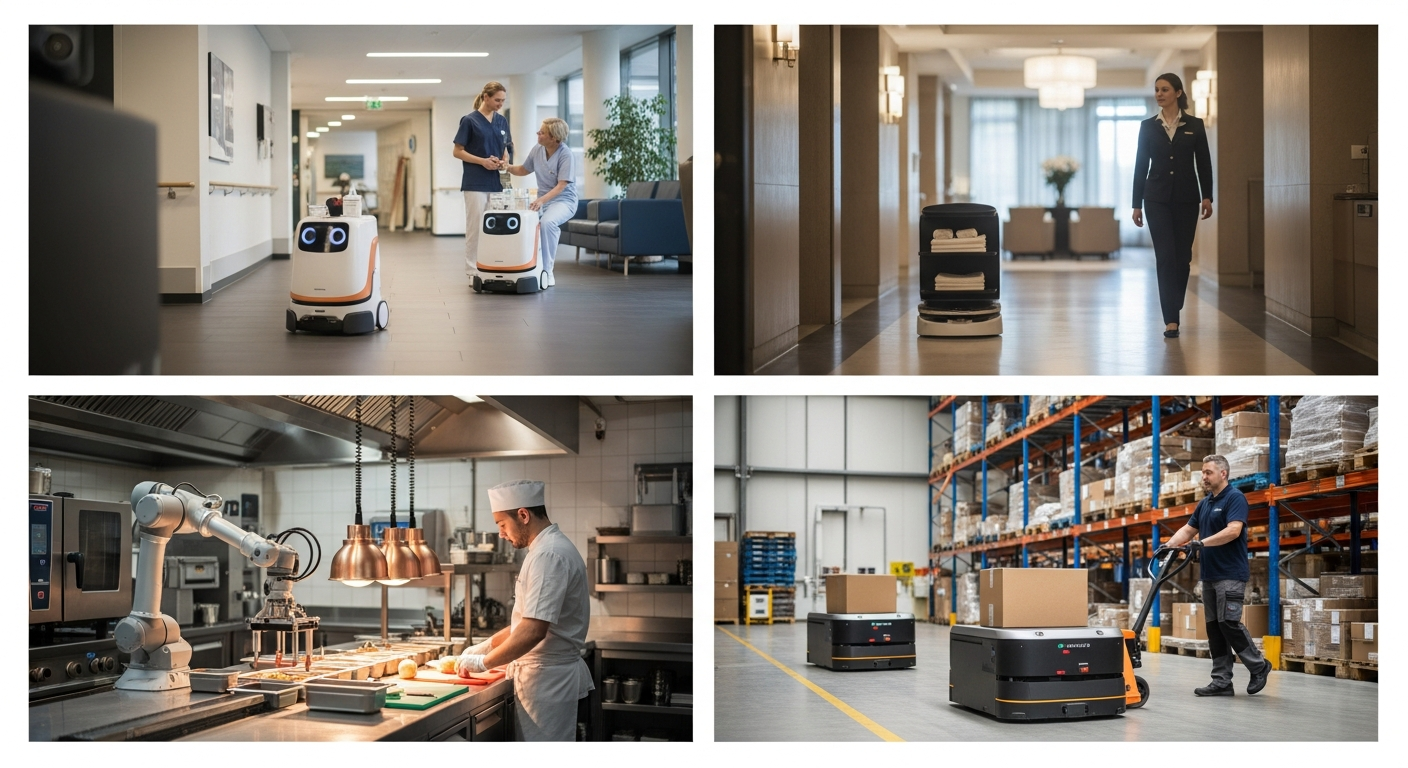
Floor 4. 03:00. The night shift lead at a senior living facility in Hamburg checks the dashboard. A medication transport robot is navigating the corridor autonomously. This is not a pilot project; it is a regulated, live operation. For the Director of Operations, the priority is not the robot's sensor range, but the compliance audit trail sitting in the cloud. With the EU Machinery Regulation 2023/1230 becoming mandatory on January 20, 2027, the window for experimental robotics is closing. Operators now require a structured pathway that translates complex workflows into compliant, regulator-ready specifications within 48 hours. werob provides this operating layer, ensuring that every deployment is backed by a robust regulatory framework and direct integration into the operator's existing technology stack.
Key Takeaways
- 1The EU Machinery Regulation 2023/1230 becomes mandatory on January 20, 2027, requiring all robotic deployments to have a clear compliance and documentation pathway.
- 2werob's hardware-agnostic platform ranks 44+ OEMs and 280 robots to find the best fit for an operator's specific workflow and infrastructure.
- 3Significant cost offsets are achievable today, such as €92,000 for senior living medication rounds and €112,000 for hotel room service.
The 2027 Regulatory Cliff: EU Machinery Regulation 2023/1230
The regulatory landscape for robotics in Europe is undergoing a fundamental shift. The transition from the old Machinery Directive to the EU Machinery Regulation 2023/1230 is not merely a clerical update. It is a mandatory legal framework that becomes enforceable on January 20, 2027. For operators in senior living, hospitality, and logistics, this regulation introduces strict requirements for digital documentation, cybersecurity, and autonomous functions. Many Asian-manufactured robots currently on the market do not yet meet these specific European conformity assessment standards. This creates a significant risk for operators who purchase hardware directly from resellers without a compliance pathway.
werob acts as the compliance bridge. As a hardware-agnostic systems integrator, werob ensures that every robot in its catalogue of 44+ OEMs is evaluated against these upcoming standards. The regulator-ready robot report provides the necessary documentation to satisfy local authorities, such as the Heimaufsicht in Germany or health and safety inspectors in the UK. By focusing on the regulatory requirements early in the specification phase, operators avoid the costly mistake of deploying non-compliant hardware that may be forced out of operation by 2027. This proactive approach is essential for protecting long-term capital expenditure in robotics.
The Four-Layer Platform: From Spec to Live Fleet
Deploying a robot is an operational challenge, not just a hardware purchase. werob utilizes a four-layer platform to manage this complexity. The first layer is the Spec Engine. This AI-assisted tool converts an operator's workflow description into a deployable robot action graph within 48 hours. It is trained on over 35,000 projects, allowing it to identify potential operational bottlenecks before a single robot arrives on site. The second layer is the Supplier Match, which ranks 280 different robots from 44+ OEM partners against the specific requirements of the site. This ensures the hardware is fit for purpose, whether it is a Boston Dynamics Spot for security or a Keenon T9 for hospitality.
The third layer consists of Connectors. These are pre-built integrations into the operator's existing software stack, such as PointClickCare for senior living, Opera PMS for hotels, or SAP EWM for logistics. Without these connectors, robots operate in a vacuum, requiring manual intervention that erodes ROI. The final layer is the Cockpit. This live fleet management tool provides a four-dimensional traffic light system covering hardware health, infrastructure status, regulatory compliance, and specification adherence. This integrated approach allows werob to move from intake to a live robot on the floor in just eight weeks, a significant improvement over the industry norm of three to six months of discovery consulting.
Senior Living: Compliance and Cost Offsets
In the senior living sector, the pressure on staff is at an all-time high. Robotics offers a clear path to relief, but only if the deployment is compliant with ISO 13482 standards for personal care robots. werob has demonstrated the efficacy of this approach with partners like Korian Deutschland. By automating the medication round, facilities can achieve a cost offset of €92,000 per site per year. General transport tasks, such as moving laundry or waste, contribute an additional €71,000 in annual savings. These figures are not theoretical; they are based on live operations across 200 robots currently managed by werob.
The integration into platforms like MatrixCare or PointClickCare is critical here. When a robot is regulator-ready, it means the data flow between the robot and the care management system is secure and auditable. This satisfies the requirements of the Heimaufsicht and ensures that the introduction of technology does not increase the administrative burden on the nursing staff. The goal is to return time to the caregivers, allowing them to focus on resident interaction while the robot handles the repetitive, heavy-lifting tasks. werob's outcome-only commercial model means the facility pays nothing until the system is operational and delivering these measured offsets.
Hospitality and F&B: Integrating with PMS and POS
The hospitality industry faces a similar labor crisis, particularly in room service and back-of-house operations. A regulator-ready robot report for a hotel environment focuses on HACCP compliance for food safety and seamless integration with Property Management Systems (PMS) like Mews or Opera. A robot handling room service can generate a cost offset of €112,000 per year, while automating bar and breakfast preparation tasks can save €54,000 annually. These offsets are achieved by allowing staff to remain in high-value guest-facing roles while robots manage the logistics of moving items through the property.
In the F&B sector, tray-bots in the dishroom can offset €76,000 per year, and automated kitchen floor cleaning adds another €44,000 in savings. The challenge in these environments is often the dynamic nature of the space. werob's Spec Engine accounts for high-traffic areas and complex floor plans, ensuring the selected OEM hardware can navigate safely around guests and staff. By using the Supplier Match layer, werob can select the best robot for the specific ceiling height, floor material, and Wi-Fi infrastructure of the site, rather than forcing a single-brand solution that may underperform in a specific environment.
Security and Logistics: Yard Patrol and SAP EWM
For logistics and security operators, compliance is often tied to the BewachVO (in DACH regions) and cybersecurity standards like IEC 62443. An autonomous yard patrol robot can offset €68,000 per year in security costs, while retail patrol robots offer a €58,000 offset. These robots must be integrated into security platforms like Genetec or warehouse management systems like SAP EWM to be effective. A robot that identifies a breach but cannot alert the central security desk in real-time is a liability, not an asset.
werob's Cockpit provides the necessary oversight for these high-stakes deployments. The live feed and audit logs ensure that every action taken by the robot is recorded and compliant with GDPR and local privacy laws. This is particularly important for robots equipped with cameras and sensors in public or semi-public spaces. The regulator-ready report details how data is handled, stored, and encrypted, providing the Head of Facility and the Compliance Lead with the assurance they need to scale the fleet from a single pilot to a multi-site rollout. werob's presence in 11 European countries ensures that these deployments meet local national requirements while maintaining a consistent continental standard.
Hardware Agnosticism: The End of Vendor Lock-in
One of the primary risks in robotics procurement is vendor lock-in. When an operator buys directly from a single manufacturer, they are tied to that OEM's software, update cycle, and financial stability. If the OEM fails or pivots, the operator is left with expensive, non-functional hardware. werob's hardware-agnostic approach mitigates this risk. By ranking 44+ OEMs, including leaders like Boston Dynamics, Keenon, Pudu, and Apptronik, werob ensures the operator always has the best tool for the job. If a better robot enters the market, the werob platform can integrate it into the existing workflow without requiring a total overhaul of the operator's stack.
This agnosticism is also a key component of the regulator-ready report. werob evaluates the technical file of each OEM to ensure it meets European standards. For many emerging humanoid robots, such as those from Figure AI or 1X, werob provides the necessary integration layer to move these machines from the lab to the facility floor. This allows operators to stay at the forefront of robotic innovation without taking on the technical and regulatory debt of managing multiple disparate systems. The werob Cockpit serves as the single pane of glass for the entire fleet, regardless of the underlying hardware brands.
The Outcome-Only Commercial Model
Traditional robotics procurement often involves high upfront capital expenditure and significant risk for the operator. werob disrupts this model with an outcome-only commercial structure. Operators pay nothing until the robot is live on the floor and performing the specified tasks. This aligns the interests of the systems integrator with those of the operator. werob is incentivized to ensure the robot is compliant, integrated, and reliable, as their revenue depends on the successful operation of the fleet.
This model is particularly attractive for large-scale deployments. For example, a senior living group deploying five robots across four sites can see an annualized cost offset of approximately €1.8 million. A European resort group with eight robots across three properties can reach €2.7 million in offsets. By removing the financial barrier to entry and focusing on measurable outcomes, werob enables rapid scaling. The promise of 48 hours to spec, five days to quote, and eight weeks to live operation is backed by this performance-based approach. It transforms robotics from a speculative technology project into a predictable operational utility.
Next Steps: Starting Your 48-Hour Specification
The path to a regulator-ready robot deployment begins with a clear understanding of the workflow. werob's eight-step intake process is designed to capture the necessary data without the need for months of discovery meetings. It starts with identifying the shift, the shape of the task, and the specific site infrastructure. From there, the Spec Engine generates a technical requirement document that serves as the foundation for the regulator-ready report. This process is fast, efficient, and focused on operational reality.
As the 2027 deadline for the EU Machinery Regulation approaches, now is the time for operators to audit their current and planned robotics projects. A regulator-ready robot report is not just a compliance document; it is a roadmap for successful, high-ROI automation. Whether you are looking to automate a medication round in a care home or a security patrol in a logistics yard, the werob platform provides the tools and the expertise to get you there in eight weeks. Start your spec today and join the 200 robots already running across Europe under werob's management.
FAQ
- What is a regulator-ready robot report?
- It is a comprehensive audit and documentation package that ensures a robotic deployment complies with EU safety, cybersecurity, and operational regulations, specifically the Machinery Regulation 2023/1230.
- How long does it take to get a robot on the floor with werob?
- werob delivers a specification in 48 hours, a quote in five days, and a live, integrated robot on the floor within eight weeks.
- Does werob manufacture its own robots?
- No, werob is a systems integrator. It partners with over 44 OEMs to provide the best hardware for the operator's specific needs.
- What software systems does werob integrate with?
- werob has pre-built connectors for PointClickCare, MatrixCare, Opera PMS, Mews, Toast, Lightspeed, GolfNow, Genetec, and SAP EWM.
- What is the commercial model for werob?
- werob operates on an outcome-only model, meaning the operator pays nothing until the robot is running and performing its tasks on-site.
- How does werob handle the EU Machinery Regulation 2023/1230?
- werob provides a built-in compliance pathway, conducting conformity assessments and ensuring all hardware and software meet the mandatory 2027 standards.