Fleet Management for Humanoid Robots: Operational Scaling
Managing humanoid robots requires more than a remote control. It demands a unified operating layer that handles compliance, stack integration, and live performance monitoring across diverse hardware.
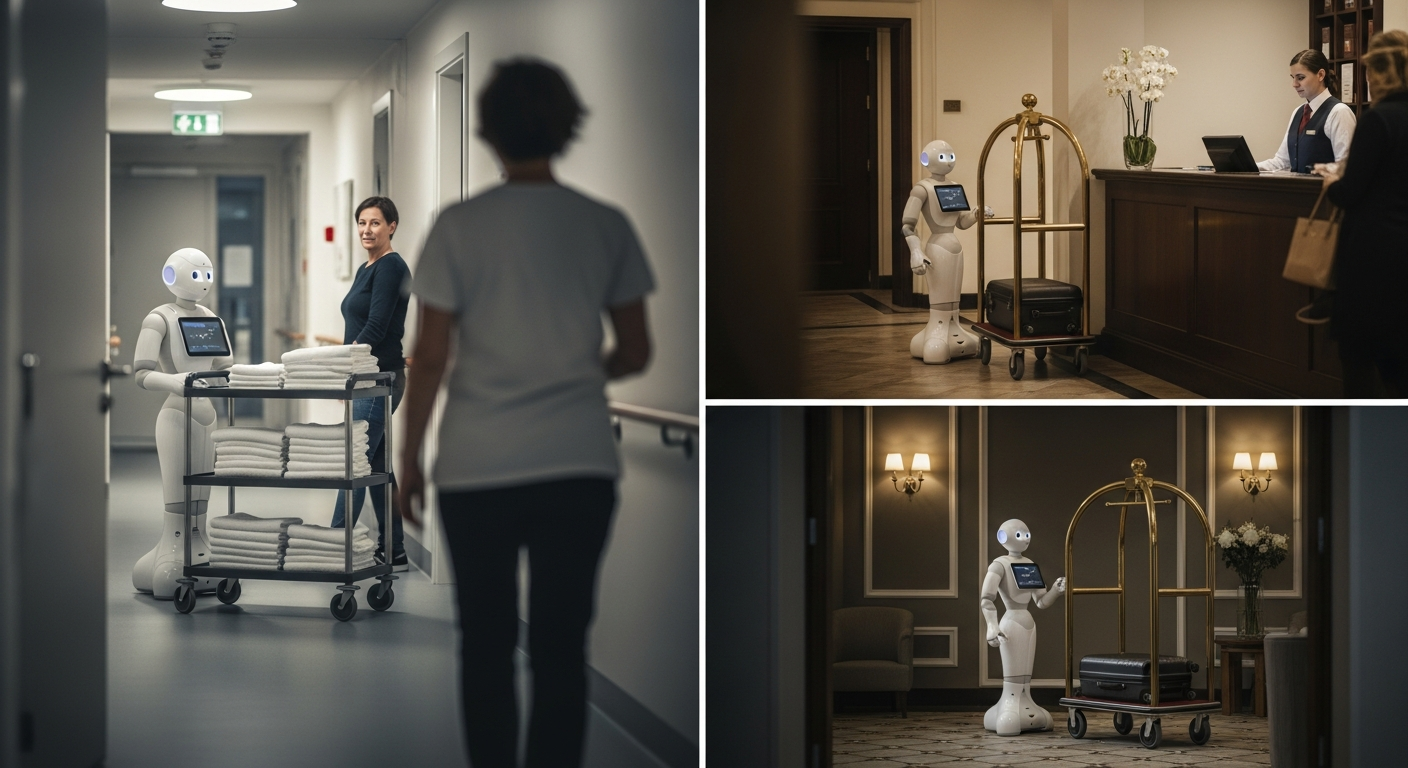
Floor 3. 03:15. The night shift supervisor at a Hamburg senior living facility monitors the dashboard. Two humanoid units are completing their rounds, checking corridor safety and logging environmental data. There is no manual intervention. The robots are not from the same manufacturer, yet they operate on a single synchronized schedule. This is the reality of week 12 of operation. The transition from experimental robotics to a managed fleet is no longer a theoretical exercise but a requirement for offsetting the 92,000 Euro annual cost of manual medication rounds. As of May 2026, werob manages 200 robots live across 11 European countries, proving that the value lies in the operating layer, not the individual machine.
Key Takeaways
- 1Hardware agnosticism is essential to avoid vendor lock-in and ensure the best robot is used for each specific task.
- 2EU Machinery Regulation 2023/1230 is a mandatory compliance hurdle that requires a specialized integrator pathway.
- 3Direct integration into existing stacks like SAP, PointClickCare, and Opera PMS is the only way to achieve measurable cost offsets.
The Shift from Single-Unit Pilots to Fleet Orchestration
The primary failure point in enterprise robotics is the pilot purgatory. Many operators begin by purchasing a single unit from a specific manufacturer, only to find that the software provided by that OEM does not talk to their existing ERP or PMS. When a second robot from a different vendor is added, the operational complexity doubles. werob eliminates this friction by acting as the hardware-agnostic systems integrator. We do not manufacture robots. Instead, we provide the operating layer that allows an operator to manage 280 different robot models from 44 plus OEM partners through a single interface.
Effective fleet management requires moving away from vendor-specific silos. In a production environment, an Operations Director cannot manage five different apps for five different robots. The werob Cockpit provides a unified view with four-dimensional traffic lights: hardware health, infrastructure status, regulatory compliance, and specification adherence. This level of oversight is critical when scaling across multiple sites. For instance, a senior living group running five robots across four sites can see an annualized cost offset of approximately 1.8 million Euro. This is only achievable when the robots are managed as a fleet rather than isolated tools.
The Four-Layer Architecture of Humanoid Management
Managing a humanoid fleet involves four distinct platform layers that transform a workflow into a live deployment. The first layer is the Spec Engine. This AI-assisted tool converts an operator's description of a shift or task into a deployable robot action graph within 48 hours. It is trained on over 35,000 projects, ensuring that the technical requirements are precise from day one. The second layer is the Supplier Match, which ranks the entire catalogue of 44 plus OEMs against that specific spec. This ensures the operator gets the best hardware for the task, whether it is an Apptronik Apollo for logistics or a Unitree unit for patrol.
The third layer consists of Connectors. These are pre-built integrations into the operator's existing software stack, such as PointClickCare, SAP EWM, or Opera PMS. Without these connectors, a robot is just a mobile sensor. With them, it becomes a functional part of the workflow, capable of logging tasks and updating records in real-time. The final layer is the Cockpit. This is the live fleet management tool that provides the audit logs and performance metrics required for enterprise-grade operations. This four-layer approach reduces the time to live from the industry norm of six months down to just eight weeks.
Regulatory Compliance and the 2027 Deadline
Compliance is the most significant forcing function in the European robotics market. The EU Machinery Regulation 2023/1230 becomes mandatory on January 20, 2027. This regulation requires rigorous conformity assessments, particularly for robots originating from outside the European Union. Many Asian OEMs do not yet have the local infrastructure to guarantee this compliance. werob acts as the compliance pathway, ensuring that every robot in the fleet meets these mandatory standards. This includes adherence to ISO 13482 for personal care robots and the EU AI Act for high-risk AI categories.
For operators in sectors like senior living or security, regulatory cover is not optional. In Germany, the Heimaufsicht gates robot deployment in care facilities. In security, the BewachVO applies to autonomous patrol units. A fleet management system must do more than track battery levels. It must maintain a continuous audit trail that proves the fleet is operating within legal and safety boundaries. werob builds this compliance into the deployment process, providing the necessary documentation and monitoring to satisfy state-level regulators and insurance providers. This de-risks the investment and ensures long-term operational stability.
Economic Impact: Cost Offsets in Practice
The decision to deploy a humanoid fleet must be driven by concrete economic outcomes. Adjectives like significant savings are insufficient for a Director of Operations. At werob, we focus on verified cost offsets per site per year. In the senior living sector, automating the medication round provides a 92,000 Euro cost offset. General transport tasks within the same facility can save an additional 71,000 Euro. These are not theoretical projections but figures based on live operations, such as our work with Korian Deutschland.
In the hospitality sector, the numbers are even more pronounced. Room service automation can offset 112,000 Euro annually, while bar and breakfast preparation robots contribute 54,000 Euro in savings. For logistics and retail, security patrol robots provide a 68,000 Euro and 58,000 Euro offset respectively. By aggregating these savings across a fleet, the return on investment becomes clear. werob operates on an outcome-only commercial model. This means the operator pays nothing until the robot is on the floor and running. This model aligns our incentives with the operator's need for immediate and measurable performance.
Integration into the Operator Stack
A humanoid robot that cannot communicate with the building's infrastructure or the company's database is an operational liability. Fleet management requires deep integration. werob provides direct connectors into the most common software platforms used in our target verticals. For senior living, this includes PointClickCare and MatrixCare. For hotels, we integrate with Opera PMS and Mews. In the F&B sector, we connect to Toast and Lightspeed. These integrations allow the robot to receive tasks directly from the existing workflow management system.
In a logistics environment, the connection to SAP EWM is vital. It allows the humanoid fleet to assist in yard patrols or inventory checks while keeping the central warehouse management system updated in real-time. This level of connectivity ensures that the robot is not an add-on but a core component of the facility's operations. It also simplifies the training process for staff, as they continue to use the interfaces they are already familiar with. The robot simply becomes another resource available within their existing software environment, managed and monitored through the werob Cockpit.
The Cockpit: Live Fleet Monitoring and Traffic Lights
The werob Cockpit is the nerve center of the fleet. It provides a real-time overview of every unit across all locations. Unlike standard OEM dashboards, the Cockpit is designed for the operator, not the engineer. It uses a four-dimensional traffic light system to signal the health of the deployment. The hardware light monitors battery, motors, and sensors. The infrastructure light checks Wi-Fi connectivity and charging station availability. The regulatory light ensures the unit is operating within its permitted zones and hours. The spec light confirms the robot is actually performing the tasks it was deployed for.
This granular level of monitoring is essential for maintaining high uptime. If a robot in a logistics yard in Poland encounters a connectivity issue, the Cockpit alerts the local facility manager and the werob support team simultaneously. This proactive approach prevents small technical glitches from becoming major operational disruptions. Furthermore, the Cockpit generates the data needed for continuous improvement. By analyzing the performance of different OEMs against the same spec, operators can make data-driven decisions about which hardware to prioritize for future expansions. This is the power of being hardware-agnostic.
Humanoid Hardware: Ranking the OEM Landscape
The humanoid market is evolving rapidly, with new models from companies like Boston Dynamics, Figure AI, and Apptronik entering the space. However, no single manufacturer is the best fit for every use case. A robot that excels at heavy lifting in a warehouse may be unsuitable for the narrow corridors of a senior living facility. This is why werob maintains a catalogue of 44 plus OEM partners and 280 different robots. Our Supplier Match engine ranks these units based on the specific requirements of the operator's workflow.
We consider factors such as payload capacity, battery life, sensor suite, and local support availability. For example, in our Hamburg senior living facility pilot, the choice of hardware was dictated by the need for high social acceptance and precise navigation in human-centric environments. In contrast, a logistics yard patrol requires ruggedized hardware capable of operating in diverse weather conditions, such as units from ANYbotics or Boston Dynamics. By remaining hardware-agnostic, werob ensures that the operator is never locked into a single vendor's roadmap. If a better robot enters the market, the werob platform makes it easy to integrate the new hardware into the existing fleet.
The 8-Week Path to Live Operation
Speed is a critical differentiator in the robotics industry. Traditional consulting firms often spend three to six months producing discovery decks before a single robot is even ordered. werob has compressed this timeline into an eight-week sprint. It begins with our eight-step intake process, which captures the shift, the task, and the site infrastructure. Within 48 hours, the Spec Engine produces a deployable specification. Within five days, the operator receives a firm quote based on our outcome-only commercial model.
The remaining weeks are focused on hardware procurement, stack integration, and on-site setup. Because we use pre-built connectors and a standardized deployment framework, we avoid the delays associated with bespoke engineering. By week eight, the robot is on the floor, integrated into the local software stack, and performing its first live tasks. This rapid deployment cycle allows operators to begin realizing cost offsets almost immediately. Whether it is a single site or a multi-country rollout, our process is designed for scale and repeatability, ensuring that the transition to robotic operations is as seamless as possible.
Future-Proofing with the werob Platform
The robotics landscape in 2028 will look vastly different than it does today. With a target of 2,000 robots under management, werob is building the infrastructure to support this growth. Our platform is designed to be future-proof, meaning that as AI models improve and hardware becomes more capable, the operating layer evolves with them. Operators who join the werob ecosystem today are not just buying a robot; they are gaining access to a continuously improving stack of integrations and compliance tools.
As the EU AI Act and other regulations continue to roll out, having a dedicated systems integrator becomes even more valuable. We handle the technical and legal complexity so that our partners can focus on their core business. Whether you are managing a hotel chain, a senior living group, or a logistics network, the goal is the same: reliable, cost-effective automation that works. The werob platform provides the spec, the match, the connectors, and the cockpit to make that goal a reality across Europe and beyond.
FAQ
- What is the difference between a robot manufacturer and a systems integrator?
- A manufacturer builds the hardware and basic control software. A systems integrator like werob provides the operating layer that connects that hardware to your business workflows, manages compliance, and orchestrates multiple different robot brands through a single cockpit.
- How does werob handle the EU Machinery Regulation 2023/1230?
- werob acts as the compliance pathway by performing the necessary conformity assessments and ensuring all hardware in the fleet meets the mandatory standards effective January 20, 2027.
- Which software stacks can werob integrate with?
- We have pre-built connectors for PointClickCare, MatrixCare, Opera PMS, Mews, Toast, Lightspeed, GolfNow, Genetec, and SAP EWM.
- What is the commercial model for werob deployments?
- werob uses an outcome-only commercial model. This means you pay nothing until the robot is live and running on your floor, eliminating the upfront risk of pilot projects.
- How long does it take to deploy a humanoid robot fleet?
- Our promise is 48 hours to a spec, five days to a quote, and eight weeks to a live robot on your floor.
- Can werob manage robots from different manufacturers simultaneously?
- Yes, the werob Cockpit is designed to manage a multi-OEM fleet, ranking and monitoring 280 different robots from over 44 partners in one unified interface.