Patrol Robot Integration: Scaling Security Operations with werob
Security operations face a dual crisis of labor shortages and rising regulatory complexity. werob provides the systems integration layer to deploy patrol robots within eight weeks, connecting directly to Genetec and SAP EWM.
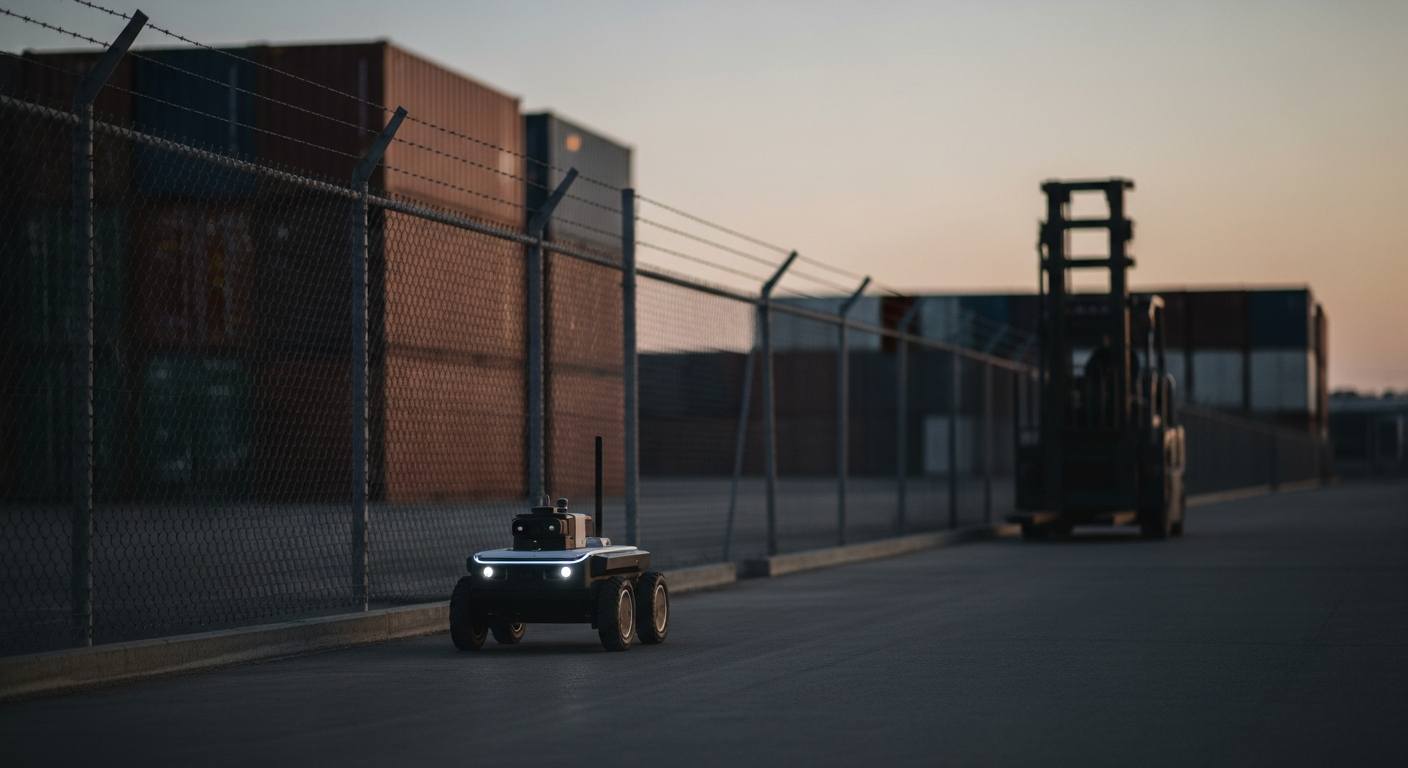
Tuesday, 02:15. A logistics yard in Hamburg-Süd. The perimeter fence is 2.4 kilometers long. Instead of a human guard performing a high-risk manual round in the rain, an autonomous patrol robot moves at a steady 5 km/h. Its thermal cameras scan for heat signatures while its LiDAR maps the environment in real-time. Every 30 seconds, a telemetry heartbeat is sent to the Genetec Security Center. This is not a pilot project. It is a live operation managed through the werob Cockpit, where the hardware, infrastructure, and regulatory status are monitored in a four-dimensional traffic light system. For the Director of Operations, the robot represents a €68k annual cost offset and a solution to the chronic shortage of night-shift personnel.
Key Takeaways
- 1werob delivers a verified €68k annual cost offset per site for logistics yard patrols through labor optimization.
- 2Compliance with EU Machinery Regulation 2023/1230 is mandatory by January 2027; werob provides the built-in pathway for this requirement.
- 3The 48-hour Spec Engine and 8-week deployment timeline replace traditional 6-month discovery cycles.
The Shift from Hardware to Systems Integration
The security industry has long viewed robotics through the lens of hardware. Operators often ask which robot is the best, but this is the wrong question. In a professional security environment, the robot is merely a sensor carrier. The real value is created by the systems integrator who translates a complex manual workflow into a deployable robot specification. werob is not a manufacturer and does not sell a single brand. Instead, werob acts as the operating layer that ranks 44+ OEM partners against your specific site requirements.
Traditional procurement cycles for security robotics often last six to twelve months, involving endless discovery decks and pilot phases that never reach production. werob changes this timeline. Using a Spec Engine trained on over 35,000 projects, werob converts your operational words-shift patterns, floor types, and task descriptions-into a technical specification within 48 hours. This hardware-agnostic approach prevents vendor lock-in and ensures that the selected platform, whether from ANYbotics, Boston Dynamics, or Robotnik, is the optimal match for the environment.
By focusing on integration rather than just the machine, operators can move from a conceptual idea to a live robot on the floor in exactly eight weeks. This speed is critical for facility managers who need to address immediate security gaps or labor shortages without waiting for a multi-year digital transformation journey.
Economic Impact: The €68k Yard Patrol Offset
The primary driver for autonomous patrol robots is the measurable cost offset. In a standard logistics yard, the annual cost offset per site is verified at €68k. This figure is not an estimate but a reflection of reduced labor hours, lower night-shift premiums, and decreased turnover costs. For larger logistics yards at scale, this offset can reach €136k per year. In retail environments, a patrol robot typically yields a €58k annual offset by reducing shrinkage and optimizing loss prevention rounds.
These savings are achieved through force multiplication. A single security officer can supervise a fleet of three to five robots from a central command center, rather than walking the perimeter. This shift allows human personnel to focus on high-value decision-making and incident response, while the robots handle the repetitive, dull, and often dangerous task of continuous patrolling. The commercial model offered by werob is outcome-only. This means the operator pays nothing until the system is running and delivering the specified workflow. This eliminates the CAPEX risk associated with traditional technology investments and aligns the cost directly with operational performance.
Furthermore, the integration into existing stacks like SAP EWM allows the robot to perform dual-purpose tasks. While patrolling for security threats, the robot can simultaneously verify inventory locations or check for structural hazards, further increasing the return on investment. The economic case for robotics in security is no longer about the future; it is about current operational efficiency.
Regulatory Compliance: Navigating BewachVO and EU 2023/1230
Regulatory compliance is the most significant hurdle for autonomous security deployments in Europe. The upcoming EU Machinery Regulation 2023/1230, which becomes mandatory on January 20, 2027, is a major forcing function. This regulation requires rigorous conformity assessments, particularly for robots originating from non-EU manufacturers. werob provides the built-in compliance pathway for this regulation, ensuring that every deployment meets the necessary safety and legal standards before it hits the floor.
In the DACH region, the Bewachungsverordnung (BewachVO) sets strict rules for security services. Autonomous robots must be integrated into the security concept in a way that complements human oversight without violating legal requirements for guard presence. Additionally, ISO 13482 standards for personal care and service robots apply when machines operate in proximity to humans, such as in retail or public-facing logistics hubs. werob manages these regulatory layers through the Cockpit, which features a dedicated regulatory traffic light. If a compliance certificate is nearing expiration or a new regulation impacts the fleet, the system alerts the operator immediately.
Cybersecurity is equally critical. As networked devices, patrol robots must adhere to IEC 62443 standards for industrial communication networks. werob ensures that all data transmission, especially video feeds and telemetry, is encrypted and integrated securely into the operator's IT infrastructure. This comprehensive approach to compliance protects the Director of Operations from legal liability and ensures long-term operational stability.
Technical Integration: Genetec and SAP EWM Connectors
A patrol robot that operates in isolation is a liability. To be effective, it must be a first-class citizen in the operator's existing software stack. werob ships pre-built connectors that integrate the robot fleet directly into platforms like Genetec Security Center and SAP EWM. This means that when a robot detects an unauthorized person or a thermal anomaly, the alert appears directly in the VMS (Video Management System) used by the security team. There is no need for a separate monitoring screen or a bespoke integration project.
The integration with SAP EWM (Extended Warehouse Management) allows for sophisticated workflow automation. For example, a robot can be triggered to patrol a specific aisle after a high-value shipment is logged as received. This level of interoperability is what separates a systems integrator from a simple reseller. werob’s connector architecture ensures that data flows bi-directionally. The robot receives mission updates from the warehouse management system and sends back status reports, environmental data, and security logs.
This seamless data flow is essential for maintaining an audit trail. In the event of a security breach, the logs from the robot, the VMS, and the access control system are synchronized, providing a complete picture of the incident. By using standardized connectors, werob reduces the deployment time from months to weeks, avoiding the common pitfalls of custom-coded integrations that are difficult to maintain and scale.
Hardware Agnosticism: Comparing Patrol Platforms
Choosing the right hardware depends entirely on the terrain and the specific security task. werob’s Supplier Match engine ranks 44+ OEMs to find the best fit. Below is a comparison of common patrol robot architectures used in security and logistics.
| Feature | Wheeled Patrol Robots | Quadruped (Legged) Robots |
|---|---|---|
| Primary Use Case | Flat surfaces, retail, indoor warehouses | Uneven terrain, stairs, industrial yards |
| Speed | Up to 15 km/h | Up to 6 km/h |
| Payload Capacity | High (Sensors, lockers, screens) | Moderate (Specialized sensors) |
| Obstacle Negotiation | Limited to small thresholds | High (Stairs, debris, curbs) |
| Typical OEM Partners | Robotnik, Clearpath, Keenon | ANYbotics, Boston Dynamics, Unitree |
Wheeled robots are often the most cost-effective solution for retail security and indoor logistics. They offer long battery life and can carry heavy sensor suites, including 360-degree cameras and thermal imagers. However, they are restricted to relatively smooth surfaces. For outdoor yards with gravel, curbs, or stairs, quadruped robots like ANYbotics' Anymal or Boston Dynamics' Spot are the preferred choice. These machines can navigate complex environments that would stop a wheeled robot, making them ideal for perimeter security in industrial sites.
werob’s hardware-agnostic stance means we do not push a specific brand. If a new, more efficient robot enters the market from an OEM like Apptronik or Neura Robotics, it is simply added to the matchable catalogue. This ensures that the operator always has access to the best technology available for their specific workflow.
The Spec Engine: From Workflow to Spec in 48 Hours
The most common point of failure in robotics projects is the gap between operational needs and technical specifications. A Head of Security knows they need a perimeter check every hour, but they may not know the required LiDAR range or the necessary IP rating for the robot's housing. werob’s Spec Engine bridges this gap. By taking the operator's description of the shift and the site, the engine generates a deployable robot action graph and a technical specification within 48 hours.
This process is powered by data from over 35,000 projects, allowing the engine to predict common infrastructure challenges, such as Wi-Fi dead zones or elevator integration requirements. Instead of spending months in discovery meetings, the operator receives a clear, actionable plan that includes the recommended hardware, the necessary connectors, and the regulatory roadmap. This speed is a core differentiator for werob, moving the industry away from the 'consulting firm' model toward a 'systems integrator' model.
Once the spec is finalized, the Supplier Match engine identifies the top-ranked OEMs that can fulfill the requirements. This competitive ranking ensures that the operator gets the best performance at the right price point. The entire process is designed to be low-friction, allowing busy operations leaders to make informed decisions without becoming robotics experts themselves.
Cybersecurity and the IEC 62443 Standard
For a CISO, a patrol robot is a mobile computer with cameras and network access-a potential entry point for cyberattacks. Ensuring the security of the robot fleet is as important as the physical security it provides. werob adheres to the IEC 62443 standard, which provides a framework for the cybersecurity of industrial automation and control systems. This includes secure boot processes, encrypted communication channels, and regular software updates managed through the werob Cockpit.
Data residency is another critical factor, particularly under GDPR (DSGVO) regulations in Europe. Patrol robots often capture video of employees and the public. werob’s platform ensures that this data is handled according to strict privacy standards, with options for local data processing or secure cloud storage that complies with EU law. The Cockpit provides a transparent view of data flows, allowing the CISO to audit the system at any time.
By integrating directly with Genetec, werob leverages the existing security protocols of the operator's VMS. This reduces the attack surface by avoiding the need for third-party cloud bridges that are often the weak link in IoT deployments. Security is baked into the integration layer, not bolted on as an afterthought, ensuring that the robot fleet enhances the site's security posture rather than compromising it.
Outcome-Only: The Commercial Model for Operators
Traditional robotics procurement involves high upfront costs and significant risk. If the robot fails to perform as expected, the operator is left with an expensive piece of 'shelfware.' werob eliminates this risk with an outcome-only commercial model. The operator does not pay for the hardware or the integration until the robot is live on the floor and performing the specified workflow. This shifts the focus from selling machines to delivering results.
This model is particularly attractive for SMEs and large enterprises alike, as it moves the cost from CAPEX to OPEX. The €68k annual cost offset becomes a real, bottom-line improvement from day one of operation. There are no hidden fees for maintenance or software updates; everything is included in the outcome-based agreement. This alignment of interests ensures that werob is incentivized to keep the fleet running at peak efficiency.
Furthermore, the outcome-only model allows for flexibility. If the security requirements of a site change, the fleet can be adjusted or scaled through the werob Cockpit. This agility is essential in a rapidly changing economic environment where labor availability and security threats are constantly evolving. By removing the financial barrier to entry, werob makes advanced robotics accessible to any professional security operation.
Operationalizing the Fleet: The werob Cockpit
Once the robots are deployed, the focus shifts to management and optimization. The werob Cockpit is the central hub for the live fleet, providing a four-dimensional view of the operation. The first dimension is hardware health-monitoring battery levels, motor temperatures, and sensor status. The second is infrastructure, ensuring that the robot has the connectivity and charging access it needs to complete its missions.
The third dimension is regulatory compliance, tracking the status of all necessary certifications and ensuring the fleet remains compliant with EU Machinery Regulation 2023/1230. The fourth dimension is the spec itself-measuring the robot's performance against the original operational goals. If a robot is consistently missing its patrol windows or failing to detect anomalies, the Cockpit flags the issue for immediate resolution.
The Cockpit also provides the data needed for continuous improvement. By analyzing patrol patterns and incident logs, operators can optimize the robot's routes to cover high-risk areas more frequently. This data-driven approach ensures that the security operation is always evolving and improving. The Cockpit is designed for ease of use, allowing a Head of Security to manage a multi-site, multi-OEM fleet from a single interface.
FAQ
- How does the robot integrate with my existing security cameras?
- werob provides direct connectors into VMS platforms like Genetec. The robot acts as a mobile camera feed within your existing dashboard, allowing for real-time monitoring and automated alarm triggering.
- What is the cost of a patrol robot?
- werob uses an outcome-only commercial model. You pay nothing until the robot is operational and meeting your spec. This eliminates upfront CAPEX and aligns costs with the €68k-€136k annual offsets.
- Can the robot operate in rain or snow?
- Yes. During the Spec Engine phase, we match your site's environmental conditions to robots with the appropriate IP ratings (e.g., IP65 or IP67) from our 44+ OEM partners to ensure 24/7 all-weather operation.
- Is a patrol robot compliant with German BewachVO?
- Yes. werob ensures that all deployments comply with local regulations like BewachVO and the EU Machinery Regulation 2023/1230, providing the necessary legal and safety documentation through our Cockpit.
- What happens if the robot encounters an intruder?
- The robot uses AI-based person detection to identify unauthorized individuals and immediately sends an alert with live video to the Genetec Security Center for human intervention.
- How long does it take to get a robot on the floor?
- werob's promise is a spec in 48 hours, a quote in 5 days, and a live, integrated robot on your floor within 8 weeks.